ART WIKI32 963 en salle
CarteCollectionArtistesMuséesExpositionsJournal
Connexion

ART WIKI

Où est accroché le chef-d’œuvre, et quand on vous laisse entrer.

Collections : Art Institute of Chicago, Cleveland Museum of Art, Galerie Tretiakov, Hirshhorn Museum and Sculpture Garden, J. Paul Getty Museum, Metropolitan Museum of Art, Minneapolis Institute of Art, Musée de l'Ermitage, Musée des Beaux-Arts Pouchkine, Musée du Louvre, musée national d'art asiatique, Musée russe, Musées d'Art de Harvard, Museum of Modern Art, National Gallery of Art, National Portrait Gallery, Rijksmuseum Amsterdam, Smithsonian American Art Museum, Statens Museum for Kunst, Victoria and Albert Museum, Villa Getty, Whitney Museum of American Art, Catalogue d’État du fonds muséal de Russie (274 musées), Europeana (19 musées), Wikidata (6 musées), Paris Musées (12 musées) et Joconde, la base des musées du ministère de la Culture (495 musées). Les images appartiennent à leurs ayants droit.

Rubriques

  • Carte
  • Recherche
  • Collection
  • Chefs-d’œuvre
  • Exposées en ce moment
  • Artistes

Et aussi

  • Musées et galeries
  • Expositions
  • Journal
  • D’où viennent les données
  • Confidentialité et cookies
AccueilCarteCatalogue
  1. Collection/
  2. National Gallery of Art/
  3. Ben James, Coal Miner
Ben James, Coal Miner, Robert Frank, 1953
Robert Frank, portraitRobert FrankÉtats-Unis, 1924–2019

Ben James, Coal Miner

1953 · Photograph

Peut-on la contempler ?

Elle ne reçoit pas en ce moment

National Gallery of Art

Washington, États-Unis

Elle appartient à la collection, mais n’est pas présentée en ce moment.

Vérifié
il y a 3 jours
Dans cet état depuis
19 août 2026
Source
Le musée
Sur la cartePage du musée

Notice

1953 · à 29 ans
19242019
Numéro d’inventaire
2014.154.26

Ce qu’elle montre

Social criticismWalesMine workersPortrait of a man

Au catalogue

PhotographiesTirage gélatino-argentiqueArt d’après-guerreXXe siècleAmerican

Sources

  • National Gallery of Art
  • Image : National Gallery of Art — © the artist or rights holder

Pendant ce temps, chez Robert Frank

La vie entière
  1. 1950–1953

    Disillusionment with America and a brief move to Paris

    Though initially optimistic about American society and culture, Frank’s perspective quickly changes as he confronts the fast pace of American life and what he sees as an overemphasis on money: he now sees America as an often bleak and lonely place, and his dissatisfaction with the control editors exercise over his work colors the experience. He continues to travel, moving his family briefly to Paris.

  2. 1953

    Back in New York and the “New York School”

    He returns to New York and works as a freelance photojournalist for magazines including McCall’s, Vogue and Fortune. Associating with photographers such as Saul Leiter and Diane Arbus, he helps form what Jane Livingston has termed the New York School of photographers of the 1940s and 1950s.

  3. 26 mai 1953 – 23 août 1953

    Exhibition: Postwar European Photography

  4. 1955

    Seven photographs in “The Family of Man”

    Edward Steichen includes seven of his photographs, many more than most other contributors, in the world-touring MoMA exhibition The Family of Man, which will be seen by 9 million visitors; they include a woman kissing her swaddled baby, a bowed old woman in Peru, a rheumy-eyed miner in Wales, and six laughing women in the window of the White Tower Hamburger Stand in New York City.

  5. 1955–1957

    Across America on a Guggenheim Fellowship

    Inspired by Jakob Tuggener’s Fabrik, Bill Brandt’s The English at Home and Walker Evans’s American Photographs, and on the recommendation of Evans, Alexey Brodovitch, Alexander Liberman, Edward Steichen and Meyer Schapiro, he secures a Guggenheim Fellowship in 1955 to travel across the United States and photograph all strata of its society, from Detroit and Dearborn to Savannah, Miami Beach and St. Petersburg, New Orleans, Houston, Los Angeles, Reno, Salt Lake City, Butte and Chicago. Over two years of road trips, part of them with his family, he takes 28,000 shots, of which he selects 83 for The Americans.

  6. 1955–1957

    Jailed in Arkansas

    In a small Arkansas town he is taken to the police station and put in jail: it comes out that he is Jewish because of a letter from the Guggenheim Foundation, and the sheriff says they will have to find somebody who speaks Yiddish. Frank later recalled that it was scary and nobody knew where he was; elsewhere in the South a sheriff told him he had “an hour to leave town”, and these incidents may have contributed to the dark view of America found in his work.

Autres œuvres : Robert Frank

Toutes les œuvres
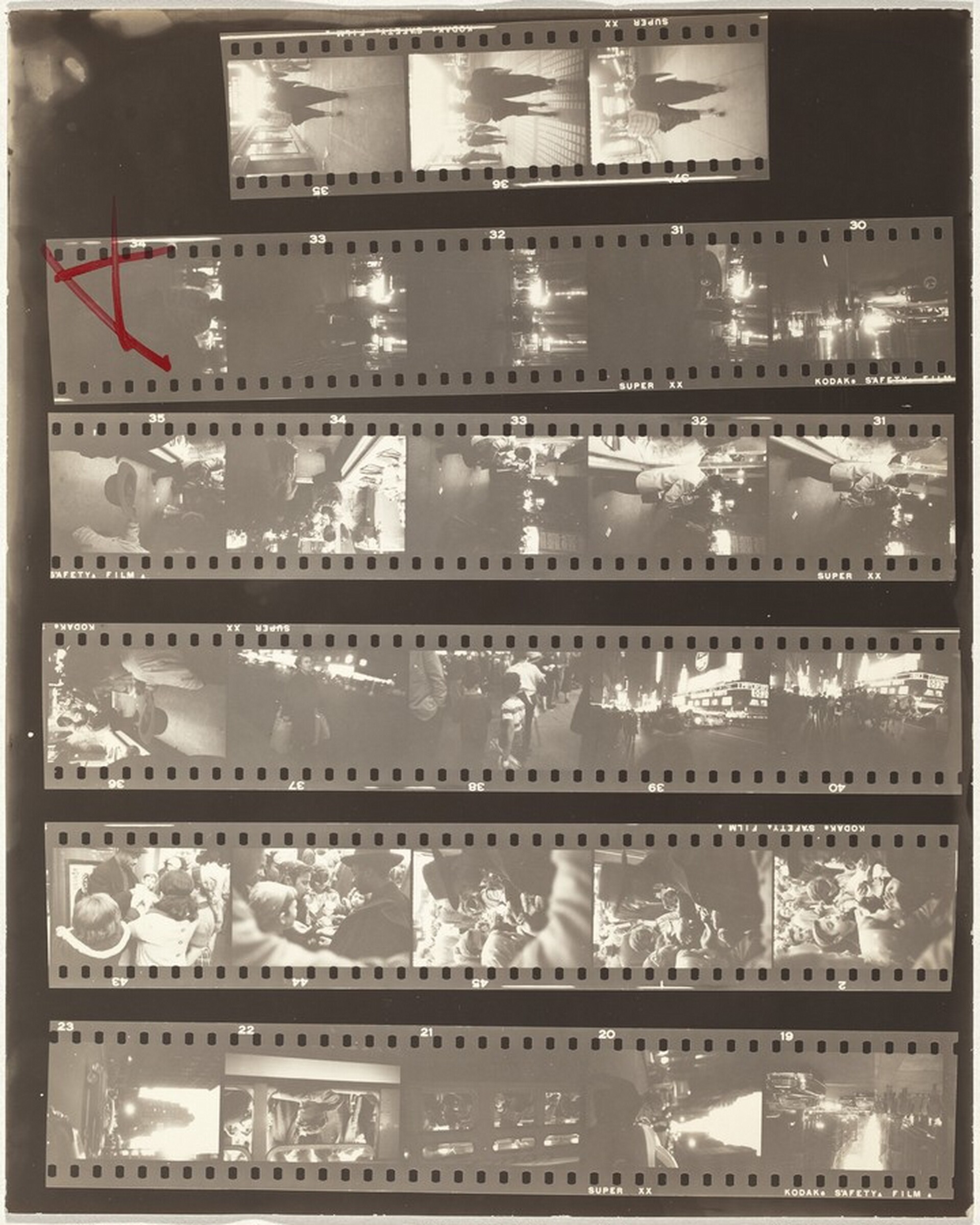
Fourth of July—Jay, New York, Robert Frank, 1954

Fourth of July—Jay, New York

1954 · National Gallery of Art

Parade—Hoboken, New Jersey, Robert Frank, 1955, printed 1977

Parade—Hoboken, New Jersey

1955, printed 1977 · National Gallery of Art

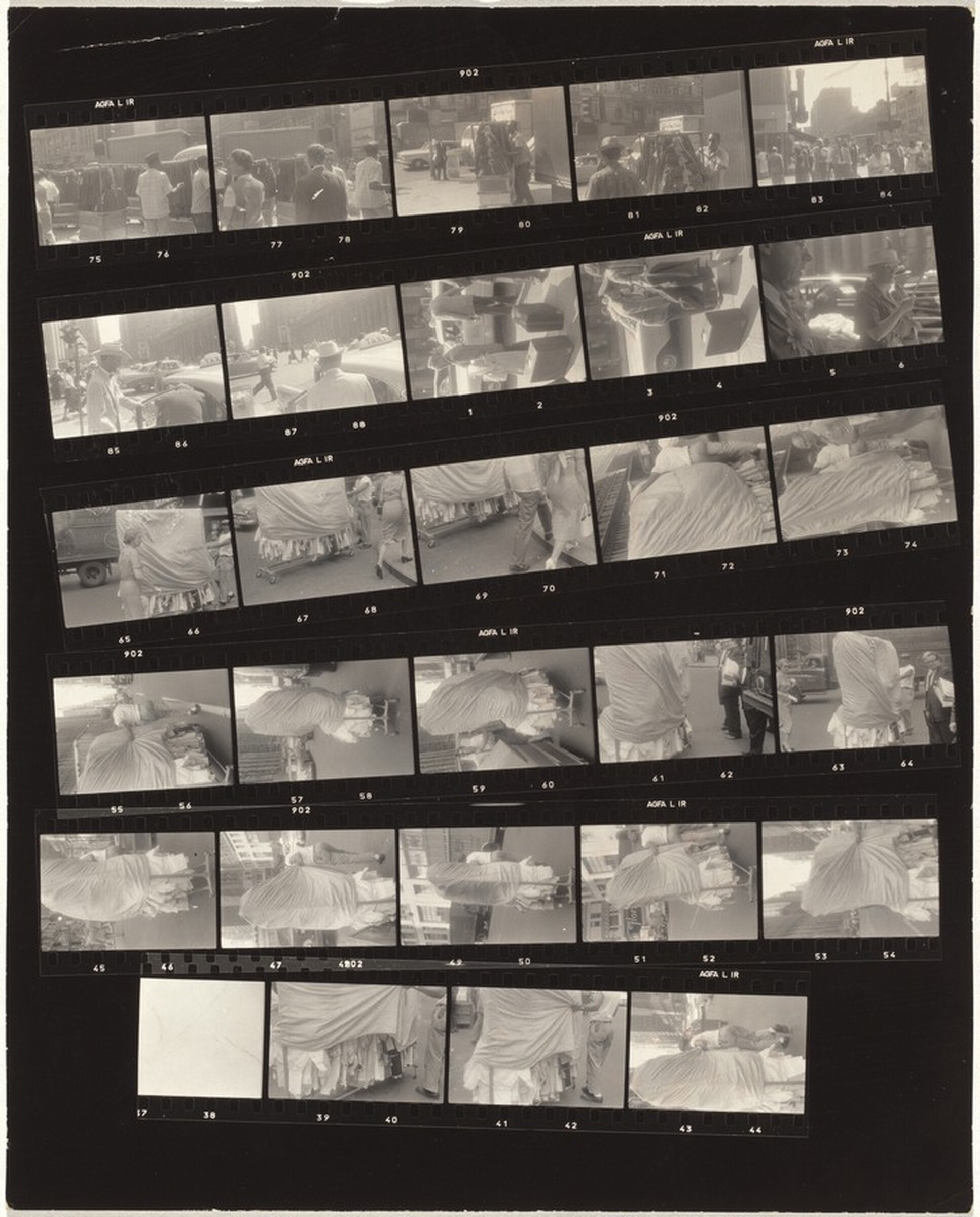
Construction--New York City no number, Robert Frank, 1950s

Construction--New York City no number

1950s · Non exposée · National Gallery of Art

Alfred Leslie--Painters no number, Robert Frank, 1950s

Alfred Leslie--Painters no number

1950s · Non exposée · National Gallery of Art

New York City no number, Robert Frank, late 1950s

New York City no number

late 1950s · Non exposée · National Gallery of Art

7th Avenue--New York City 1, Robert Frank, early 1950s

7th Avenue--New York City 1

early 1950s · Non exposée · National Gallery of Art

Revival no number, Robert Frank, mid-late 1950s

Revival no number

mid-late 1950s · Non exposée · National Gallery of Art

Revival no number, Robert Frank, mid-late 1950s

Revival no number

mid-late 1950s · Non exposée · National Gallery of Art

Sous le même toit : National Gallery of Art

Page du musée
Ginevra de' Benci [obverse], Leonardo da Vinci, c. 1474/1478

Leonardo da Vinci

Portrait de Ginevra de' Benci, c. 1474/1478

Wreath of Laurel, Palm, and Juniper with a Scroll inscribed Virtutem Forma Decorat [reverse], Leonardo da Vinci, c. 1474/1478

Leonardo da Vinci

Wreath of Laurel, Palm, and Juniper with a Scroll inscribed Virtutem Forma Decorat [reverse], c. 1474/1478

Green Wheat Fields, Auvers, Vincent van Gogh, 1890

Vincent van Gogh

Green Wheat Fields, Auvers, 1890

Girl in White, Vincent van Gogh, 1890

Vincent van Gogh

Jeune Fille en blanc, 1890

Roses, Vincent van Gogh, 1890

Vincent van Gogh

Roses, 1890

Self-Portrait, Vincent van Gogh, 1889

Vincent van Gogh

Self-Portrait, 1889

Farmhouse in Provence, Vincent van Gogh, 1888

Vincent van Gogh

Ferme en Provence, 1888

La Mousmé, Vincent van Gogh, 1888

Vincent van Gogh

La Mousmé, 1888

Sur le même thème · Social criticism

Toutes les œuvres sur ce thème
No Hay Quien Los Socorra (Nobody Can Help Them), Francisco Goya, 1810/1820, printed later

Francisco de Goya

No Hay Quien Los Socorra (Nobody Can Help Them), 1810/1820, printed later

Non exposée · National Gallery of Art

Subir y bajar (To Rise and To Fall), Francisco Goya, 1799

Francisco de Goya

Subir y bajar (To Rise and To Fall), 1799

Non exposée · National Gallery of Art

Buen Viage (Bon Voyage), Francisco Goya, 1799

Francisco de Goya

Buen Viage (Bon Voyage), 1799

Non exposée · National Gallery of Art

Estan Calientes (They Are Hot), Francisco Goya, 1799

Francisco de Goya

Estan Calientes (They Are Hot), 1799

Non exposée · National Gallery of Art

No hay quien nos desate? (Can't Anyone Untie Us?), Francisco Goya, 1799

Francisco de Goya

No hay quien nos desate? (Can't Anyone Untie Us?), 1799

Non exposée · National Gallery of Art

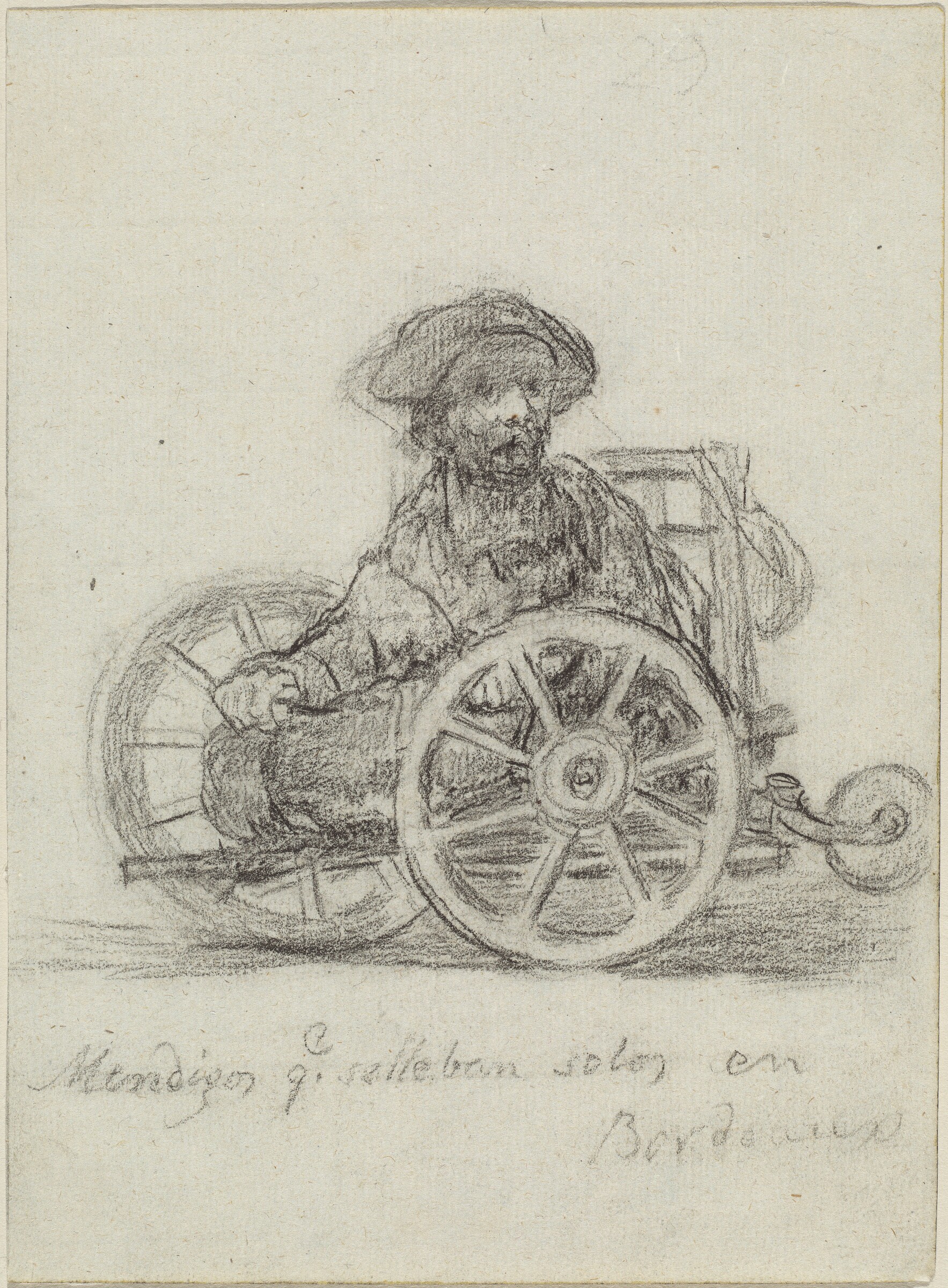
Mendigos que se llevan solos en Bordeaux (Beggars Who Get about on Their Own in Bordeaux), Francisco Goya, 1824/1827

Francisco de Goya

Mendigos que se llevan solos en Bordeaux (Beggars Who Get about on Their Own in Bordeaux), 1824/1827

Non exposée · National Gallery of Art

Polichinelle, Edouard Manet, 1874

Édouard Manet

Polichinelle, 1874

Non exposée · National Gallery of Art

The Balloon, Edouard Manet, 1862

Édouard Manet

The Balloon, 1862

Non exposée · National Gallery of Art