ART WIKI32 963 en salle
CarteCollectionArtistesMuséesExpositionsJournal
Connexion

ART WIKI

Où est accroché le chef-d’œuvre, et quand on vous laisse entrer.

Collections : Art Institute of Chicago, Cleveland Museum of Art, Galerie Tretiakov, Hirshhorn Museum and Sculpture Garden, J. Paul Getty Museum, Metropolitan Museum of Art, Minneapolis Institute of Art, Musée de l'Ermitage, Musée des Beaux-Arts Pouchkine, Musée du Louvre, musée national d'art asiatique, Musée russe, Musées d'Art de Harvard, Museum of Modern Art, National Gallery of Art, National Portrait Gallery, Rijksmuseum Amsterdam, Smithsonian American Art Museum, Statens Museum for Kunst, Victoria and Albert Museum, Villa Getty, Whitney Museum of American Art, Catalogue d’État du fonds muséal de Russie (274 musées), Europeana (19 musées), Wikidata (6 musées), Paris Musées (12 musées) et Joconde, la base des musées du ministère de la Culture (495 musées). Les images appartiennent à leurs ayants droit.

Rubriques

  • Carte
  • Recherche
  • Collection
  • Chefs-d’œuvre
  • Exposées en ce moment
  • Artistes

Et aussi

  • Musées et galeries
  • Expositions
  • Journal
  • D’où viennent les données
  • Confidentialité et cookies
AccueilCarteCatalogue
  1. Collection/
  2. Musée des Beaux-Arts de Strasbourg/
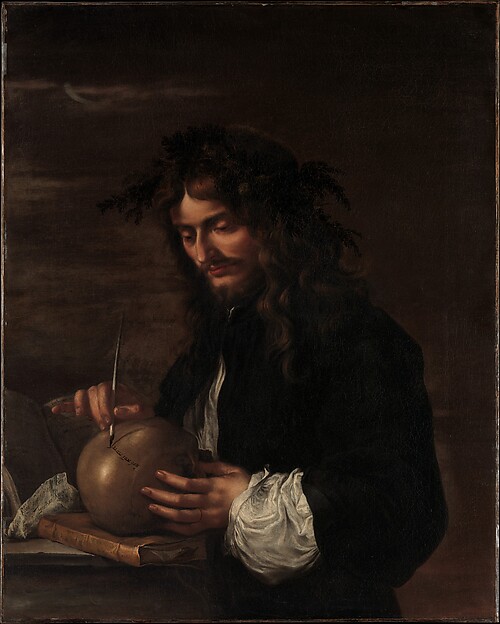
  3. Autoportrait
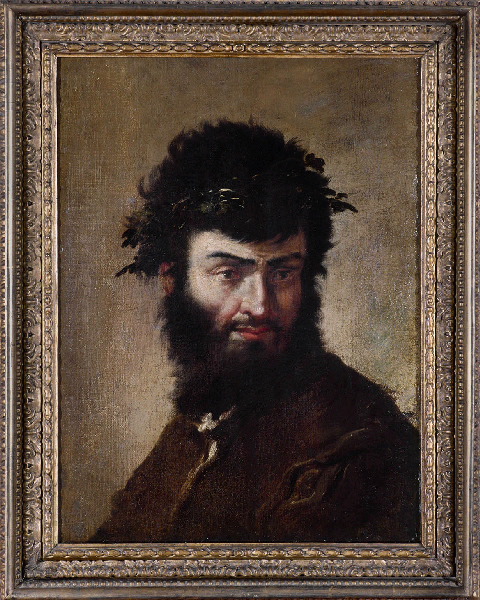
Autoportrait, Salvator Rosa, 1640,1649
Salvator Rosa, portraitSalvator RosaItalie, 1615–1673

Autoportrait

1640,1649 · Painting · 61 × 45 cm

Peut-on la contempler ?

Inconnu

MBS
Musée des Beaux-Arts de Strasbourg

Strasbourg, France

Le propriétaire est connu ; on ignore si l’œuvre est exposée aujourd’hui.

Dans cet état depuis
5 oct. 2026
Source
Le musée
Sur la cartePage du musée

Notice

1640,1649
16151673
Numéro d’inventaire
44.987.3.7 ; 44.R.116 (N° récolement)

Ce qu’elle montre

Autoportrait (Rosa Salvator, artiste, en buste, couronne : laurier)

Au catalogue

PeinturesHuilePeinture italienneBaroqueXVIIe siècleItalie

Sources

  • Musée des Beaux-Arts de Strasbourg
  • Image : Musée des Beaux-Arts de Strasbourg — © Service photographique des Musées de Strasbourg, © BACHER, © PLISSON; Ministère de la Culture (France), base Joconde

Pendant ce temps, chez Salvator Rosa

La vie entière
  1. 1638

    Move to Rome under the Protection of Cardinal Brancaccio

    He settled in Rome under the patronage of the influential Cardinal Francesco Maria Brancaccio, a lover of the arts and theater who was close to the Barberini family.

  2. 1640

    Meeting Lucrezia Paolini

    In Florence he met Lucrezia Paolini, who had been abandoned by her husband; she became his lifelong companion and was probably the model for the allegory of Music (c. 1641).

  3. 1640–1649

    Florentine Period at the Medici Court

    After scandalous quarrels with Bernini and his failure to gain admission to the Accademia di San Luca, he moved to Florence at the invitation of Giovanni Carlo de' Medici, where he remained until 1649.

  4. 1647

    Participation in Masaniello's Revolt

    According to a widespread account, he took part in the popular uprising led by Masaniello in Naples; he painted a portrait of Masaniello and expressed sympathy for the revolt in one of his satires.

  5. 1650

    Return to Rome, Seclusion

    He returned to Rome, kept to himself, and accepted no commissions, devoting himself to battle scenes and enigmatic landscapes, which he sold through his friend, the banker Carlo de Rossi.

  6. 1650s

    Scandal over the "Allegory of Fortune"

    The painting Allegory of Fortune provoked a storm of indignation among the religious and secular authorities, who saw in it a satire on themselves; Rosa came close to arrest and published a text offering innocuous interpretations of its imagery.
Autres œuvres : Salvator Rosa

Toutes les œuvres
Self-Portrait, Salvator Rosa, ca. 1647

Self-Portrait

ca. 1647 · Metropolitan Museum of Art

Prodigal Son, Salvator Rosa, 1650s

Prodigal Son

1650s · Musée de l'Ermitage

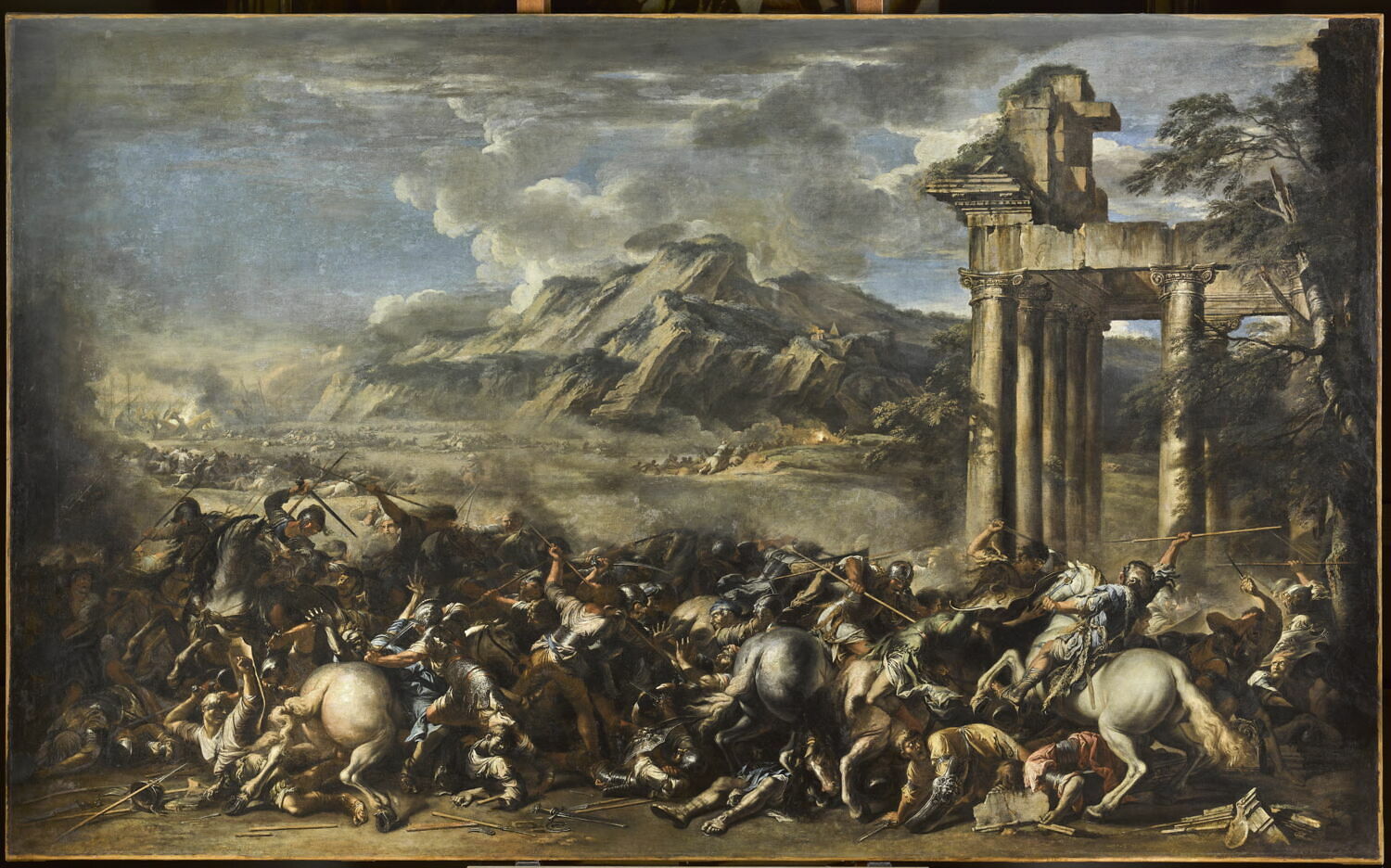
Bataille héroïque (La Bataille d'Eurymédon), Rosa, Salvator, Milieu du XVIIe siècle (1652)

Bataille héroïque (La Bataille d'Eurymédon)

Milieu du XVIIe siècle (1652) · Musée du Louvre

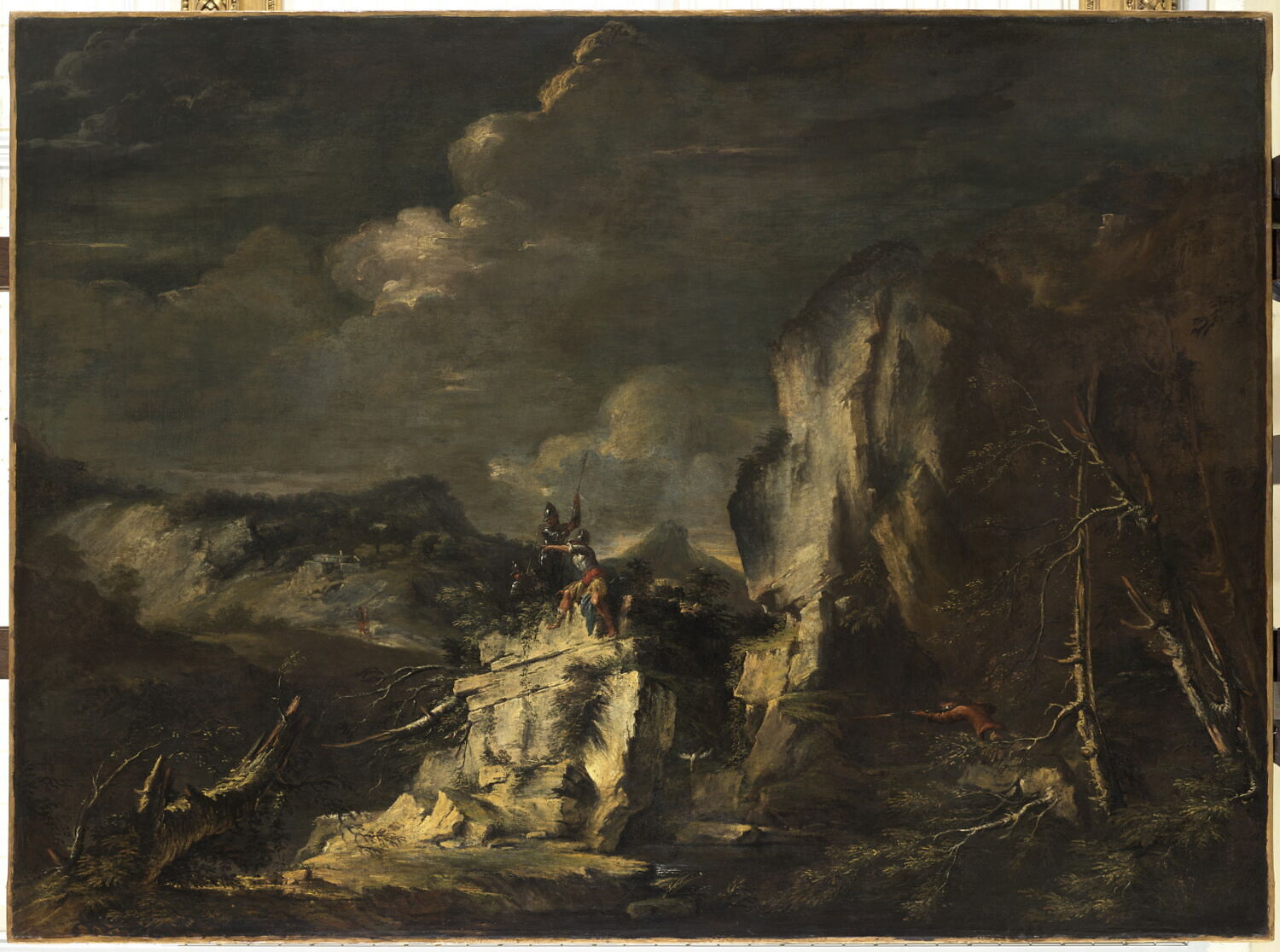
Paysage rocheux avec un chasseur et des guerriers, Rosa, Salvator, 3e quart du XVIIe siècle (1652)

Paysage rocheux avec un chasseur et des guerriers

3e quart du XVIIe siècle (1652) · Musée du Louvre

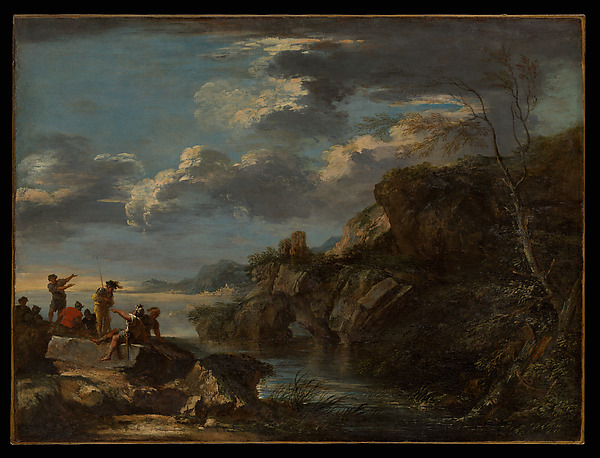
Bandits on a Rocky Coast, Salvator Rosa, 1655–60

Bandits on a Rocky Coast

1655–60 · Metropolitan Museum of Art

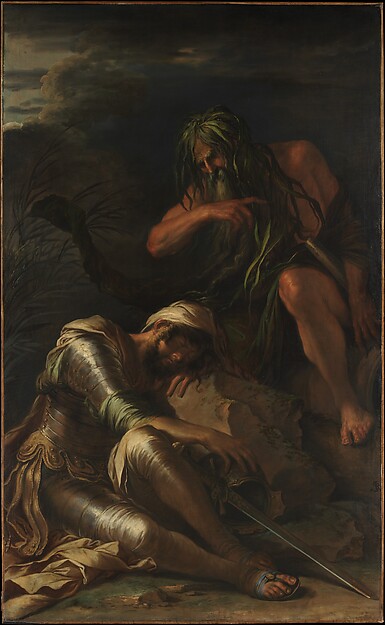
The Dream of Aeneas, Salvator Rosa, 1660–65

The Dream of Aeneas

1660–65 · Metropolitan Museum of Art

Democritus and Protagoras, Salvator Rosa, 1663

Democritus and Protagoras

1663 · Musée de l'Ermitage

Odysseus and Nausicaa (Ulysses and Nausicaa), Salvator Rosa, 1663

Odysseus and Nausicaa (Ulysses and Nausicaa)

1663 · Musée de l'Ermitage

De la collection : Musée des Beaux-Arts de Strasbourg

Page du musée
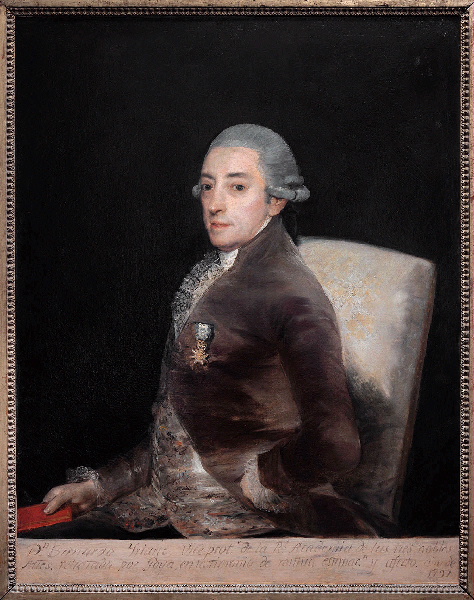
Portrait de Don Bernardo Yriarte, Y LUCIENTES Francisco de Goya, 1797

Francisco de Goya

Portrait de Don Bernardo Yriarte, 1797

Vierge à l'Enfant avec deux anges, Sandro Botticelli, 1468,1469

Sandro Botticelli

Vierge à l'Enfant avec deux anges, 1468,1469

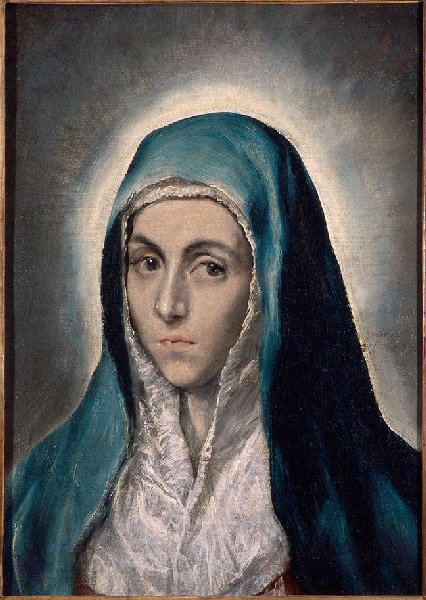
"Portrait" de la Vierge ; Mater Dolorosa ((autrefois appelé)), Greco, 1594,1604

El Greco

"Portrait" de la Vierge ; Mater Dolorosa ((autrefois appelé)), 1594,1604

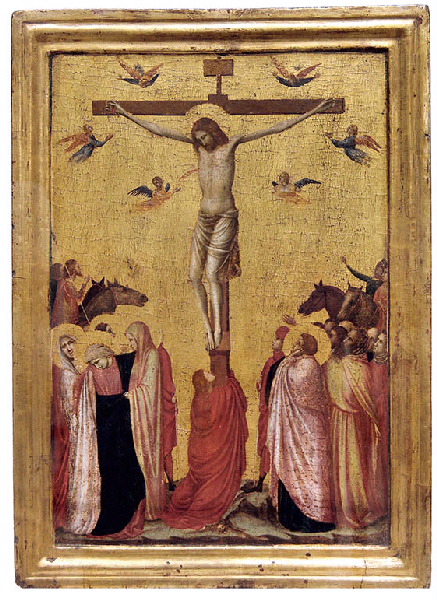
La Crucifixion, Giotto Di Bondone, 1315

Giotto

La Crucifixion, 1315

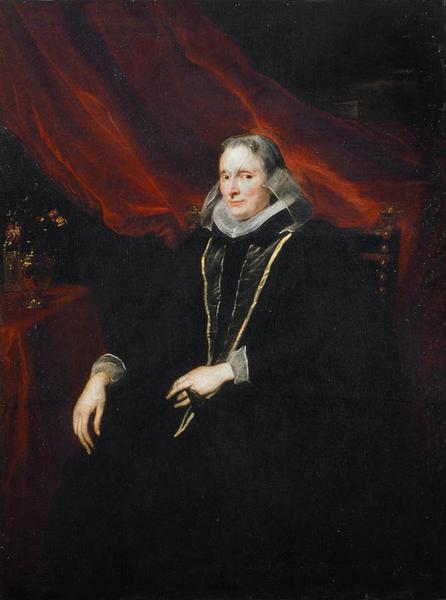
Portrait d'une noble génoise ; Portrait de Luigia Cattaneo-Gentile (autre titre), Antoon van Dyck, 1622

Anthony van Dyck

Portrait d'une noble génoise ; Portrait de Luigia Cattaneo-Gentile (autre titre), 1622

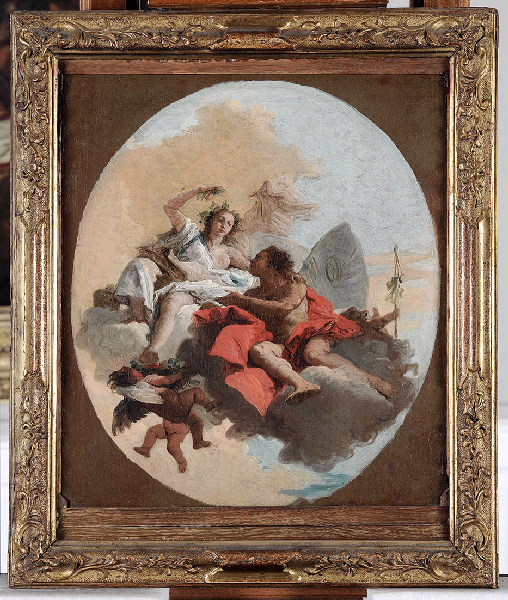
Zéphyr et Flore, Giambattista Tiepolo, 1750,1753

Giovanni Battista Tiepolo

Zéphyr et Flore, 1750,1753

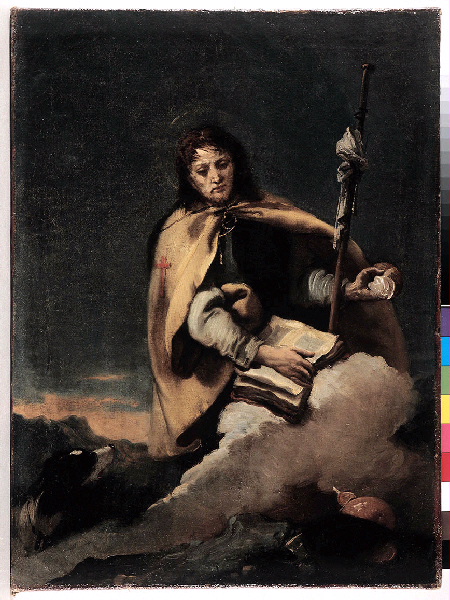
Saint Roch, Giambattista Tiepolo, 1730,1735

Giovanni Battista Tiepolo

Saint Roch, 1730,1735

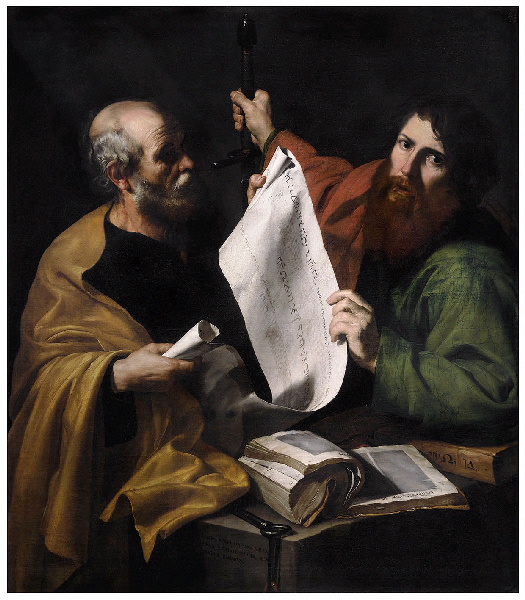
Saint Pierre et saint Paul, Jusepe de Ribera, 1616,1617

Jusepe de Ribera

Saint Pierre et saint Paul, 1616,1617