ART WIKI32 963 en salle
CarteCollectionArtistesMuséesExpositionsJournal
Connexion

ART WIKI

Où est accroché le chef-d’œuvre, et quand on vous laisse entrer.

Collections : Art Institute of Chicago, Cleveland Museum of Art, Galerie Tretiakov, Hirshhorn Museum and Sculpture Garden, J. Paul Getty Museum, Metropolitan Museum of Art, Minneapolis Institute of Art, Musée de l'Ermitage, Musée des Beaux-Arts Pouchkine, Musée du Louvre, musée national d'art asiatique, Musée russe, Musées d'Art de Harvard, Museum of Modern Art, National Gallery of Art, National Portrait Gallery, Rijksmuseum Amsterdam, Smithsonian American Art Museum, Statens Museum for Kunst, Victoria and Albert Museum, Villa Getty, Whitney Museum of American Art, Catalogue d’État du fonds muséal de Russie (274 musées), Europeana (19 musées), Wikidata (6 musées), Paris Musées (12 musées) et Joconde, la base des musées du ministère de la Culture (495 musées). Les images appartiennent à leurs ayants droit.

Rubriques

  • Carte
  • Recherche
  • Collection
  • Chefs-d’œuvre
  • Exposées en ce moment
  • Artistes

Et aussi

  • Musées et galeries
  • Expositions
  • Journal
  • D’où viennent les données
  • Confidentialité et cookies
AccueilCarteCatalogue
  1. Collection/
  2. Albertina/
  3. Apostel Philippus
Apostel Philippus, Hendrik Goltzius, 1589
Hendrick Goltzius, portraitHendrick GoltziusPays-Bas, 1558–1617

Apostel Philippus

1589 · Print

Peut-on la contempler ?

Inconnu

Albertina

Vienne, Autriche

Le propriétaire est connu ; on ignore si l’œuvre est exposée aujourd’hui.

Dans cet état depuis
27 sept. 2026
Source
Le musée
Sur la cartePage du musée

Notice

1589 · à 31 ans
15581617

Au catalogue

EstampesRenaissanceXVIe siècle

Sources

  • Albertina
  • Image : Albertina — Public Domain Mark 1.0

Pendant ce temps, chez Hendrick Goltzius

La vie entière
  1. 1579–1587

    Pupil: Jan Saenredam

  2. late 1580s

    Depression and consumption

    From the late 1580s he suffered from depression and consumption; his family life was unhappy.

  3. 1587

    Founding of the Haarlem Academy

    Together with Cornelis van Haarlem and Karel van Mander he founded an academy of art in Haarlem, later known as the Haarlem Mannerist Academy (some sources give 1583 or 1600). There, for the first time in the Netherlands, systematic study of anatomy and drawing from the nude model were introduced.

  4. 1590

    Departure for Italy

    He fled from his wife and, despite his illnesses, set out for Italy — via Hamburg and Munich to Venice, Bologna and Florence. Part of the way he traveled on foot, passing himself off as a commoner, "partly out of a love of mystification."

  5. January 1591

    Eight months in Rome

    He arrived in Rome in January 1591 and stayed eight months (with a brief sojourn in Naples). He discovered Raphael, was especially impressed by Michelangelo and Giambologna, and studied art from classical sculpture to the masters of the Renaissance.

  6. August 1591

    Return to Haarlem with a collection of drawings

    He returned to Haarlem, bringing from Italy a large collection of drawings that he used for the rest of his life; from the Roman material three engravings of classical statues are known, including the Farnese Hercules.

Autres œuvres : Hendrick Goltzius

Toutes les œuvres
Lot and his Daughters, Hendrick Goltzius, 1616

Lot and his Daughters

1616 · Rijksmuseum Amsterdam

Fall of Man, Hendrick Goltzius, 1608

Fall of Man

1608 · Musée de l'Ermitage

Baptism, Hendrick Goltzius, 1608

Baptism

1608 · Musée de l'Ermitage

Dying Adonis, Hendrick Goltzius, 1609

Dying Adonis

1609 · Rijksmuseum Amsterdam

Vertumnus and Pomona, Hendrick Goltzius, 1613

Vertumnus and Pomona

1613 · Rijksmuseum Amsterdam

The Fall of Man, Hendrick Goltzius, 1616

The Fall of Man

1616 · National Gallery of Art

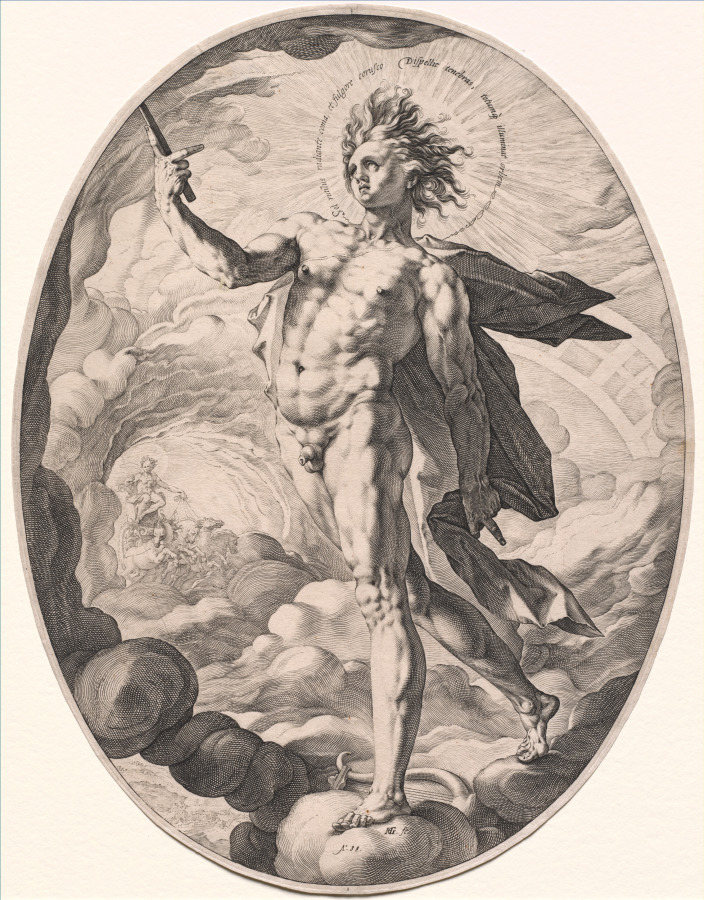
Apollo, Hendrick Goltzius, 1588

Apollo

1588 · Cleveland Museum of Art

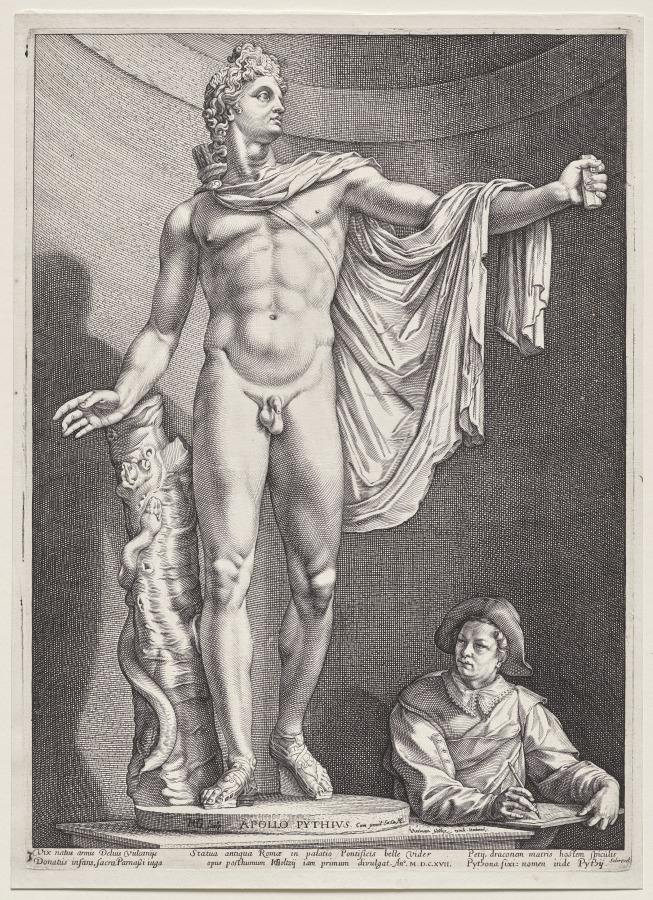
Apollo Belvedere, Hendrick Goltzius, 1592

Apollo Belvedere

1592 · Cleveland Museum of Art