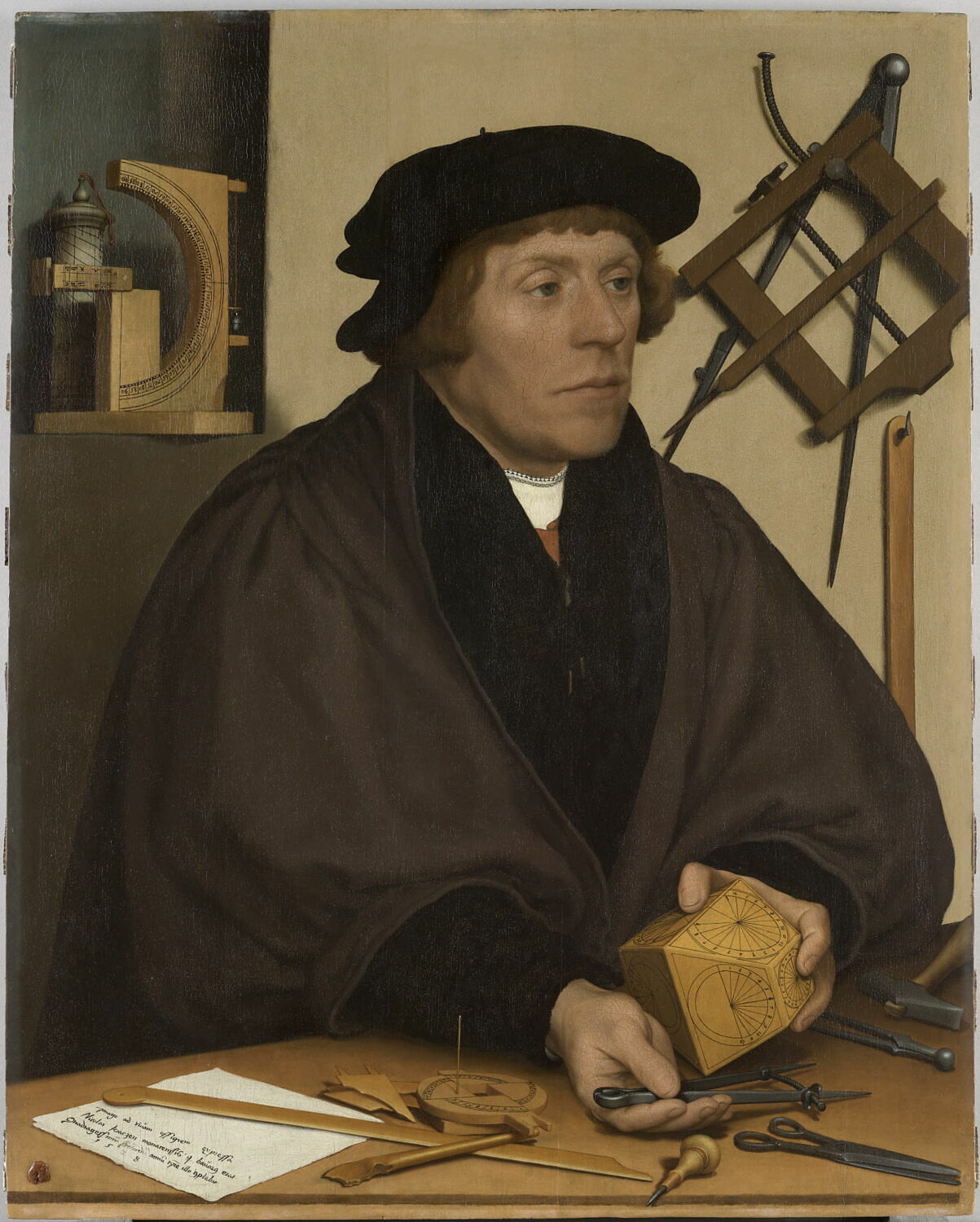
Hans HolbeinAllemagne, 1497–1543
Abdis en de Dood
Peut-on la voir ?
Inconnu
Où est « Abdis en de Dood » aujourd’hui ? Collection: Rijksmuseum Amsterdam, Amsterdam. Inconnu.

Amsterdam, Pays-Bas
Le propriétaire est connu ; on ignore si l’œuvre est exposée aujourd’hui.
- Source
- Le musée
À propos de l’œuvre
Selon le musée — en néerlandais
Een abdis wordt aan haar habijt meegesleurd door de Dood uit het klooster terwijl ze haar handen in gebed vouwt en een rozenkrans vasthoudt. De Dood draagt veren op zijn hoofd. Links op de grond staat een zandloper. In de marge boven de prent staat de tekst Ecle. IIII.
Rijksmuseum Amsterdam
Notice
- Numéro d’inventaire
- RP-P-OB-4509H(R)
Ce qu’elle montre
Au catalogue
Sources
- Rijksmuseum Amsterdam
- Image : Rijksmuseum Amsterdam — public domain
Dans la vie de Hans Holbein
La vie entièrec. 1522
Son born: Philipp Holbein I
1524
Journey to France
He visited France, probably in search of work at the court of Francis I; there he may have seen the portrait drawings of Jean Clouet, whose technique of drawing in colored chalks he adopted.
1526
Departure for England on Erasmus's Recommendation
On the advice of Erasmus of Rotterdam he set out for England in search of work, visiting France and the Netherlands on the way; Erasmus recommended him to Thomas More.
1526
Received into Thomas More's Humanist Circle
In England he was received by Sir Thomas More, who found him a series of commissions; in the humanist circle Holbein quickly won a high reputation. More wrote to Erasmus: "Your painter is a wonderful artist."
1528
Return to Basel, Purchase of a House
He returned to Basel and bought a house in the St. Johanns-Vorstadt, becoming a neighbor of the publisher Hieronymus Froben; in 1531, having grown wealthy from his English commissions, he bought the adjoining house as well.