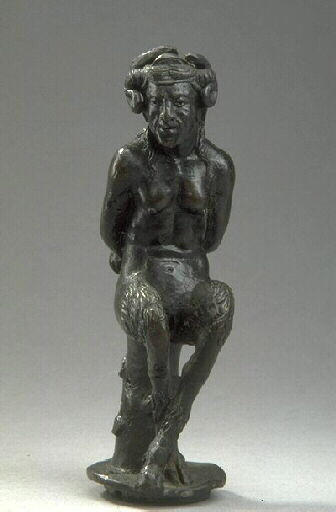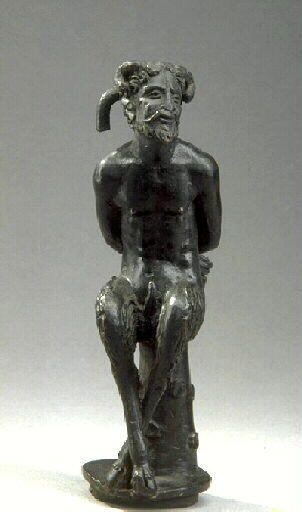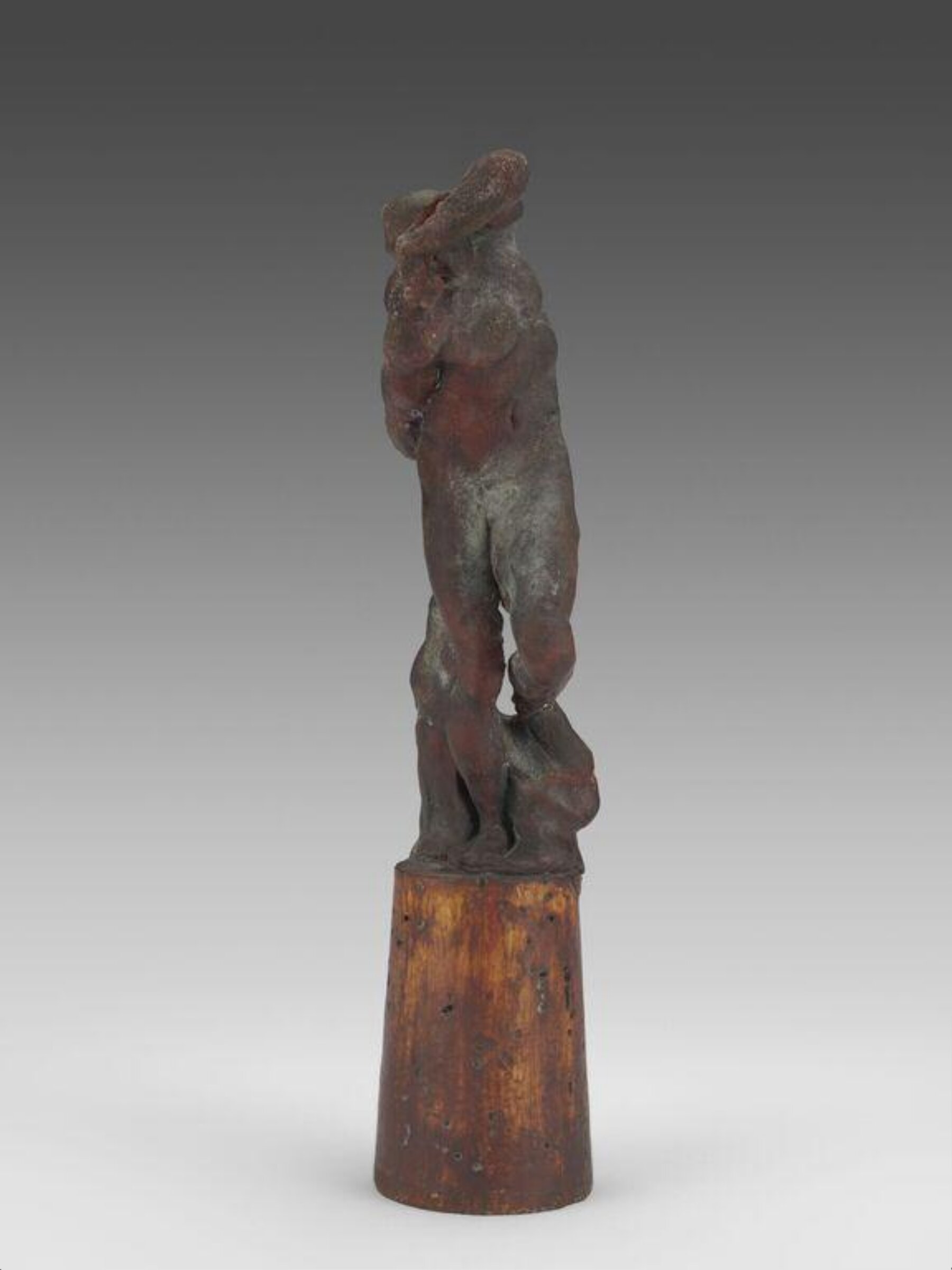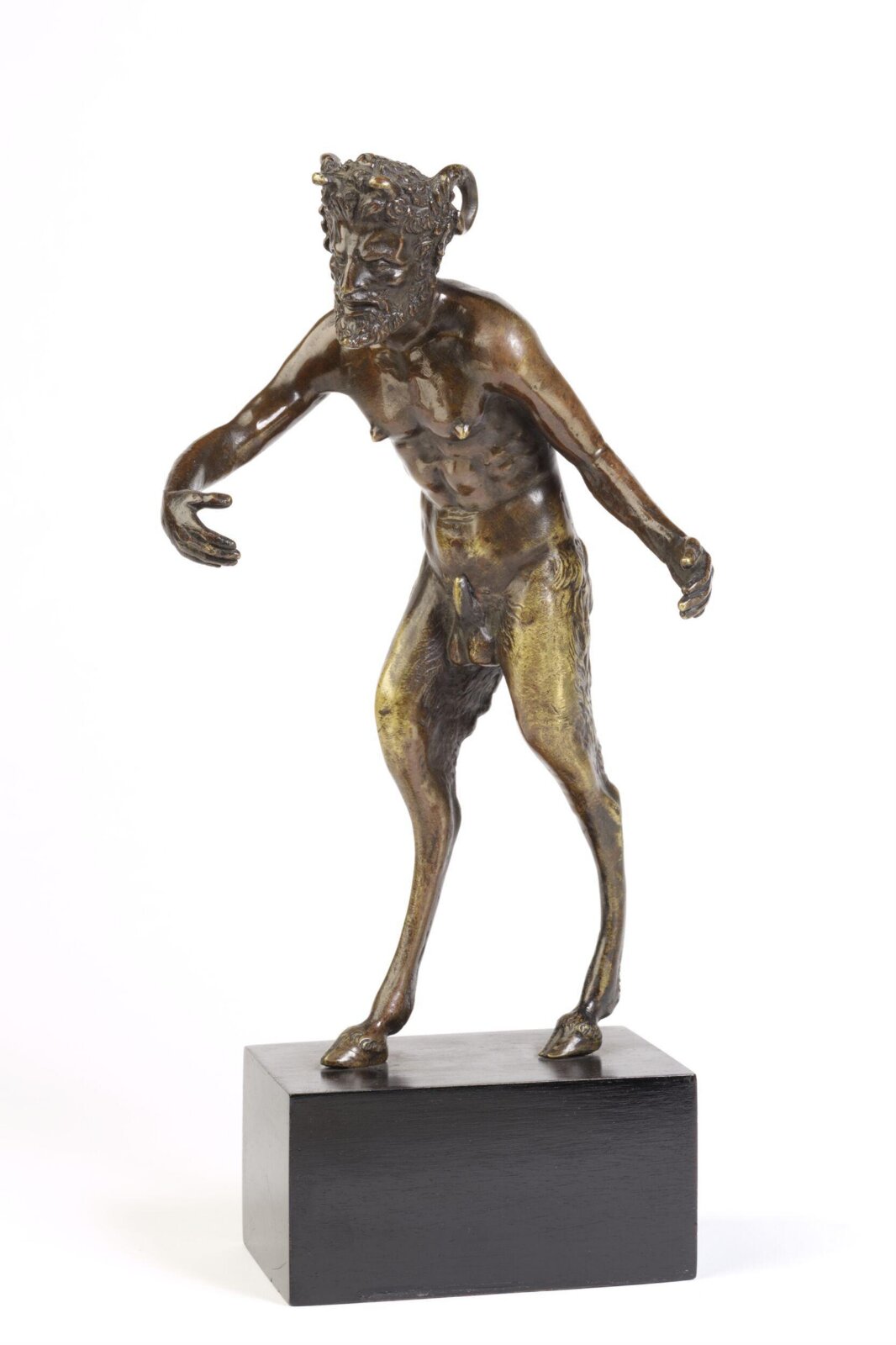
A Satyr
Peut-on la contempler ?
Elle ne reçoit pas en ce moment

Londres, Royaume-Uni
Elle appartient à la collection, mais n’est pas présentée en ce moment.
- Vérifié
- Dans cet état depuis
- Source
- Le musée
À propos de la sculpture
This bronze statuette representing a satyr, is an aftercast with modifications of one figure from a group by Il Riccio in the Museé National de la Renaissance, Ecouen.
Satyrs are the spirits living in woods and hills and are bestial in their behaviour and desires. They have features of animals, either of the horse or the goat. Satyrs are usually young and have Pan's goat details (in contrast to the rather old Sileni with horse ears). They were the attendants of Bacchus. They were lazy and lecherous and spent their time drinking and chasing nymphs. In medieval and Renaissance allegory they represent the evil or rather 'Lust' and may be labelled 'Luxuria' or 'Libido'.
Lire plus
Riccio (1470-1532) - meaning 'Curly-Head' - worked primarily in bronze and is acknowledged as the master of the bronze statuette during the late 15th and early 16th centuries. He was active in the humanist circle of the University of Padua, in north-east Italy. Riccio was trained as a goldsmith and lived and worked all his live in Padua. Today he is acknowledged as one of the greatest bronze sculptors of the Renaissance.
His statuettes, functional objects, like oil lamps, and reliefs reflect Riccio's inimitable ability to express the most refined humanist ideas prevalent in the Veneto in bronze.
He was also a specialist in rendering themes of Classical mythology.
His oeuvre is often neglected because of its small scale, but it constitutes one of the most fascinating manifestations of the poetic paganism of the High Renaissance.
Victoria and Albert Museum
Notice
- Numéro d’inventaire
- A.11-1958
Ce qu’elle montre
Au catalogue
Sources
- Victoria and Albert Museum
- Image : Victoria and Albert Museum — © Victoria and Albert Museum, London