ART WIKI32 963 en salle
CarteCollectionArtistesMuséesExpositionsJournal
Connexion

ART WIKI

Où est accroché le chef-d’œuvre, et quand on vous laisse entrer.

Collections : Art Institute of Chicago, Cleveland Museum of Art, Galerie Tretiakov, Hirshhorn Museum and Sculpture Garden, J. Paul Getty Museum, Metropolitan Museum of Art, Minneapolis Institute of Art, Musée de l'Ermitage, Musée des Beaux-Arts Pouchkine, Musée du Louvre, musée national d'art asiatique, Musée russe, Musées d'Art de Harvard, Museum of Modern Art, National Gallery of Art, National Portrait Gallery, Rijksmuseum Amsterdam, Smithsonian American Art Museum, Statens Museum for Kunst, Victoria and Albert Museum, Villa Getty, Whitney Museum of American Art, Catalogue d’État du fonds muséal de Russie (274 musées), Europeana (19 musées), Wikidata (6 musées), Paris Musées (12 musées) et Joconde, la base des musées du ministère de la Culture (495 musées). Les images appartiennent à leurs ayants droit.

Rubriques

  • Carte
  • Recherche
  • Collection
  • Chefs-d’œuvre
  • Exposées en ce moment
  • Artistes

Et aussi

  • Musées et galeries
  • Expositions
  • Journal
  • D’où viennent les données
  • Confidentialité et cookies
AccueilCarteCatalogue
  1. Collection/
  2. Art Institute of Chicago/
  3. 10/29/52
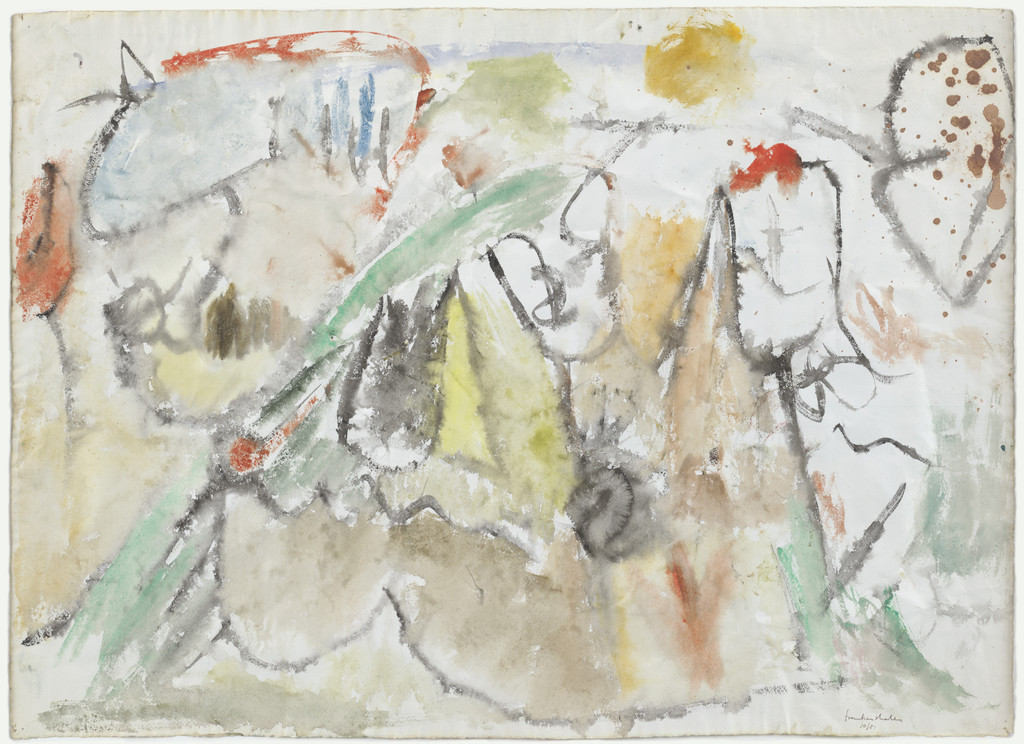
10/29/52, Helen Frankenthaler, 1952
Helen Frankenthaler, portraitHelen FrankenthalerÉtats-Unis, 1928–2011

10/29/52

1952 · Painting

Peut-on la contempler ?

Oui, elle reçoit

Art Institute of Chicago

Chicago, États-Unis

Salle291

Présentée au public. Qui s’en porte garant est indiqué ci-dessous.

Vérifié
avant-hier
Dans cet état depuis
19 août 2026
Source
Le musée
Sur la cartePage du musée

À propos du tableau

10/29/52 illuminates Helen Frankenthaler's abstract approach to landscape. Created at a turning point in her career, this painting demonstrates the "soak stain technique" that she pioneered following a summer spent painting landscapes in Nova Scotia, Canada. Using paint thinner to liquify her oil paint until it was the consistency of watercolor, Frankenthaler introduced a new way of engaging with canvas, which she placed on the floor as opposed to on an easel.

Here, the swirling, undulating forms suggest her affinity for the improvisational compositions of Wassily Kandinsky (on view in Gallery 392) and Arshile Gorky (Gallery 398), and the looping shapes allude to the signature aesthetic of her contemporary Jackson Pollock, whose work is on view nearby.

Art Institute of Chicago · CC BY 4.0

Notice

1952 · à 24 ans
19282011
Numéro d’inventaire
2023.1317

Au catalogue

PeinturesHuilePeinture américaineArt d’après-guerreXXe siècleAbstractÉtats-Unis

Sources

  • Art Institute of Chicago
  • Image : Art Institute of Chicago — © the artist or rights holder

Pendant ce temps, chez Helen Frankenthaler

La vie entière
  1. 1950

    Meets Clement Greenberg

    She meets the critic Clement Greenberg; they have a five-year relationship, and through him she is introduced to the New York art scene — in 1964 he will include her in the exhibition “Post-Painterly Abstraction”.

  2. 1950

    Pollock’s show at the Betty Parsons Gallery

    She sees a Jackson Pollock show for the first time, at the Betty Parsons Gallery: “Autumn Rhythm”, “Number 30, 1950” and “Lavender Mist” impress her so much that she recalls wanting to live in that world and master its language. Other accounts date the show to 1951; after it she adopts Pollock’s method of laying the canvas out on the studio floor.

  3. summer 1950

    A summer with Hans Hofmann

    Under Clement Greenberg’s guidance she spends the summer of 1950 studying with Hans Hofmann, the catalyst of the Abstract Expressionist movement.

  4. autumn 1951

    First solo exhibition at Tibor de Nagy

    Frankenthaler’s first solo exhibition takes place in the fall of 1951 at the Tibor de Nagy Gallery in New York.

  5. 1952

    The “Mountains and Sea” exhibition launches her career

    The exhibition of “Mountains and Sea” launches her official career as a painter; throughout the 1950s her compositions tend to be centred.

  6. 1953

    Louis and Noland see “Mountains and Sea”

    Kenneth Noland and Morris Louis see “Mountains and Sea”, which Louis later calls a bridge between Pollock and what was possible.
Autres œuvres : Helen Frankenthaler

Toutes les œuvres
Rio Grande, Helen Frankenthaler, 1987

Rio Grande

1987 · Minneapolis Institute of Art

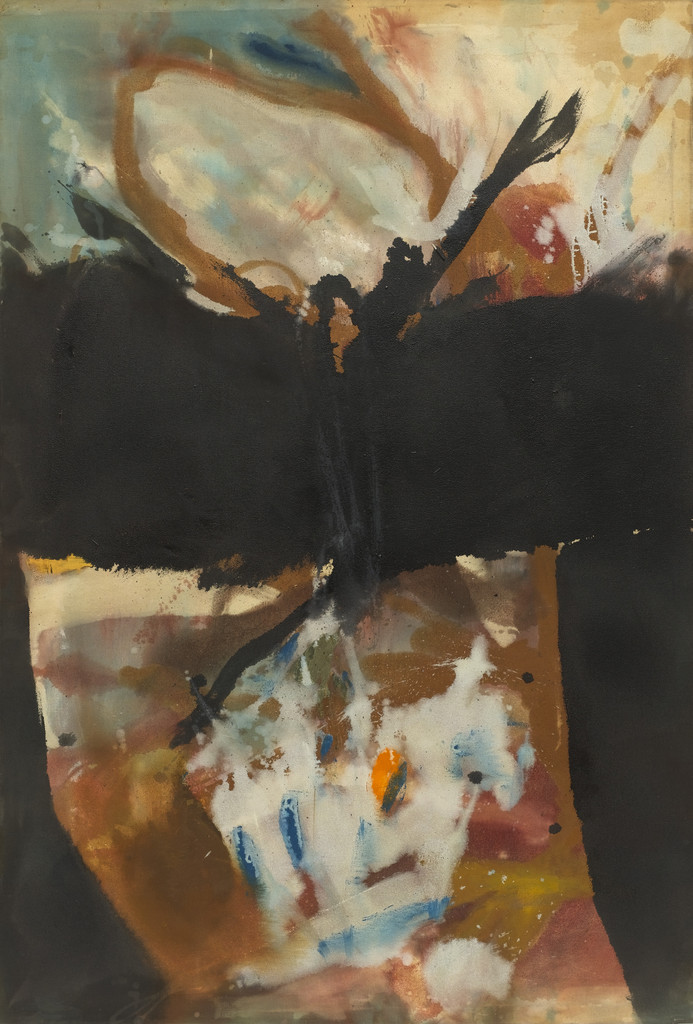
Blue Form in a Scene, Helen Frankenthaler, 1961

Blue Form in a Scene

1961 · Whitney Museum of American Art

Great Meadows (recto); Untitled (Landscape) (verso), Helen Frankenthaler, 1951

Great Meadows (recto); Untitled (Landscape) (verso)

1951 · Non exposée · Museum of Modern Art

Trojan Gates, Helen Frankenthaler, 1955

Trojan Gates

1955 · Non exposée · Museum of Modern Art

Jacob's Ladder, Helen Frankenthaler, 1957

Jacob's Ladder

1957 · Non exposée · Museum of Modern Art

First Stone, Helen Frankenthaler, 1961

First Stone

1961 · Non exposée · National Gallery of Art

Brown Moons, Helen Frankenthaler, 1961

Brown Moons

1961 · Non exposée · National Gallery of Art

Brown Moons, Helen Frankenthaler, 1961

Brown Moons

1961 · Non exposée · Museum of Modern Art

Sous le même toit : Art Institute of Chicago

Page du musée
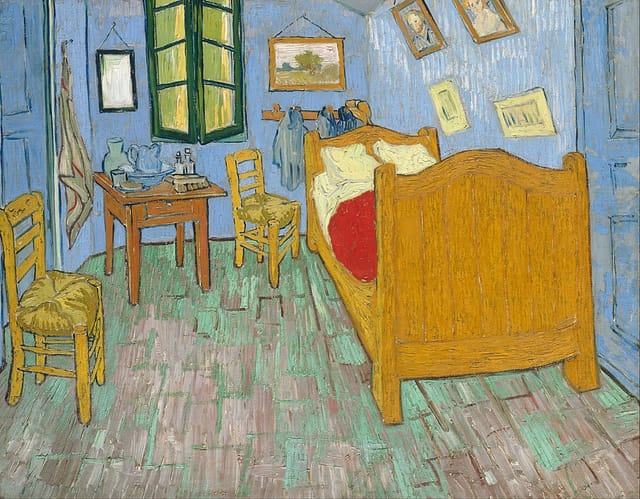
The Bedroom, Vincent van Gogh, 1889

Vincent van Gogh

The Bedroom, 1889

A Sunday on La Grande Jatte — 1884, Georges Seurat, 1884–86, border added 1888–89

Georges Seurat

Un dimanche après-midi à l'Île de la Grande Jatte, 1884–86, border added 1888–89

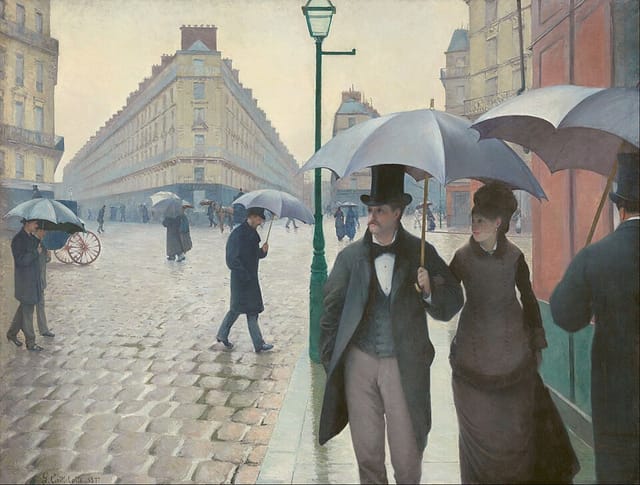
Paris Street; Rainy Day, Gustave Caillebotte, 1877

Gustave Caillebotte

Rue de Paris, temps de pluie, 1877

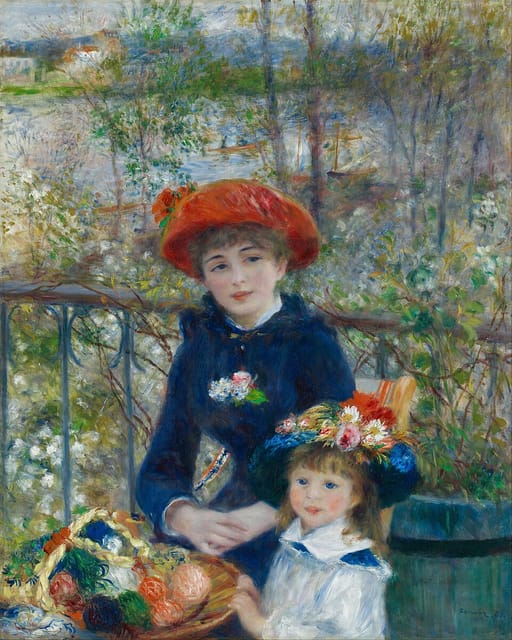
Two Sisters (On the Terrace), Pierre-Auguste Renoir, 1881

Pierre-Auguste Renoir

Les Deux Sœurs, 1881

The Basket of Apples, Paul Cézanne, c. 1893

Paul Cézanne

La Corbeille de pommes, c. 1893

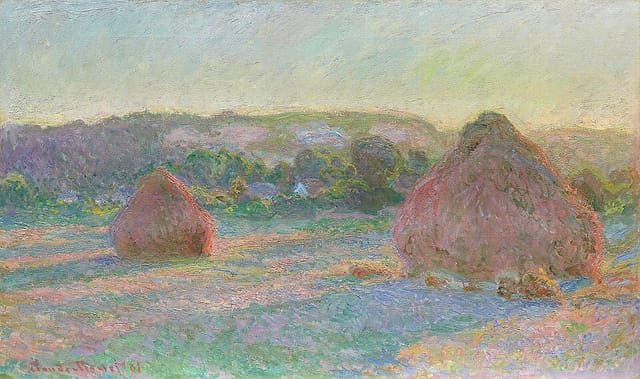
Stacks of Wheat (End of Summer), Claude Monet, 1890–91

Claude Monet

Stacks of Wheat (End of Summer), 1890–91

American Gothic, Grant Wood, 1930

Grant Wood

American Gothic, 1930

Nighthawks, Edward Hopper, 1942

Edward Hopper

Nighthawks, 1942