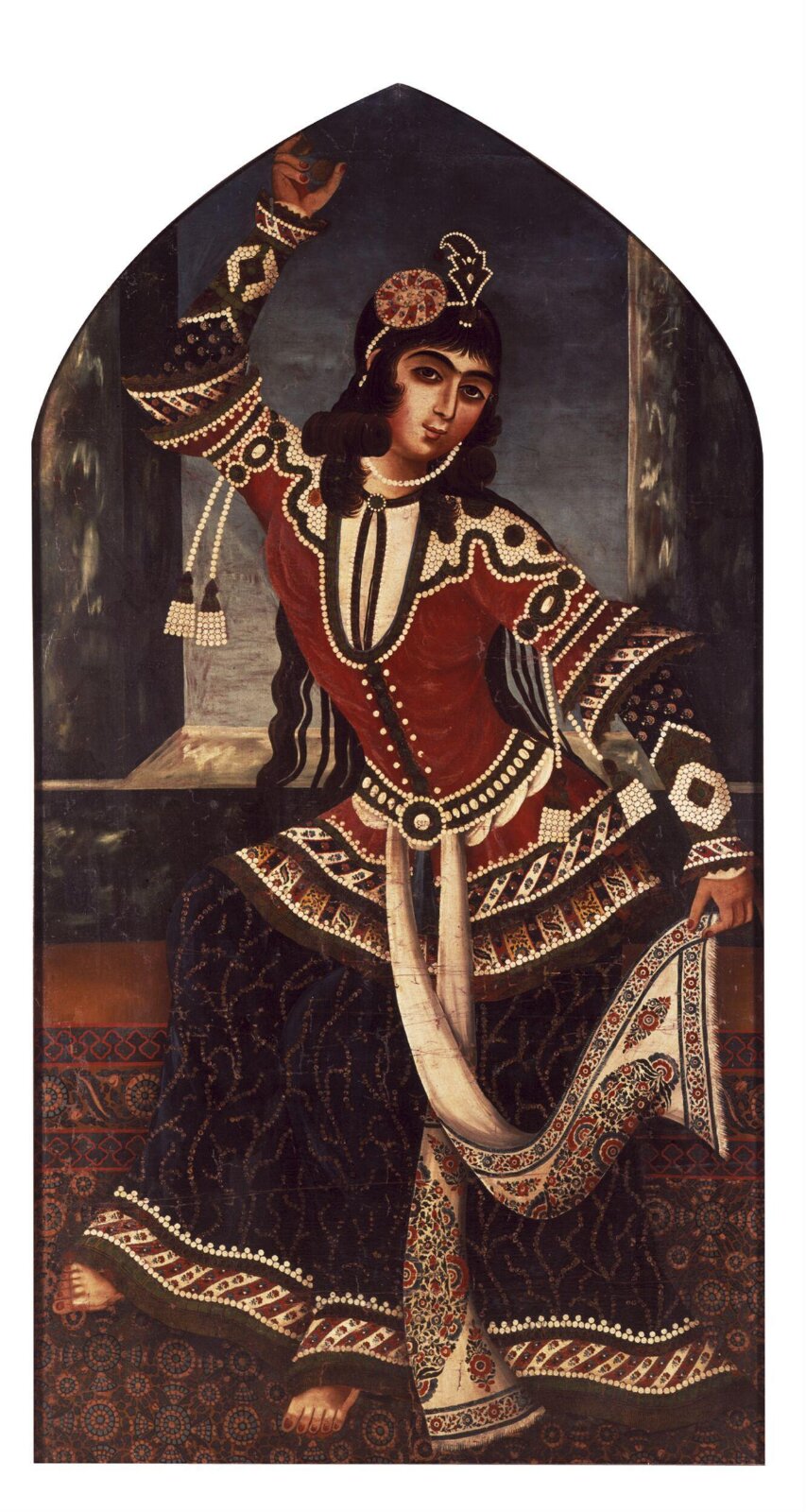
Woman Dancing
¿Se puede contemplar?
Se desconoce: el museo guarda silencio

Museo de Victoria y Alberto
Londres, Reino Unido
Se sabe quién es el propietario. Si hoy está expuesta, el museo no lo dice, y a adivinar no nos enseñaron.
- En este estado desde
- 25 sept 2026
- Fuente
- Los datos de colección del propio museo
About the painting
The painting may well have been removed from a palace erected during the reign of Fath 'Ali Shah, who ruled Iran between 1797 and 1834. His residences were often decorated with series of oil paintings in this style, which were built into the walls. The individual paintings are usually portraits of a single, large human figure. The shapes of the figures are flattened out, but there is a great deal of decorative detail.
Many of the series painted for Fath 'Ali Shah show imaginary portraits of members of a royal harem. In this case, a woman is shown dancing.
Read on
Painting in oils was introduced to Iran after 1600, when the country had strong commercial links with Europe. Production shrank during the troubled period after the Afghan invasion of Iran in 1722. It burst back into life under the Qajar dynasty, who re-united the country in the 1780s and 1790s. Fath 'Ali Shah was the second ruler of this dynasty, and his patronage led to this revival of oil painting.
Museo de Victoria y Alberto
Ficha
- Número de inventario
- P.21-1933
En el catálogo
Fuentes
- Museo de Victoria y Alberto: the museum's own open data · obtenido hace 4 días
- Imagen: Museo de Victoria y Alberto — © Victoria and Albert Museum, London