 Zhu DaChina, 1626–1705
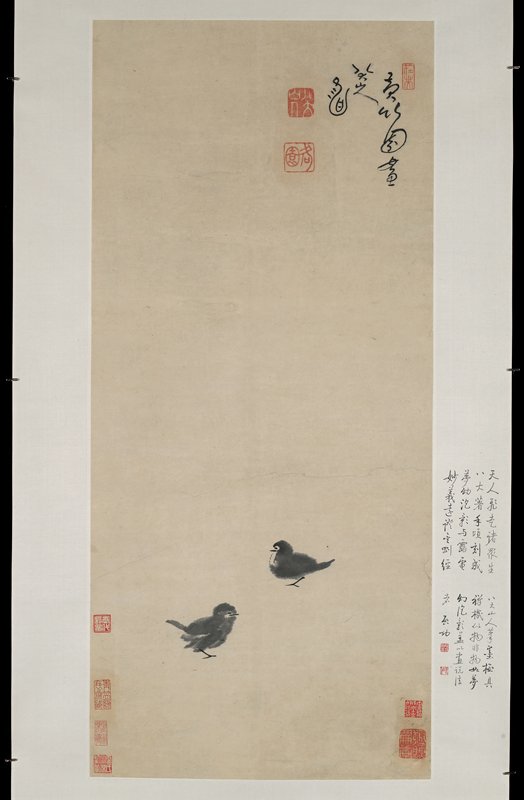
Two Chicks
¿Puedo verla?
No expuesta por ahora
¿Dónde está «Two Chicks» hoy? Colección: Instituto de Artes de Mineápolis, Minneapolis. No expuesta por ahora. Comprobado 23 de noviembre de 2026.

Minneapolis, Estados Unidos
Pertenece a la colección, pero ahora mismo no está expuesta.
- Comprobado
- En este estado desde
- Fuente
- El museo
Sobre el cuadro
The birds avoid each other's gaze in Zhu Da's Two Chicks, painted around 1694 and now in the Minneapolis Institute of Art, Minneapolis. Their separate positions likely express his loyalty to the fallen Ming and rejection of Manchu rule. Using the name Bada Shanren, Zhu Da belonged to the displaced imperial lineage. His inscription locates the painting in the Garden of Yellow Bamboo and dates it to day nineteen in lunar month three. That day commemorates the last Ming emperor's suicide in 1644 as rebel troops approached the capital.
En palabras del museo
Zhu Da, also known as Bada Shanren, often expressed complex ideas using simple images. It is likely that these quickly rendered chicks express the artist's loyalty to the former Ming dynasty, while indicating his contempt for the ruling Manchus. Zhu Da saw himself as being in, but not part of, the society around him. With his imperial lineage eradicated by the conquering Manchus, he was unable to submit to the foreign rulers.
Although the chicks are of the same species and face in complementary directions, they do not look at each other. Each isolated chick exists in a separate world. The inscription reads: Painted in the Garden of Yellow Bamboo by Bada Shanren, the nineteenth day of the third lunar month. The nineteenth day of the third lunar month is now known to commemorate the day in 1644 when the last Ming emperor hanged himself as rebel forces approached the capital.
Instituto de Artes de Mineápolis
Ficha
- Número de inventario
- 97.133.1
En el catálogo
Fuentes
- Instituto de Artes de Mineápolis
- Imagen: Instituto de Artes de Mineápolis — public domain