Jean François MilletFrancia, 1814–1875
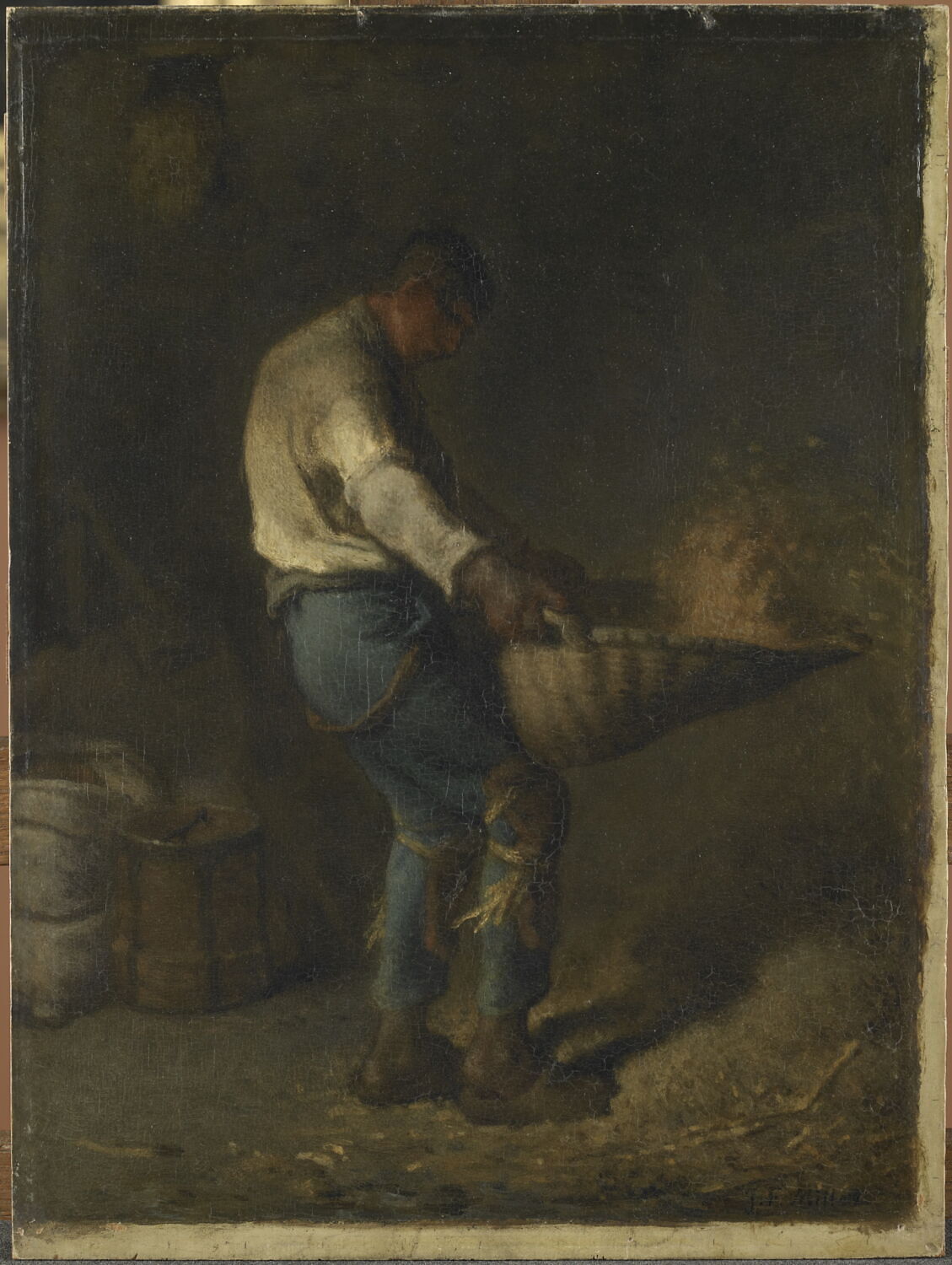
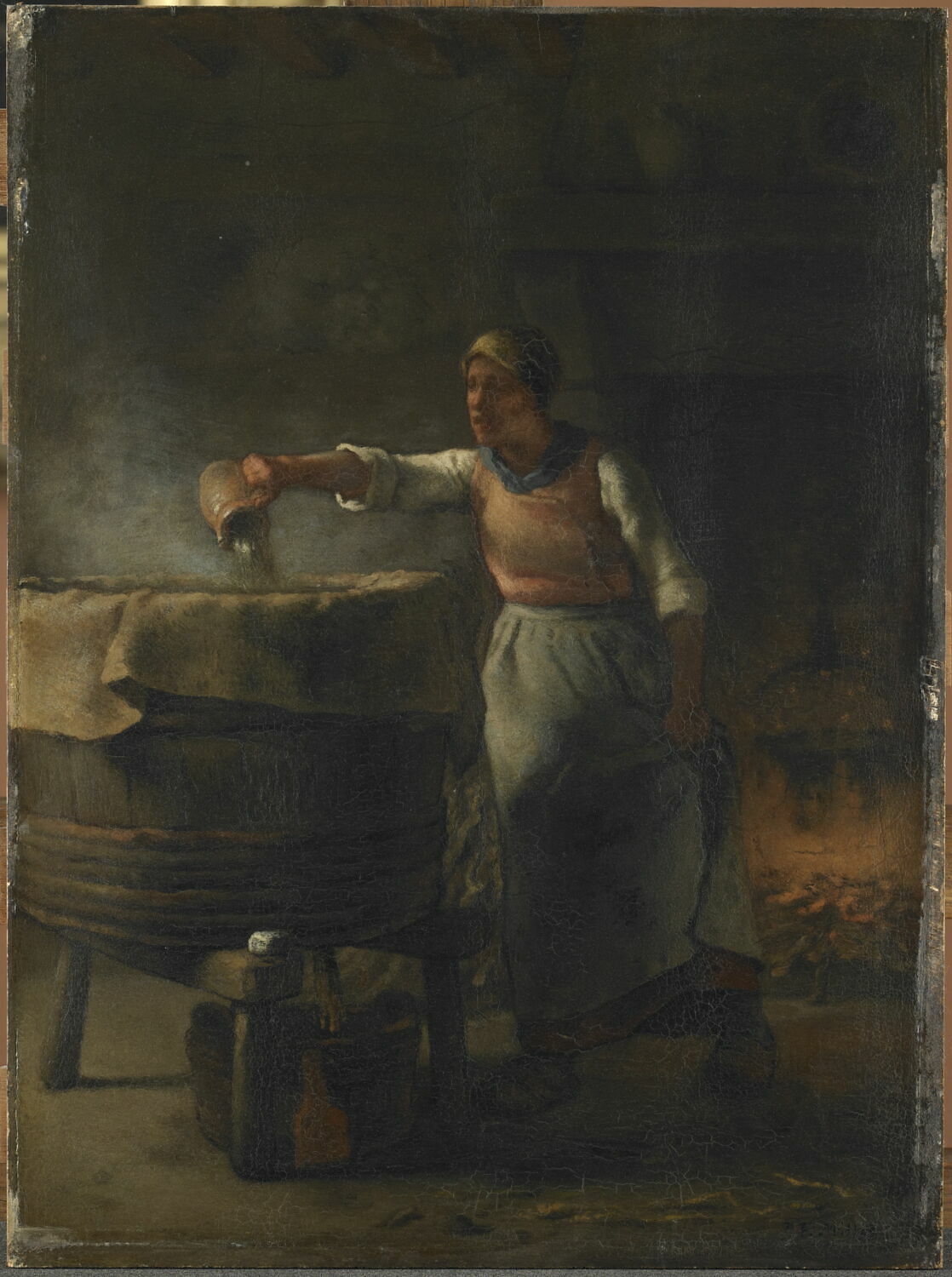
The Winnower
¿Puedo verla?
No expuesta por ahora
¿Dónde está «The Winnower» hoy? Colección: National Gallery, Londres. No expuesta por ahora. Comprobado 12 de octubre de 2026.

Londres, Reino Unido
Pertenece a la colección, pero ahora mismo no está expuesta.
- Comprobado
- En este estado desde
- Fuente
- El sitio web del museo
Sobre el cuadro
El aventador es un cuadro del pintor del realismo francés Jean-François Millet, realizado en 1848, que se encuentra en el Museo del Louvre. Existen varias copias (en la National Gallery de Londres, Museo de Orsay) del original, ya destruido, siendo la del Museo de Orsay comprada por el ministro de interior de la Segunda República Francesa, Ledru-Rollin.
Ficha
- Número de inventario
- NG6447
En el catálogo
Exposiciones
Ahora no está expuesta
National Gallery · 12 oct 2026 — hoy · Verificado
Se desconoce si estaba expuesta
National Gallery · 29 sept 2026 — 12 oct 2026 · Sin confirmar
Fuentes
- Wikidata
- Imagen: National Gallery — Jean-François Millet · Public domain · Wikimedia Commons
En la vida de Jean François Millet
La vida enteramid-1840s
Friends in Paris: Rousseau, Daumier, Sensier
In Paris in the middle 1840s Millet befriended Constant Troyon, Narcisse Diaz, Charles Jacque and Théodore Rousseau, artists later associated with the Barbizon school; Honoré Daumier, whose figure draftsmanship influenced his rendering of peasant subjects; and Alfred Sensier, a government bureaucrat who became a lifelong supporter and eventually his biographer.
1847
First Salon success: “Oedipus Taken Down from the Tree”
In 1847 his first Salon success came with the exhibition of the painting “Oedipus Taken Down from the Tree”.
1848
The government buys “The Winnower”
In 1848 his “Winnower” was bought by the government.
1849
The move to Barbizon
In June 1849 Millet settled in Barbizon with Catherine and their children.
1850
An arrangement with Alfred Sensier
In 1850 Millet entered into an arrangement with Sensier, who provided the artist with materials and money in return for drawings and paintings, while Millet remained free to sell work to other buyers.
1850
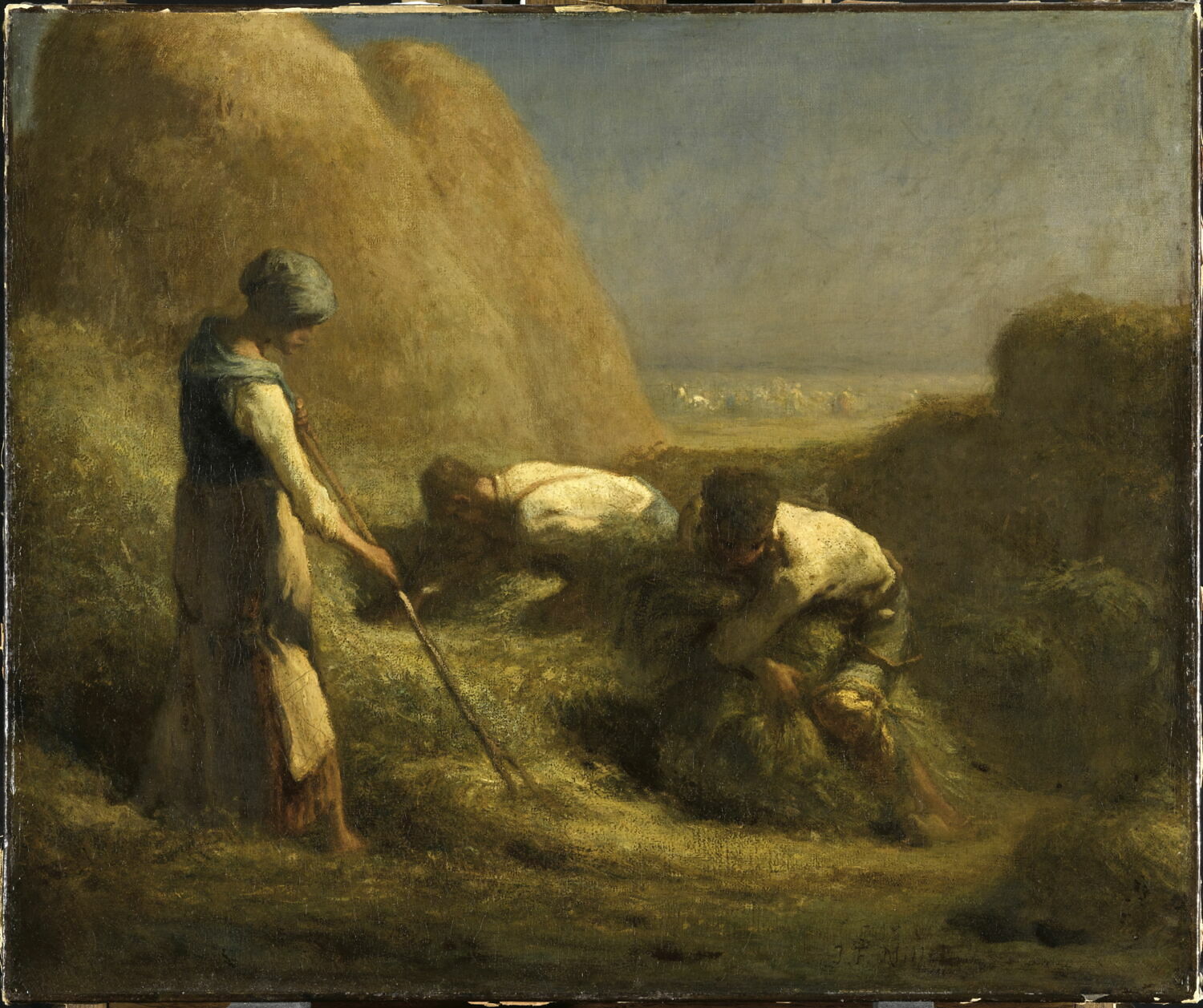
The Salon of 1850: “The Sower” and “Haymakers”
At that year’s Salon he exhibited “Haymakers” and “The Sower”, his first major masterpiece and the earliest of the iconic trio of paintings that also included “The Gleaners” and “The Angelus”.