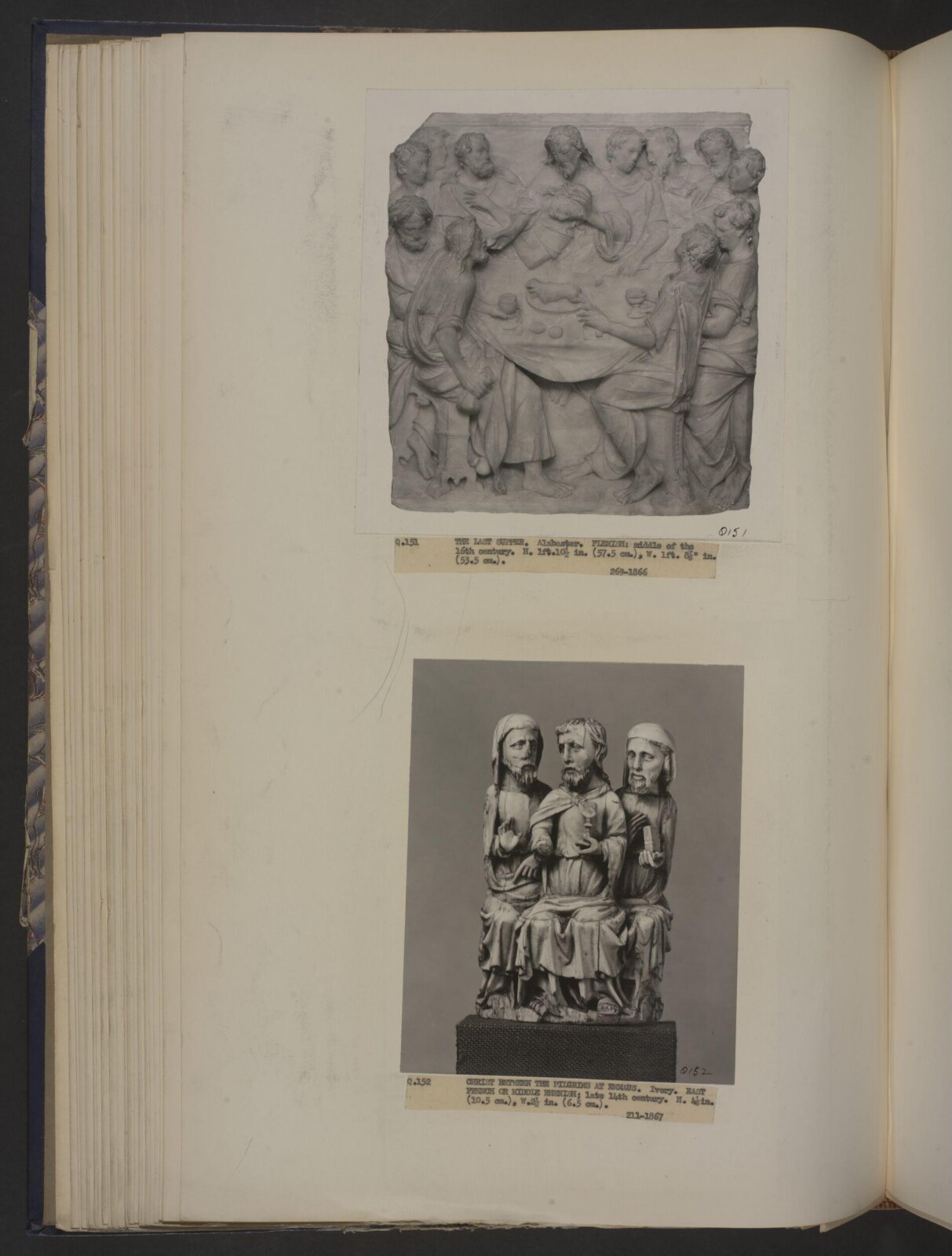
The Last Supper
¿Se puede contemplar?
Por ahora no recibe

Museo de Victoria y Alberto
Londres, Reino Unido
Pertenece a la colección, pero ahora mismo no está expuesta.
- Comprobado
- hace 8 días
- En este estado desde
- 25 sept 2026
- Fuente
- Los datos de colección del propio museo
About the sculpture
This is an alabaster relief made in the middle of the 16th century in Flanders. The relief represents the Last Supper and is carved in high relief and set in an oaken frame.
Alabaster, a fine grained form of gypsum, is a smooth marble-like stone that was popular for the carving of religious sculpture. Softer than marble, it was much easier to carve and also considerably cheaper.
Read on
The southern Netherlands were an important centre for the production of alabaster sculpture during the 15th century, and while not producing the numbers that the English alabaster workshops turned out, they certainly exceeded their English counterparts in quality of craftsmanship. The English alabaster-carvers dominated the lower end of the market, catering for patrons right across Europe who could not afford to spend very much but were eager to furnish their parish churches and homes with religious imagery. The Netherlandish workshops, by contrast, produced fewer but many times more carefully finished alabaster sculptures, which were also considerably more expensive to buy.
Museo de Victoria y Alberto
Ficha
- Número de inventario
- 269-1866
What it shows
En el catálogo
Fuentes
- Museo de Victoria y Alberto: the museum's own open data · obtenido hace 8 días
- Imagen: Museo de Victoria y Alberto — © Victoria and Albert Museum, London