ART WIKI32.963 en sala
MapaColecciónArtistasMuseosExposicionesRevista
Acceder

ART WIKI

Dónde cuelga la obra maestra y cuándo le dejan pasar.

Colecciones: Galería Nacional de Arte, Galería Nacional de Dinamarca, Galería Nacional de Retratos, Galería Tretiakov, Harvard Art Museums, Instituto de Arte de Chicago, Instituto de Artes de Mineápolis, MoMA, Museo de Arte de Cleveland, Museo de Victoria y Alberto, Museo del Hermitage, Museo del Louvre, Museo Estatal Ruso, Museo Hirshhorn y Jardín de Esculturas, Museo J. Paul Getty, Museo Metropolitano de Arte, Museo Pushkin, Museo Smithsoniano de Arte Americano, Museo Whitney de Arte Estadounidense, National Museum of Asian Art, Rijksmuseum, Villa Getty, Catálogo Estatal del Fondo Museístico de Rusia (274 museos), Europeana (19 museos), Wikidata (6 museos), Paris Musées (12 museos) y Joconde, la base de museos del Ministerio de Cultura de Francia (495 museos). Las imágenes pertenecen a sus titulares de derechos.

Secciones

  • Mapa
  • Búsqueda
  • Colección
  • Obras maestras
  • Expuestas ahora
  • Artistas

Más

  • Museos y galerías
  • Exposiciones
  • Revista
  • De dónde salen los datos
  • Privacidad y cookies
InicioMapaCatálogo
  1. Colección/
  2. Museo de Victoria y Alberto/
  3. The Fallen Angel
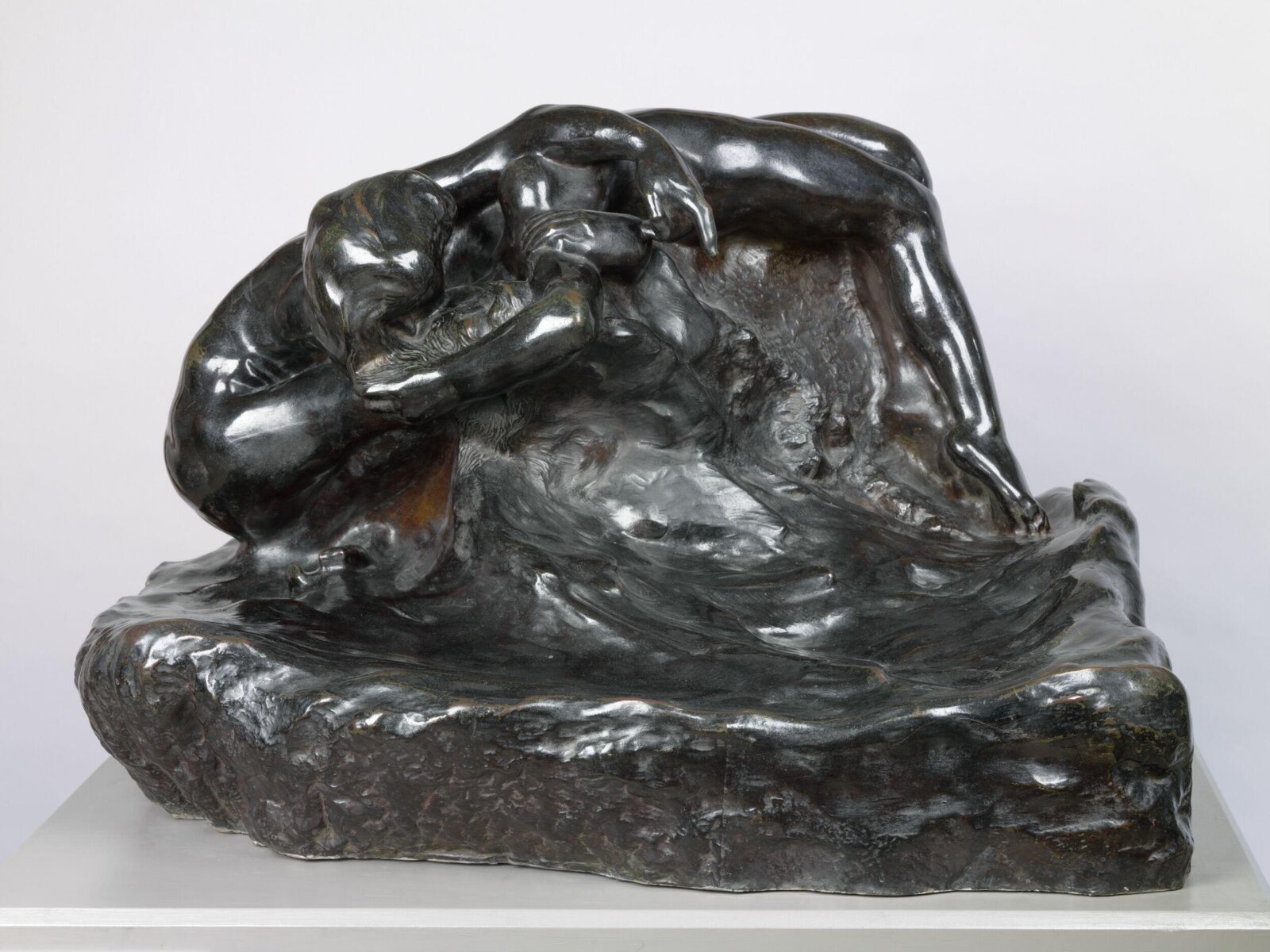
The Fallen Angel, Auguste Rodin, ca. 1895-1900

The Fallen Angel

ca. 1895-1900 · Group · 53.3 × 81.2 cm

Sobre la escultura

Rodin explored the human form in extreme physical and emotional states in a number of works (for example, 'The Prodigal Son'; museum number A.34-1914). Here a winged figure has collapsed on the ground and is held by a second naked female. The group is thought to evoke the vain flight of our illusions, though the intimacy of the two figures may also reflect Rodin's interest in the writing of Baudelaire.

Seguir leyendo

Rodin extracted single figures from groups to create individual pieces, or used existing individual figures in new combinations to form groups. The winged figure here, for example, is based on the Torso of Adèle, first modelled in the late 1880s as a siren figure for a villa in Nice. It was reused later on The Gates of Hell (the bronze portal and doors for the new Museum of Decorative Arts, Paris, which Rodin was asked to design in 1880, where it appears upper left of the tympanum, the rectangular panel immediately above the doors), and as a kneeling figure in Eternal Spring.

Rodin's appreciation of the formal aspects of the human body and his facility for creating new compositions was inspired by his vast collection of models and plaster casts. Turning them in his hand, he examined their formal properties and considered how the different pieces might be combined to create new sculpture.

This group has been known as 'The Fall of Icarus', and 'Illusion falls with broken wings, the earth receives him', but is now generally known by its present title. Just as Rodin changed the formal elements of his sculpture he also changed their titles equally frequently. (See also 'France', Museum no. A.39-1914).

Mientras tanto, en la vida de Auguste Rodin

La vida entera
  1. 1890s–1900s

    Young sculptors in Rodin's studio

    His income let him hire gifted young sculptors, among them Antoine Bourdelle, Charles Despiau, Jules Desbois, François Pompon and Aristide Maillol. Constantin Brancusi left after two months, convinced that nothing grows under a big tree.

  2. 1893

    Chicago: nudes behind a drape

    Through the curator Sarah Hallowell, Rodin sent “Cupid and Psyche”, “Sphinx” and “Andromeda” to the Chicago World's Fair; the nudes caused such controversy that they were hidden behind a drape, with special permission needed to see them. Even so, the financier Charles Yerkes bought two large marbles and was probably the first American to own a Rodin.

  3. 1895

    Buys the Villa des Brillants at Meudon

    Rodin bought the Villa des Brillants estate near Paris and moved his studio there, but there was not enough room and two years later it went back to Paris. His income let him collect: Egyptian, Greek and Roman sculpture, Persian miniatures and paintings by his contemporaries, including Van Gogh's “Portrait of Père Tanguy”.

  4. 1898

    Parts from Camille Claudel

    Rodin never gave up Rose Beuret, his companion of the lean years and the mother of his son; in 1898 he and Claudel parted. A few years later Claudel suffered what is called a nervous breakdown, and her family confined her to an institution for thirty years.

  5. 1898

    The scandal over “Balzac”
Más obras de Auguste Rodin

Todas las obras

En la misma sala · Sculpture, Room 21, The Dorothy and Michael Hintze Galleries, Museo de Victoria y Alberto

Página del museo
Museo de Victoria y Alberto

Ficha

ca. 1895-1900
18401917
Número de inventario
A.37-1914

Fuentes

  • Museo de Victoria y Alberto
  • Imagen: Museo de Victoria y Alberto — © Victoria and Albert Museum, London

The monument's showing in 1898 caused a storm: the Société des Gens de Lettres rejected it, the press ran parodies, and Monet, Debussy and the future premier Clemenceau signed a manifesto in Rodin's defence. Rodin repaid the commission and moved the statue to his garden; he never completed another public commission.

  • 1900

    Rodin's pavilion at the World's Fair

    The French government gave him an entire pavilion: a retrospective of 136 sculptures and 14 unfinished works showed “The Gates of Hell” for the first time. The exhibition brought sales of sculptures to museums around the world worth about 200,000 francs.

  • Auguste Rodin, retratoAuguste RodinFrancia, 1840–1917

    ¿Se puede contemplar?

    Sí, recibe visitas

    Museo de Victoria y Alberto

    Londres, Reino Unido

    SalaSculpture, Room 21, The Dorothy and Michael Hintze Galleries

    Expuesta al público. Quién lo avala figura más abajo.

    Comprobado
    hace 12 días
    En este estado desde
    25 sept 2026
    Fuente
    El museo
    En el mapaPágina del museo
    Adam, Auguste Rodin, modeled 1880 or 1881, cast 1910

    Adam

    modeled 1880 or 1881, cast 1910 · Museo Metropolitano de Arte

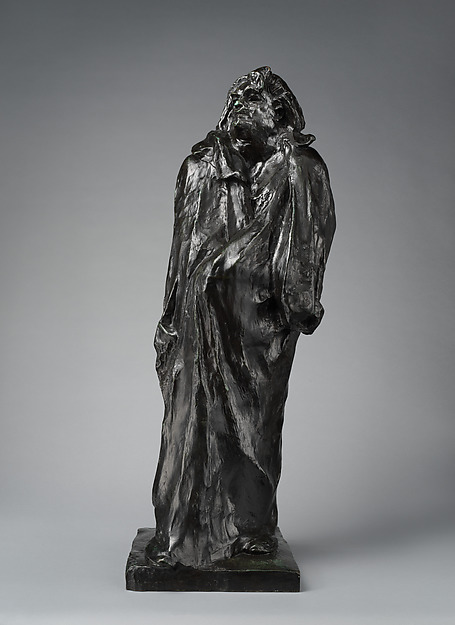
    Honoré de Balzac, Auguste Rodin, 1891

    Honoré de Balzac

    1891 · Museo Metropolitano de Arte

    Statuette of a Woman, Auguste Rodin, early 1880s

    Statuette of a Woman

    early 1880s · Galería Nacional de Arte

    Statuette of a Woman, Auguste Rodin, possibly early 20th century

    Statuette of a Woman

    possibly early 20th century · Galería Nacional de Arte

    Head of a Woman, Auguste Rodin, possibly 1880s

    Head of a Woman

    possibly 1880s · Galería Nacional de Arte

    Final Study for the Monument to Balzac, Auguste Rodin, modeled 1897, cast 1972

    Final Study for the Monument to Balzac

    modeled 1897, cast 1972 · Museo Metropolitano de Arte

    The Burghers of Calais, Auguste Rodin, modeled 1884–95, cast 1985

    The Burghers of Calais

    modeled 1884–95, cast 1985 · Museo Metropolitano de Arte

    Torso, Auguste Rodin, modeled ca. 1877–78, cast 1979

    Torso

    modeled ca. 1877–78, cast 1979 · Museo Metropolitano de Arte

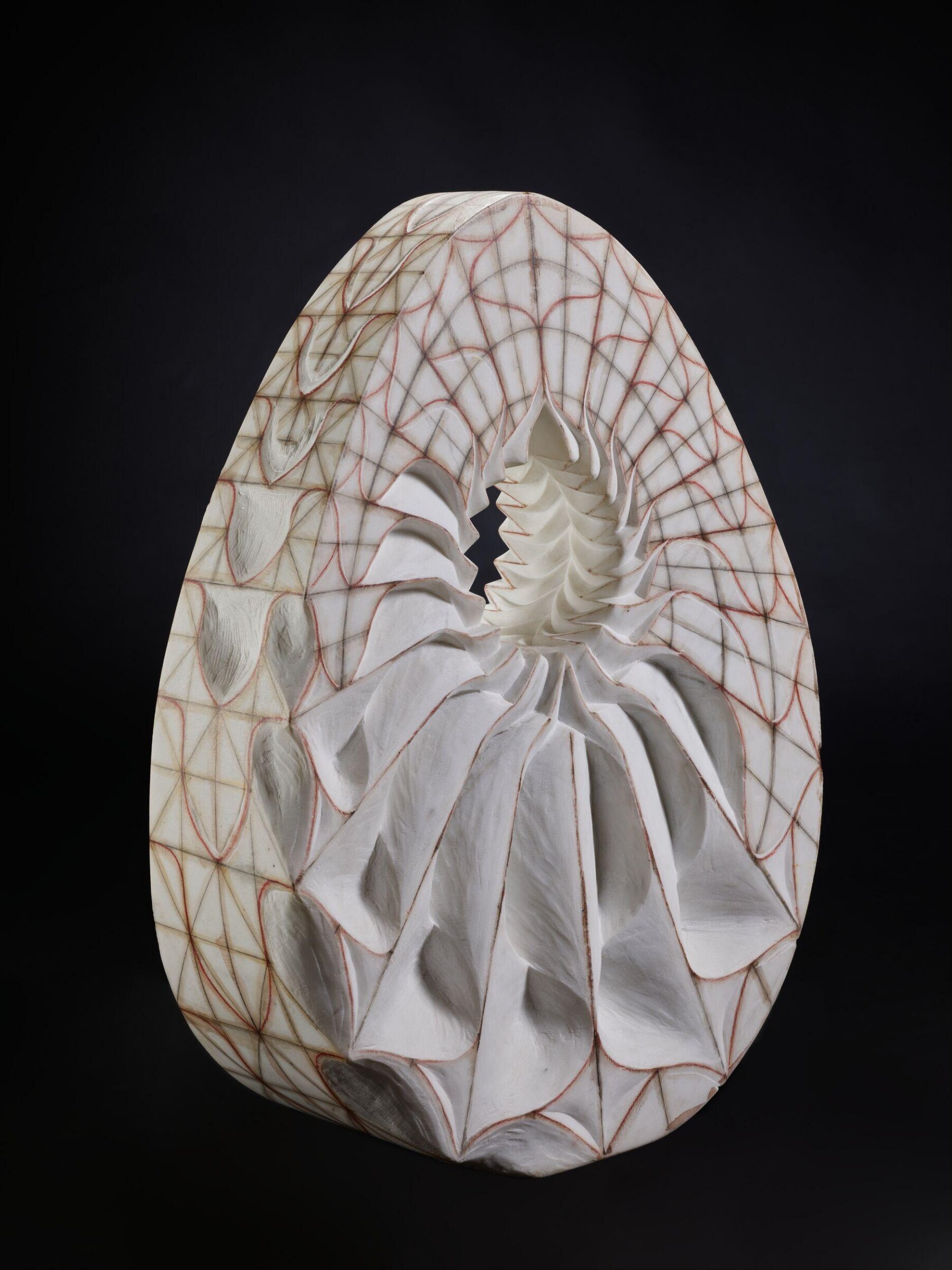
    Bow Wave, Halima Cassell, MBE, FRSS, 2012

    Halima Cassell, MBE, FRSS

    Bow Wave, 2012

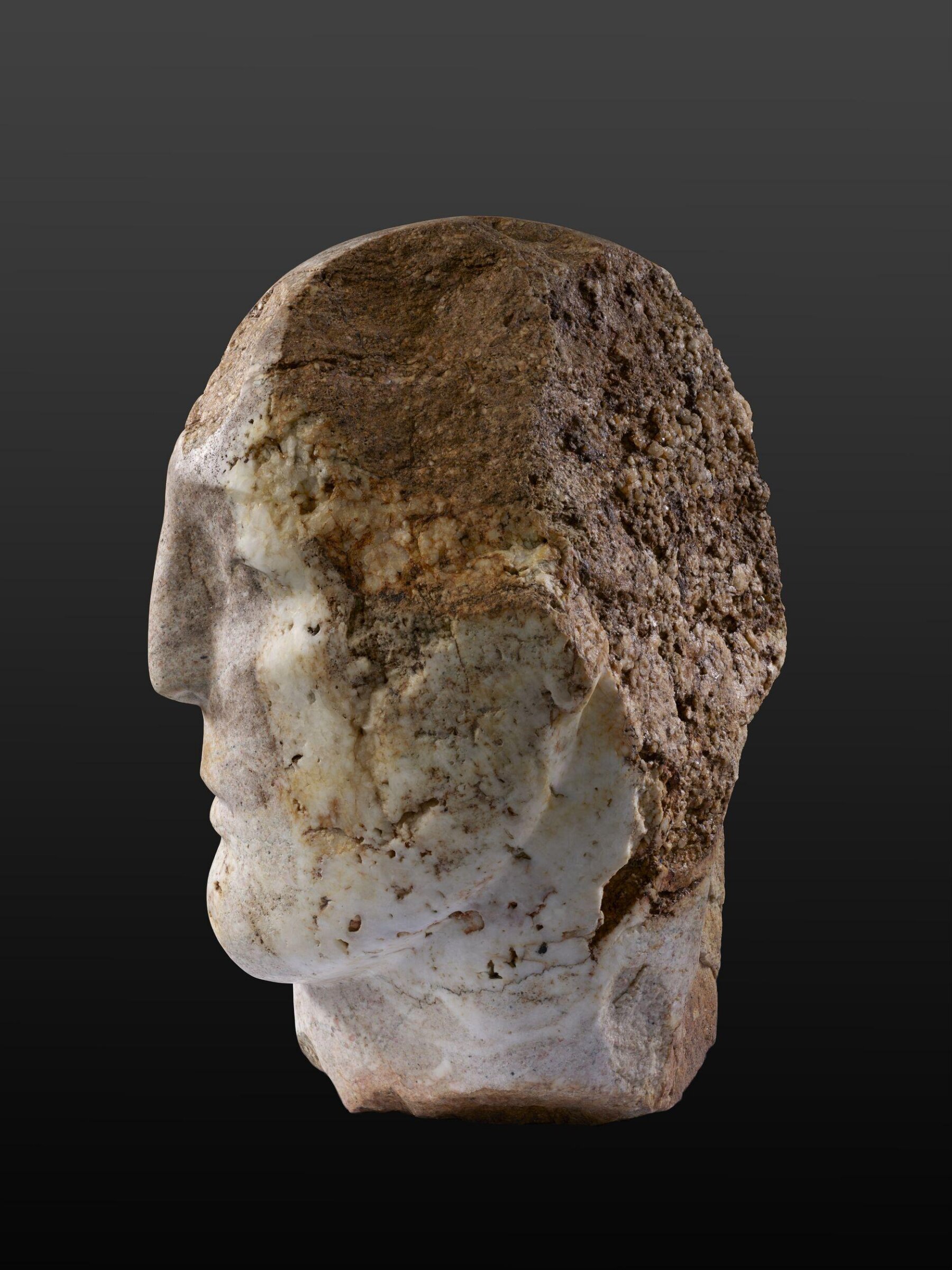
    Warrior Poet, Emily Young, 2011

    Emily Young

    Warrior Poet, 2011

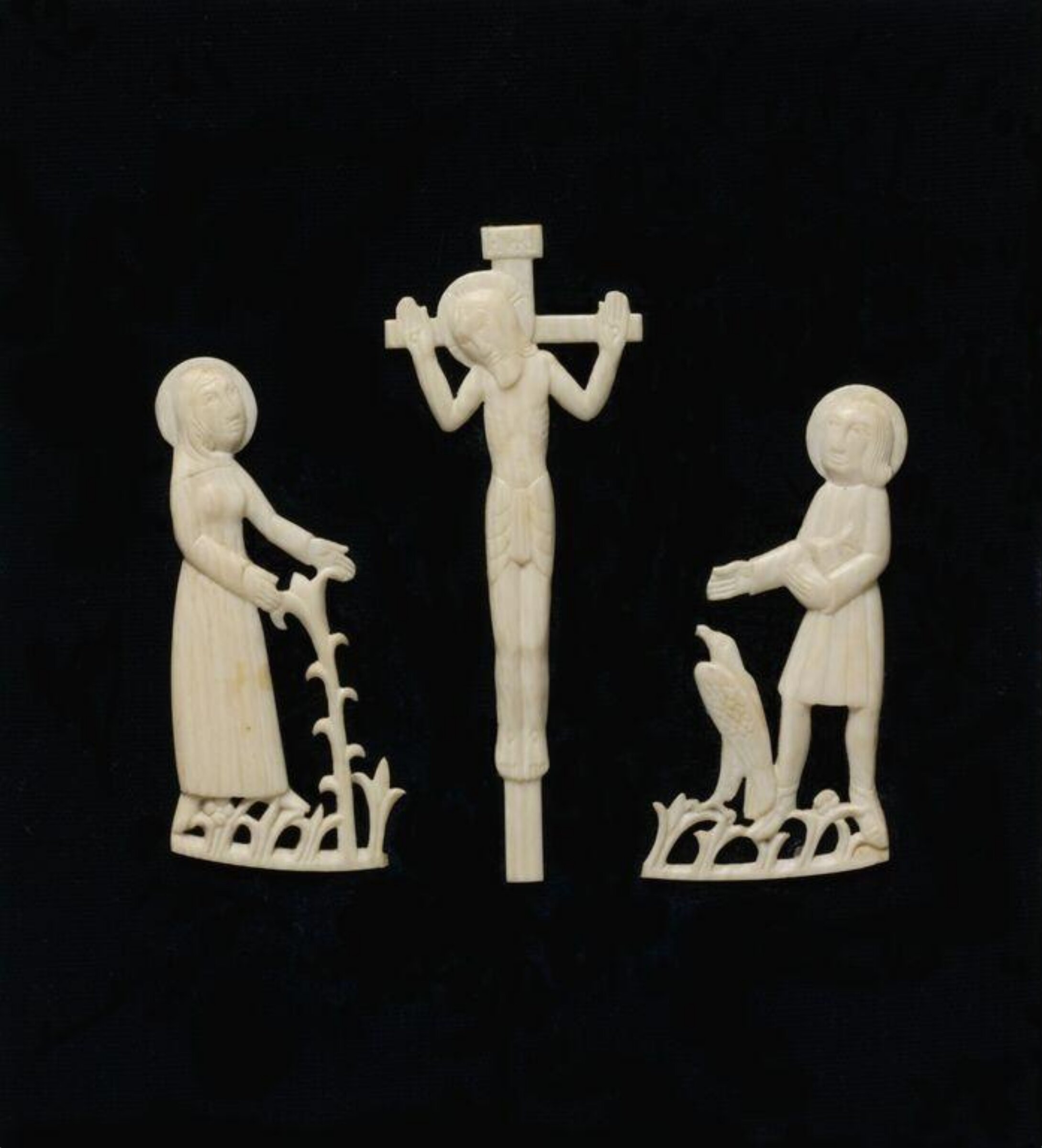
    Crucifixion, Dunstan Pruden, ca. 1935 - ca. 1940

    Dunstan Pruden

    Crucifixion, ca. 1935 - ca. 1940

    Mindslave: The Mind in Abject Subordination to the Intellect, Leon Underwood, 1934

    Leon Underwood

    Mindslave: The Mind in Abject Subordination to the Intellect, 1934

    Crouching Youth, Winifred Turner, ca. 1934

    Winifred Turner

    Crouching Youth, ca. 1934

    Male and female nude figures, Maurice Lambert, ca. 1930 - ca. 1932

    Maurice Lambert

    Male and female nude figures, ca. 1930 - ca. 1932

    Scandal, Charles Sargeant Jagger, 1930

    Charles Sargeant Jagger

    Scandal, 1930

    Tahitian woman, Robert Gibbings, ca. 1929 - ca. 1931

    Robert Gibbings

    Tahitian woman, ca. 1929 - ca. 1931

    En el catálogo

    EsculturaBronceImpresionismoSiglo XIXFrancia