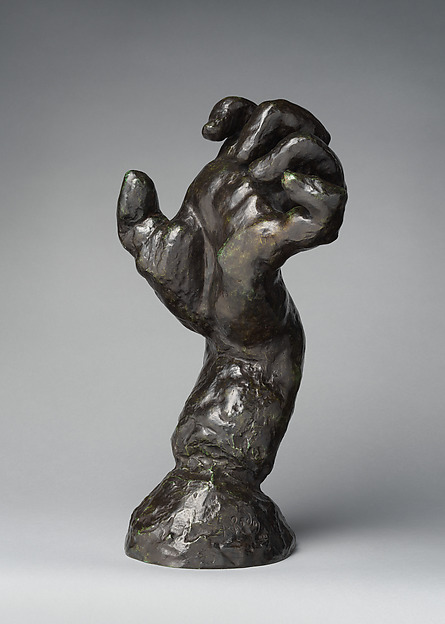
Auguste RodinFrancia, 1840–1917
The Evil Spirits
¿Puedo verla?
Sí, expuesta ahora
¿Dónde está «The Evil Spirits» hoy? Galería Nacional de Arte, Sala 3 · Edificio Oeste, planta baja, Washington D. C. Sí, expuesta ahora. Comprobado 23 de noviembre de 2026.

Abierto· hasta las 17:00
Expuesta al público.
- Comprobado
- En este estado desde
- Fuente
- El museo
Sobre la escultura
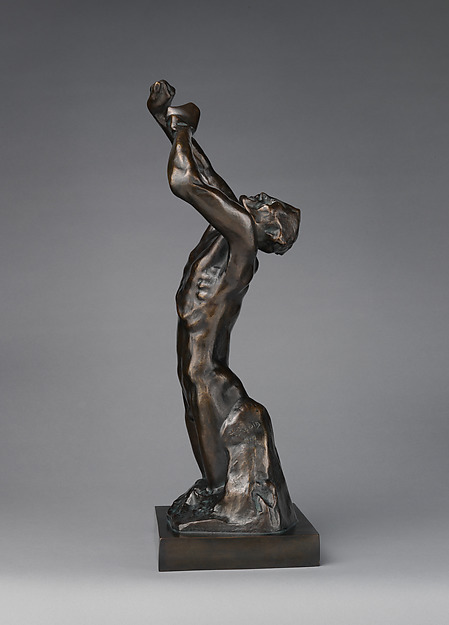
The Evil Spirits is Auguste Rodin's marble group from around 1899, now at Washington's National Gallery of Art. Intertwined bodies bend around a central seated figure, with smooth surfaces rising from a roughly carved base. The sculpture measures 71.2 cm high, 75.7 cm wide and 59 cm deep. It appeared under the title Three Figures in 1946.
Ficha
- Número de inventario
- 1942.5.17
Lo que muestra
En el catálogo
Fuentes
- Galería Nacional de Arte
- Imagen: Galería Nacional de Arte — Museum open access
En la vida de Auguste Rodin
La vida entera1890s–1900s
Young sculptors in Rodin's studio
His income let him hire gifted young sculptors, among them Antoine Bourdelle, Charles Despiau, Jules Desbois, François Pompon and Aristide Maillol. Constantin Brancusi left after two months, convinced that nothing grows under a big tree.
1897
An album of Rodin's drawings
The industrialist and collector Maurice Fenaille published an album of 147 reproductions of Rodin's drawings in an edition of 125 copies. It sold out at once.
1898
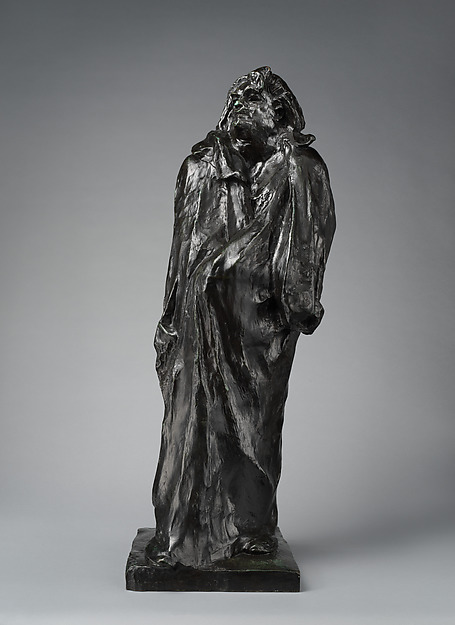
The scandal over “Balzac”
The monument's showing in 1898 caused a storm: the Société des Gens de Lettres rejected it, the press ran parodies, and Monet, Debussy and the future premier Clemenceau signed a manifesto in Rodin's defence. Rodin repaid the commission and moved the statue to his garden; he never completed another public commission.
1898
Parts from Camille Claudel
Rodin never gave up Rose Beuret, his companion of the lean years and the mother of his son; in 1898 he and Claudel parted. A few years later Claudel suffered what is called a nervous breakdown, and her family confined her to an institution for thirty years.
1900
Rodin's pavilion at the World's Fair
The French government gave him an entire pavilion: a retrospective of 136 sculptures and 14 unfinished works showed “The Gates of Hell” for the first time. The exhibition brought sales of sculptures to museums around the world worth about 200,000 francs.
1900s
Portraits of the famous and the rich
Rodin began to receive regular commissions for portraits; his clients included Bernard Shaw, Gustav Mahler, Georges Clemenceau, the Argentine president Sarmiento, the chemist Berthelot and the philanthropist Bertha Palmer. Clemenceau was displeased: he thought the portrait looked like a “Mongol general”.