ART WIKI32.963 en sala
MapaColecciónArtistasMuseosExposicionesRevista
Acceder

ART WIKI

Dónde cuelga la obra maestra y cuándo le dejan pasar.

Colecciones: Galería Nacional de Arte, Galería Nacional de Dinamarca, Galería Nacional de Retratos, Galería Tretiakov, Harvard Art Museums, Instituto de Arte de Chicago, Instituto de Artes de Mineápolis, MoMA, Museo de Arte de Cleveland, Museo de Victoria y Alberto, Museo del Hermitage, Museo del Louvre, Museo Estatal Ruso, Museo Hirshhorn y Jardín de Esculturas, Museo J. Paul Getty, Museo Metropolitano de Arte, Museo Pushkin, Museo Smithsoniano de Arte Americano, Museo Whitney de Arte Estadounidense, National Museum of Asian Art, Rijksmuseum, Villa Getty, Catálogo Estatal del Fondo Museístico de Rusia (274 museos), Europeana (19 museos), Wikidata (6 museos), Paris Musées (12 museos) y Joconde, la base de museos del Ministerio de Cultura de Francia (495 museos). Las imágenes pertenecen a sus titulares de derechos.

Secciones

  • Mapa
  • Búsqueda
  • Colección
  • Obras maestras
  • Expuestas ahora
  • Artistas

Más

  • Museos y galerías
  • Exposiciones
  • Revista
  • De dónde salen los datos
  • Privacidad y cookies
InicioMapaCatálogo
  1. Colección/
  2. Instituto de Arte de Chicago/
  3. The Eagle, the Arrow, and the Dolphin
The Eagle, the Arrow, and the Dolphin, Joseph Cornell, c. 1960

The Eagle, the Arrow, and the Dolphin

c. 1960 · Mixed Media

Sobre la obra

The title of this box refers to a small section of a map of the heavens attached to the top of the box’s interior left wall. It reproduces several constellations with their Latin names, including AQUl(LA) (Eagle), SAGITTA (Arrow), and DELPHINUS (Dolphin). Cornell used the larger illustration attached to the box’s interior back wall, showing a group of constellations labeled CEPHEUS, URSA MINOR, DRACO, and CAUDA DRACONIS, in several other boxes, including Pavilion. The original image appears to have been photographically reproduced, and then partially colored in by hand by Cornell himself. The artist used it again in Cauda Draconis of 1958 (New York, Xavier Fourcade, Inc.; Waldman 1977, pl. 33), a box that offers a close comparison to The Eagle, the Arrow, and the Dolphin. Both boxes are horizontal in their construction and include metal rods supporting a rolling ball. The Eagle, the Arrow, and the Dolphin,, however, has two metal rings rather than one and lacks the row of wine glasses with blue marble balls arranged on a shelf in Cauda Draconis.

Seguir leyendo

A comparison between Pavilion and The Eagle, the Arrow, and the Dolphon draws attention not only to their shared imagery but also to an interesting similarity in their formal construction. Although one box is vertical and the other horizontal, the spatial divisions created by the wood or metal rods, which function as either “columns” or “shelves,” seem to follow the same proportional rules. Strong geometric and structural principles often underlie the heterogeneous collections of materials and objects within Cornell‘s boxes.

The study of the constellations had many layers of significance for the artist Constellations were connected to ancient mythology and bore witness to the power of the human imagination to imprint images and patterns on chaos. The illustration pasted into these boxes exemplifies these aspects in its particularly pleasing combination of science and fantasy. Cornell associated favorite constellations, such as Andromeda, Orion, and the Dragon, with friends, film stars, or ballerinas. The very term “ constellation” took on a particular significance for him in his effort to understand and describe his working process, as he sought patterns in his experiences, his feelings, and his works. A handwritten note in his diary reads: “What about ‘constellations’ for experiments in going over past experiences on various subjects and picking out certain points for a presentation” (Cornell Papers, AAA, reel 1060; see Cornell 1993, p. 227).

Más obras de Joseph Cornell

Todas las obras

En la misma sala · Gallery 397, Instituto de Arte de Chicago

Página del museo

— Entry, Dawn Ades, Surrealist Art: The Lindy and Edwin Bergman Collection at the Art Institute of Chicago, 1997, p. 88-89.

Instituto de Arte de Chicago · CC BY 4.0

Ficha

c. 1960
19031972
Número de inventario
1982.1849

Fuentes

  • Instituto de Arte de Chicago
  • Imagen: Instituto de Arte de Chicago — © the artist or rights holder
JJoseph CornellEstados Unidos, 1903–1972

¿Se puede contemplar?

Sí, recibe visitas

Instituto de Arte de Chicago

Chicago, Estados Unidos

Sala397

Expuesta al público. Quién lo avala figura más abajo.

Comprobado
hace 3 días
En este estado desde
19 ago 2026
Fuente
El museo
En el mapaPágina del museo
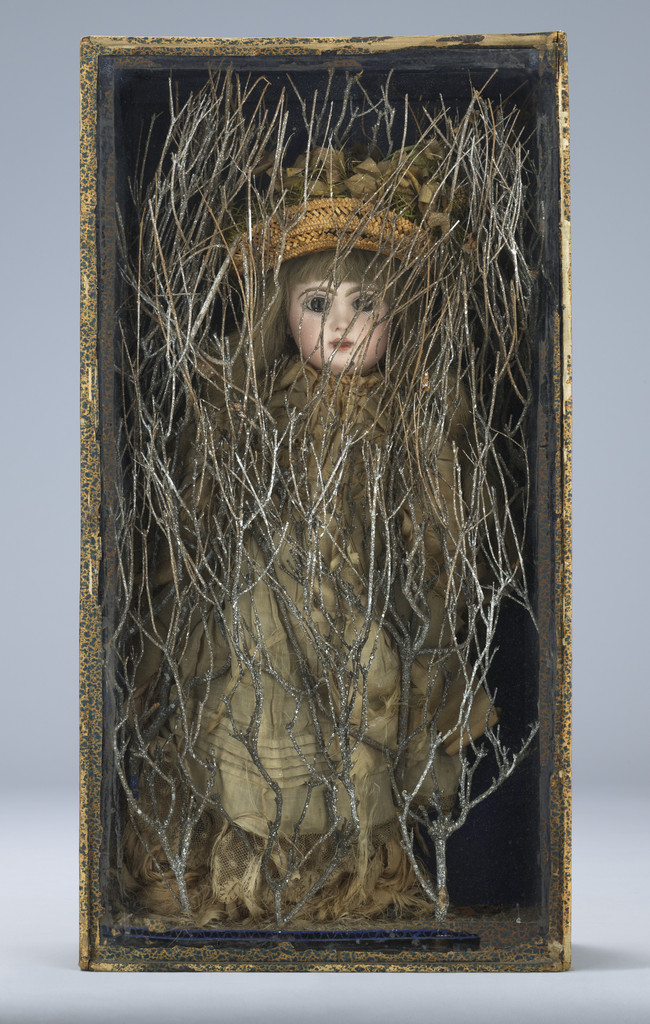
Untitled (Bébé Marie), Joseph Cornell, early 1940s

Untitled (Bébé Marie)

early 1940s · MoMA

Paolo and Francesca, Joseph Cornell, 1943-1948

Paolo and Francesca

1943-1948 · Galería Nacional de Arte

Untitled (Swan Box), Joseph Cornell, c. 1945

Untitled (Swan Box)

c. 1945 · Galería Nacional de Arte

Sand Fountain, Joseph Cornell, 1948

Sand Fountain

1948 · Galería Nacional de Arte

Untitled (Medici Prince), Joseph Cornell, c. 1952

Untitled (Medici Prince)

c. 1952 · Galería Nacional de Arte

Untitled (Medici Prince), Joseph Cornell, c. 1953

Untitled (Medici Prince)

c. 1953 · Galería Nacional de Arte

Untitled (Grand Hotel Bon Port, Ostend Hotel), Joseph Cornell, 1954

Untitled (Grand Hotel Bon Port, Ostend Hotel)

1954 · Galería Nacional de Arte

Les constellations voisines du pôle, Joseph Cornell, 1961

Les constellations voisines du pôle

1961 · Galería Nacional de Arte

Juan Soriano De Lacandón, Leonora Carrington, 1964

Leonora Carrington

Juan Soriano De Lacandón, 1964

Untitled (Butterfly Habitat), Joseph Cornell, c. 1940

Joseph Cornell

Untitled (Butterfly Habitat), c. 1940

Untitled, Balthus, c. 1972

Balthus

Untitled, c. 1972

Untitled (For Trista), Joseph Cornell, c. 1969

Joseph Cornell

Untitled (For Trista), c. 1969

Untitled (Satie and Ravel), Joseph Cornell, March 14, 1968–early September 1969

Joseph Cornell

Untitled (Satie and Ravel), March 14, 1968–early September 1969

The Tiara, Joseph Cornell, 1966/67

Joseph Cornell

The Tiara, 1966/67

Untitled (L'Abeille), Joseph Cornell, April 7, 1966

Joseph Cornell

Untitled (L'Abeille), April 7, 1966

Now, Voyager, Joseph Cornell, 1966

Joseph Cornell

Now, Voyager, 1966

En el catálogo

Arte de posguerraSiglo XXEstados Unidos