 Albrecht AltdorferAlemania, 1480–1538
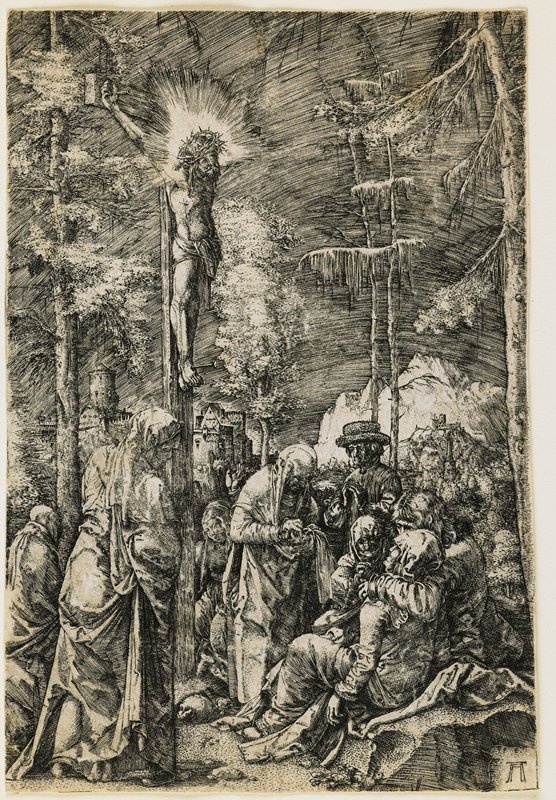
The Crucifixion
¿Puedo verla?
Sí, expuesta ahora
¿Dónde está «The Crucifixion» hoy? Instituto de Artes de Mineápolis, G344, Minneapolis. Sí, expuesta ahora. Comprobado 29 de septiembre de 2026.

Minneapolis, Estados Unidos
Abierto· hasta las 17:00
Expuesta al público.
- Comprobado
- En este estado desde
- Fuente
- El museo
Sobre la obra
Pilgrimages to the Holy Land were popular activities in the North. The many pilgrim accounts described Calvary as a rocky, inhospitable place. Albrecht Altdorfer chose to heighten the immediacy of the Crucifixion, however, by placing it in a fictional German landscape. In time he would create the first pure landscape prints in art, but here he fuses his humanistic delight in nature with subdued religiosity.
Instituto de Artes de Mineápolis
Ficha
- Número de inventario
- P.68.110
En el catálogo
Fuentes
- Instituto de Artes de Mineápolis
- Imagen: Instituto de Artes de Mineápolis — public domain
En la vida de Albrecht Altdorfer
La vida entera1505
Settles in the free city of Regensburg
He settles in Regensburg, a free imperial city on the Danube, where he will in time become town architect and a member of the city council.
1506
His first signature on engravings: a monogram
Having begun as a copper engraver, in 1506 he first signs his prints with a monogram of his own, made in imitation of Albrecht Dürer's famous mark.
1506
Works in one workshop with his brother Erhard
In 1506 the brothers Albrecht and Erhard Altdorfer begin working together in one workshop. The younger brother — a painter, engraver and architect — studied with Lucas Cranach the Elder and from 1512 served as court artist in Schwerin.
1511
A journey down the Danube to the Austrian Alps
In 1511 he travels along the Danube to the Austrian Alps, making sketches on the way. Altdorfer is regarded as one of the first German artists to turn to landscape as an independent genre.
1513
In the service of Emperor Maximilian I in Innsbruck
From 1513 he is in the service of Emperor Maximilian I in Innsbruck (Tyrol) and carries out several commissions for the imperial court; for the emperor he also made drawings for the “Triumphal Arch”, the “Triumphal Procession” and Maximilian's “Prayer Book”.
1516–1518
Works at St. Florian's monastery near Linz
In 1516–1518 he works at the monastery of St. Florian near Linz.