Gustave CourbetFrancia, 1819–1877
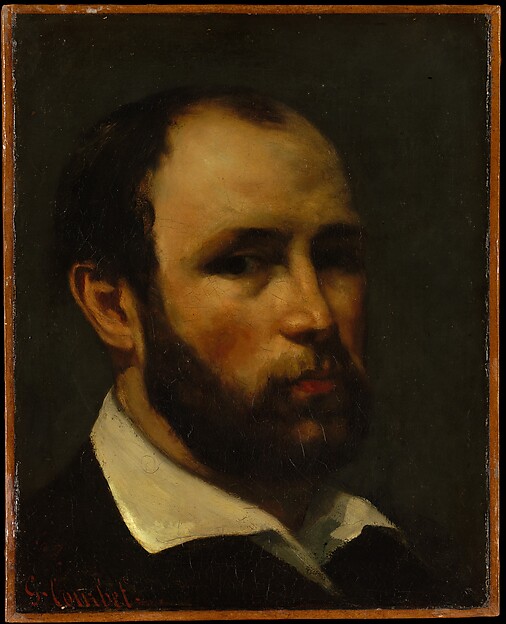
The Cellist (Self-portrait)
¿Puedo verla?
No expuesta por ahora
¿Dónde está «The Cellist (Self-portrait)» hoy? Colección: Museo Nacional de Suecia, Estocolmo. No expuesta por ahora. Comprobado 9 de octubre de 2026.

Estocolmo, Suecia
Pertenece a la colección, pero ahora mismo no está expuesta.
- Comprobado
- En este estado desde
- Fuente
- El sitio web del museo
Sobre el cuadro
Courbet painted many self-portraits. In the course of the 19th century, self-portraits became increasingly popular. In art circles in Paris, they played a key role in defining the self-image of artists of the era, and in launching artists’ careers on the increasingly competitive art market. In his early self-portraits, Courbet often appears as various theatrical characters – here he is seen in a melancholic, dreamy pose. When The Cellist was shown at the Paris Salon in 1848, the critics noted a resemblance between the claire-obscure of this painting and Rembrandt’s self-portraits.
Museo Nacional de Suecia
Ficha
Lo que muestra
En el catálogo
Exposiciones
Ahora no está expuesta
Museo Nacional de Suecia · 9 oct 2026 — hoy · Verificado
Se desconoce si estaba expuesta
Museo Nacional de Suecia · 27 sept 2026 — 9 oct 2026 · Sin confirmar
Fuentes
- Museo Nacional de Suecia
- Imagen: Museo Nacional de Suecia — Public Domain Mark 1.0
En la vida de Gustave Courbet
La vida enterac. 1844 – 1847
Brasserie Andler: the realists' circle
Around these years Courbet built ties in Paris artistic circles: he frequented the Brasserie Andler next to his studio, where proponents of realism in art and literature gathered, among them Charles Baudelaire and Honoré Daumier.
1844–1847
Ornans, Belgium and the Netherlands
Between 1844 and 1847 Courbet visited Ornans several times and also travelled to Belgium and the Netherlands, where he made contact with picture dealers. His trip to Holland in 1847 further strengthened his admiration for Rembrandt and Hals.
1847
The Salon jury rejects all three paintings
All three of Courbet's paintings submitted to the Salon of 1847 were rejected by the jury. The jury also rejected works by many well-known artists, including Delacroix, Daumier and Théodore Rousseau, who planned to set up their own exhibition gallery, a plan overtaken by the outbreak of revolution.
1848
Salon of 1848: seven paintings accepted, none sold
In 1848 all seven works Courbet submitted to the jury were shown at the Salon, but he did not manage to sell a single painting.
by 1848
First supporters among younger critics
By 1848 Courbet had gained supporters among the younger critics, the Neo-romantics and Realists, notably Champfleury.
1849
Gold medal at the Salon of 1849
Courbet's first Salon success came with “After Dinner at Ornans”, reminiscent of Chardin and Le Nain; it earned him a gold medal and was purchased by the state. The medal exempted his works from jury approval at the Salon until 1857, when the rule changed.