 Winslow HomerEstados Unidos, 1836–1910
The Brierwood Pipe
¿Puedo verla?
Sí, expuesta ahora
¿Dónde está «The Brierwood Pipe» hoy? Museo de Arte de Cleveland, 001A ArtLens Exhibition, Cleveland. Sí, expuesta ahora. Comprobado 29 de septiembre de 2026.

Expuesta al público.
- Comprobado
- En este estado desde
- Fuente
- El museo
Sobre el cuadro
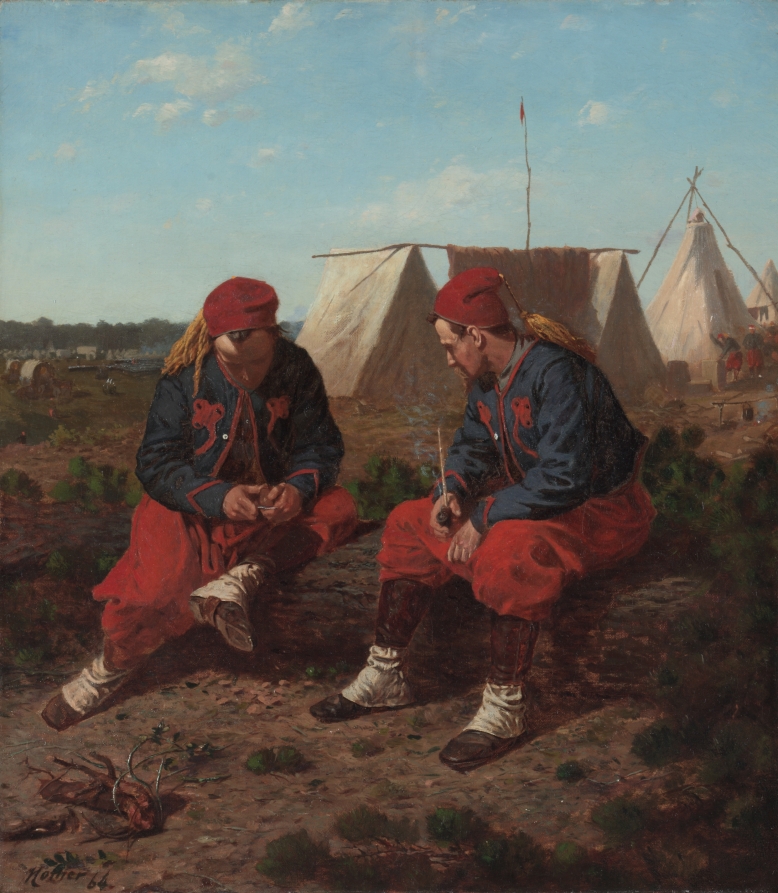
The Brierwood Pipe is an oil painting of 1864 by the American artist Winslow Homer. It depicts two men from the 5th New York Volunteer Infantry (Duryee Zouaves).
The title may refer to a popular poem of the day about the 5th New York Zouaves, titled "The Brier-Wood Pipe". "Two of the most famous Zouave outfits in the Army of the Potomac were from New York, Duryees and Hawkins's."
It is also known as Making Brier-root Pipes, Making Brierwood Pipes, and other similar variants.
As of 2012, the painting is on display at the Smithsonian American Art Museum, from the collection of the Cleveland Museum of Art.
En palabras del museo
Created during the United States Civil War, Winslow Homer’s painting depicts two volunteers for the Union Army who sport their regiment’s highly colorful uniforms, a design discovered to be impractical due to its ability to be spotted by sharpshooters. Passing idle time in their encampment, one soldier holds a lit pipe and watches his companion whittle a block of wood. The painting shares its title with a contemporary poem, in which a soldier smokes a brierwood pipe and daydreams of the time when the conflict will end so he can return home. The museum acquired this painting during World War II, and it seems likely that the painting’s subject was viewed as especially significant for its wartime audience.
Museo de Arte de Cleveland
Ficha
- Número de inventario
- 1944.524
En el catálogo
Fuentes
- Museo de Arte de Cleveland
- Imagen: Museo de Arte de Cleveland — Museum open access