Johnson, William H.Estados Unidos, 1901–1970
The Blind Singer
¿Se puede contemplar?
Por ahora no recibe

Harvard Art Museums
Cambridge, Estados Unidos
Pertenece a la colección, pero ahora mismo no está expuesta.
- Comprobado
- En este estado desde
- Fuente
- Los datos de colección del propio museo
Sobre la obra
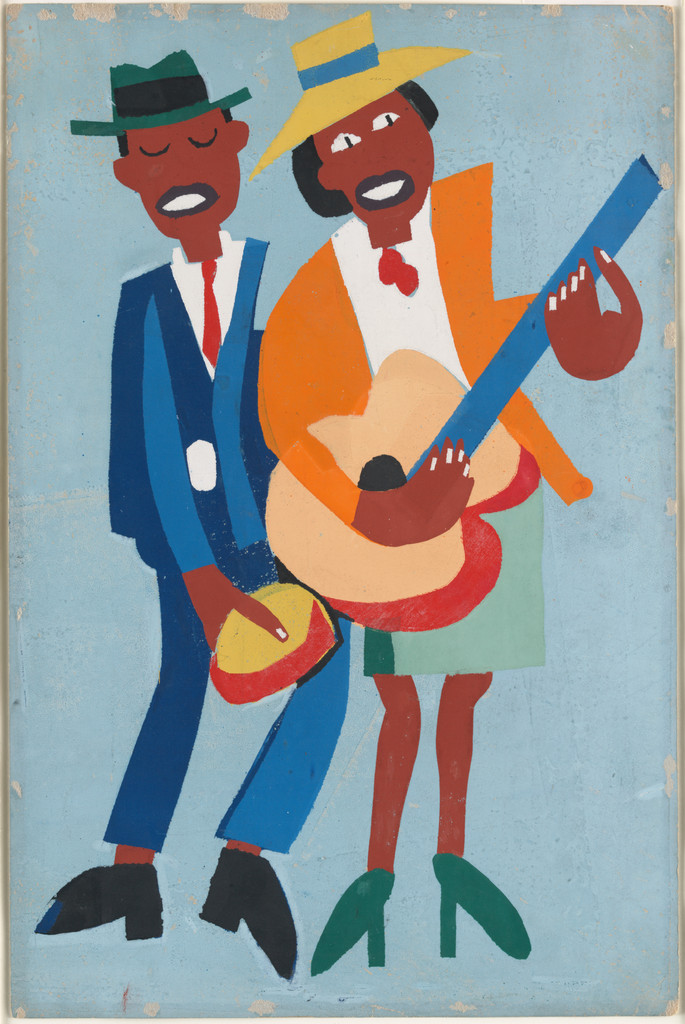
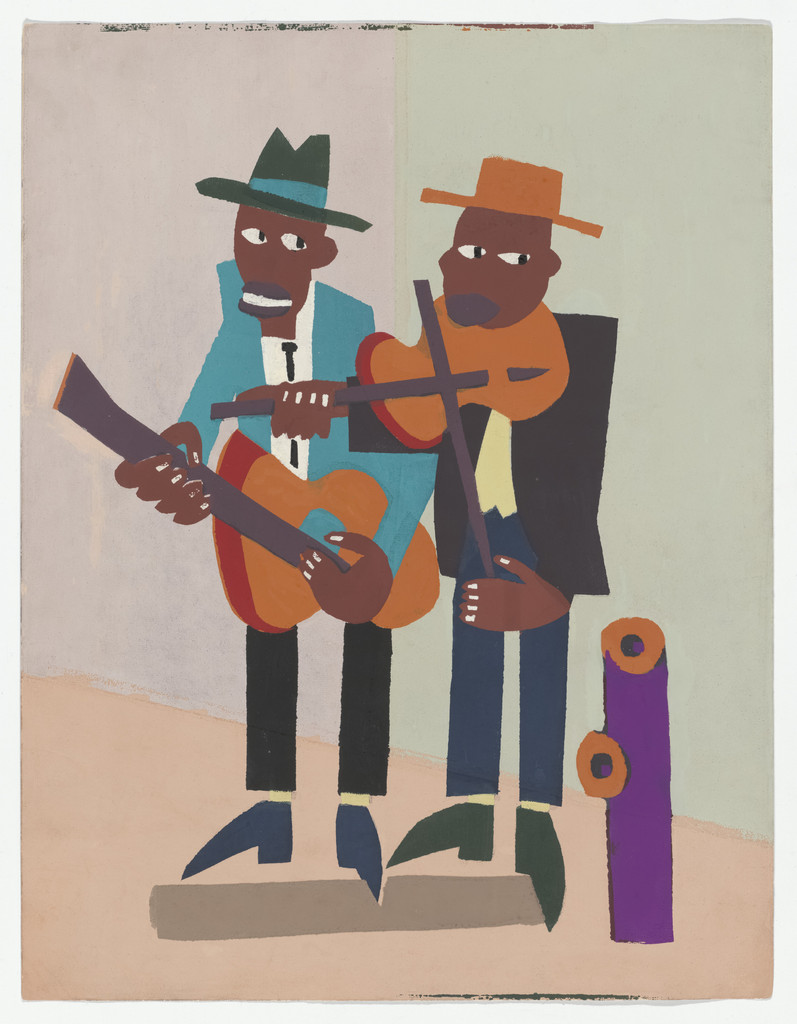
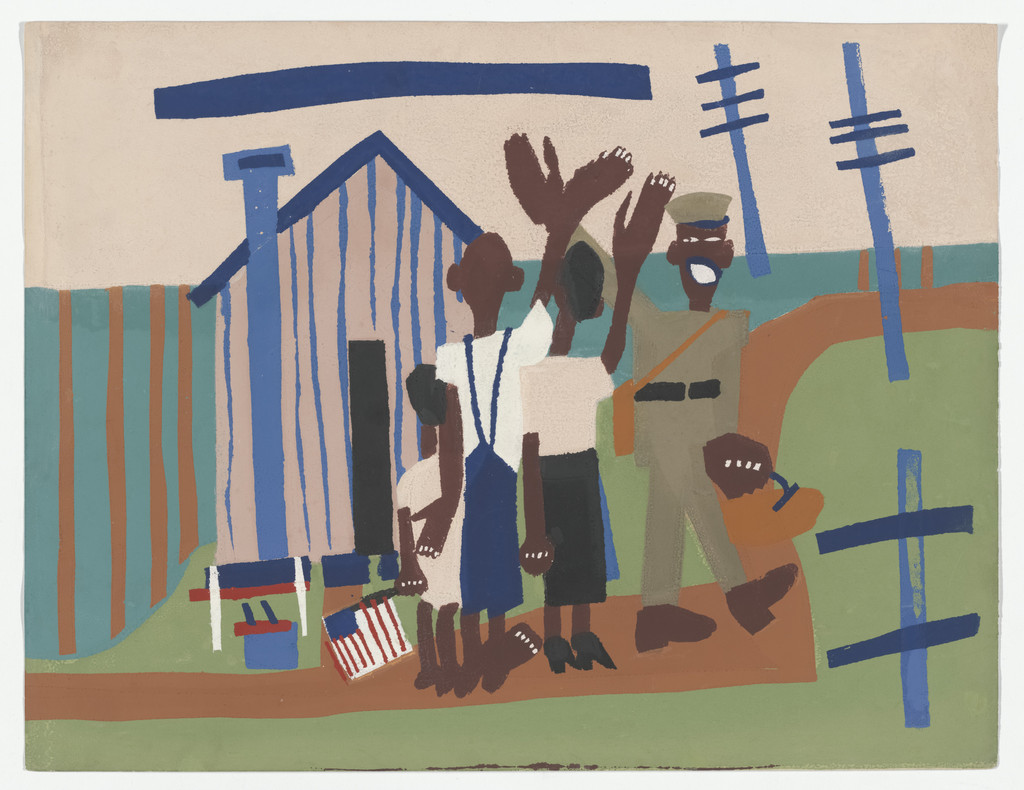
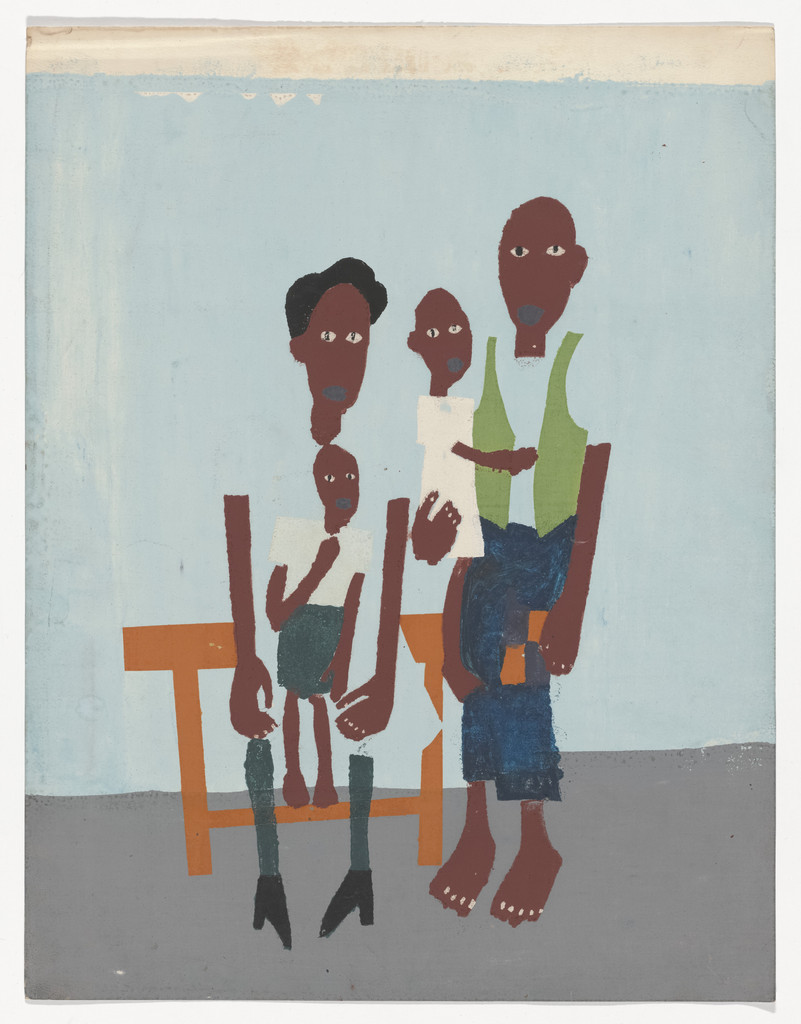
The screenprint, Blind Singer, is the first work by William Henry Johnson to enter the collection of the Harvard Art Museum. After studying at the National Academy of Design in New York under Charles Hawthorne in the 1920s, Johnson traveled to France where he began working in a less academic style. After a brief return to New York where he experienced intense racism, he returned to Europe in 1930 and began his travels through northern Europe-Denmark, Norway, and Sweden. He remained in Scandinavia until 1938 when political unrest prompted another return to New York. Exposure to the Expressionism of such northern European artists as Nolde and Munch had a lasting influence on his work. Upon his return to the US, Johnson took a WPA job teaching at the Harlem Community Art Center, where he was introduced to the technique of screen printing.
Read on
(The FAP/WPA transformed screenprinting from a commercial practice to a fine art technique when it set up a workshop dedicated to the medium in New York City in 1938.) Johnson's previous print work had all been woodcut, a favored technique of the Expressionists. His arrival in Harlem also initiated an interest in subjects related to African-American life in the US-agrarian southern life, black American heroes, battalions of black soldiers, religious imagery, and northern urban black life, especially centered on the Harlem Renaissance. Screenprinting provided him with a visual language to represent these subjects with renewed vitality. The flat areas of bold color that comprise the stylized figures and objects are distinctly modernist in appearance and subject.
Harvard Art Museums
Ficha
- Número de inventario
- 2009.63
En el catálogo
Fuentes
- Harvard Art Museums: the museum's own open data · obtenido hace 7 días
- Imagen: Harvard Art Museums — © President and Fellows of Harvard College
![[Kerteminde], William H. Johnson, c. 1930–35](https://img.artsmia.org/web_objects_cache/149000/700/70/149775/mia_8037351_800.jpg)