 André DerainFrancia, 1880–1954
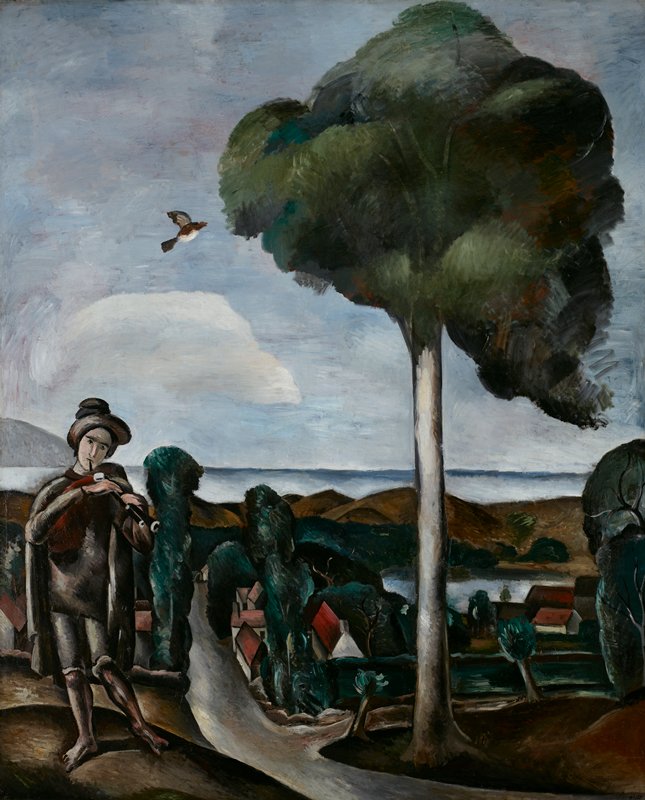
The Bagpiper
¿Puedo verla?
Sí, expuesta ahora
¿Dónde está «The Bagpiper» hoy? Instituto de Artes de Mineápolis, G371, Minneapolis. Sí, expuesta ahora. Comprobado 16 de noviembre de 2026.

Minneapolis, Estados Unidos
Cerrado· abre mañana a las 10:00
Expuesta al público.
- Comprobado
- En este estado desde
- Fuente
- El museo
Sobre el cuadro
André Derain painted The Bagpiper in 1910–11; it is in the Minneapolis Institute of Art, Minneapolis. Colour, handling and composition owe much to Cézanne, while the pastoral subject recalls Titian and Claude Lorrain's scenes with shepherds and musicians. Derain had grown dissatisfied with Fauvism and Cubism, feeling that technical concerns displaced subject matter. His turn towards older painting helped shape this lyrical, romantic work, which became widely known before the war. Its large format continues that older tradition. The painting is exhibited in gallery G371.
En palabras del museo
Although Derain had helped found Fauvism and had been an early adherent of Cubism, he increasingly fell away from both aesthetics, feeling their obsession with technique had supplanted the content of their work. Derain, instead, began to turn toward the Old Masters, even as he kept pace with the spirit of his own time. Thus, while The Bagpiper at Camiers owes much to Cézanne in color, brushwork and composition, a great debt to the Old Masters is also evident, especially the arcadian scenes peopled with shepherds and musicians by Titian, and Derain's countryman, Claude Lorrain. The Bagpiper at Camiers became one of Derain's best known pre-war pictures and its lyrical and romantic feeling established him as an artist in the grand tradition of large formats and timeless subjects.
Instituto de Artes de Mineápolis
Ficha
- Número de inventario
- 61.36.10
En el catálogo
Fuentes
- Instituto de Artes de Mineápolis
- Imagen: Instituto de Artes de Mineápolis — public domain
En la vida de André Derain
La vida entera1909
Grabados para el primer libro de Apollinaire
Realizó xilografías de estilo primitivista para la edición del primer libro en prosa de Guillaume Apollinaire, «El encantador putrefacto» (L'enchanteur pourrissant).
1910
Exposición de la Nueva Asociación de Artistas en Múnich
Mostró sus obras en la exposición de la Neue Künstlervereinigung en Múnich.
1912
Participa en la exposición de El Jinete Azul
Expuso en la muestra de la agrupación secesionista Der Blaue Reiter; ese mismo año ilustró un poemario de Max Jacob.
1913
Participa en el Armory Show de Nueva York
Participó en el Armory Show de Nueva York, una exposición que marcó época.