 Ernst BarlachAlemania, 1870–1938
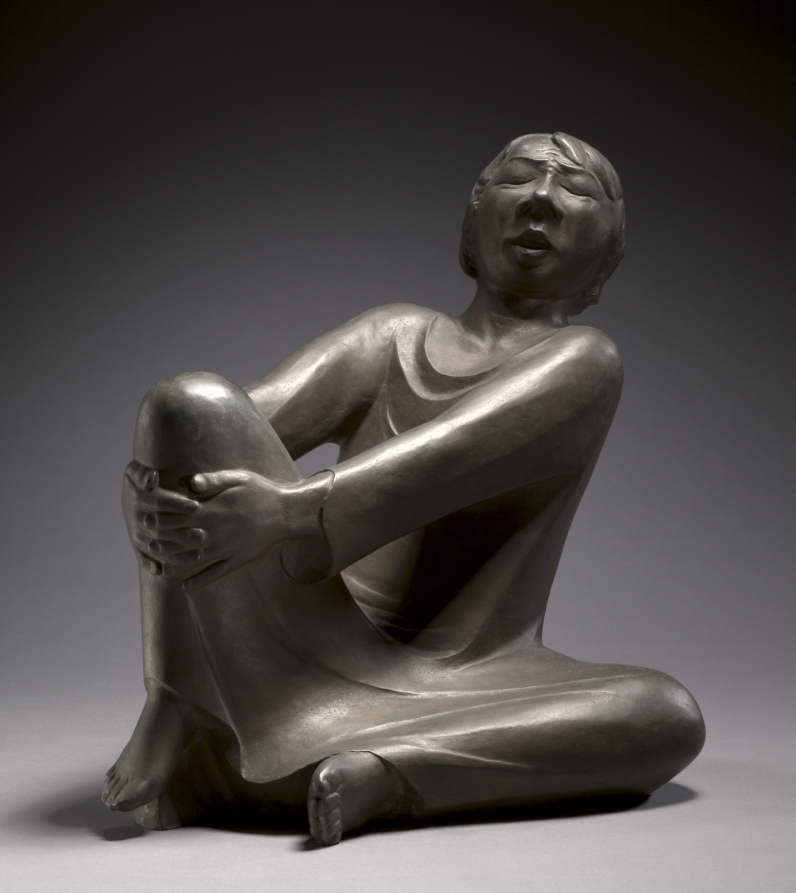
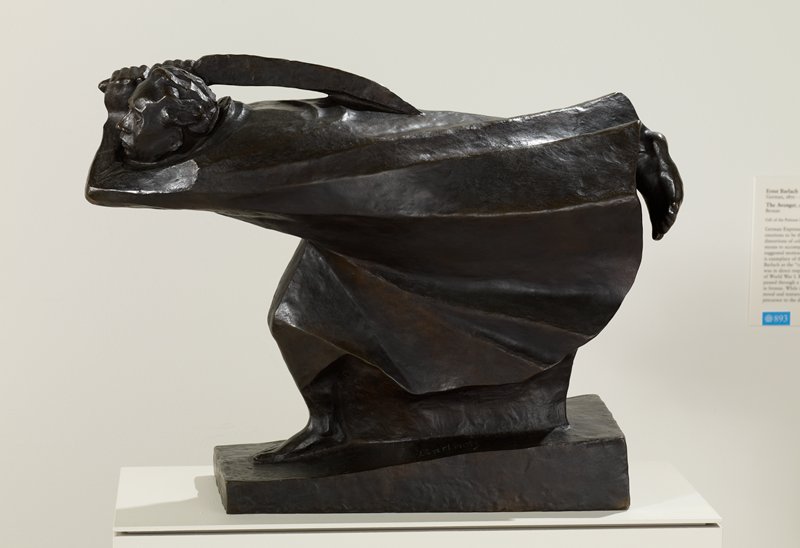
The Avenger
¿Se puede contemplar?
Por ahora no recibe

Instituto de Artes de Mineápolis
Minneapolis, Estados Unidos
Pertenece a la colección, pero ahora mismo no está expuesta.
- Comprobado
- En este estado desde
- Fuente
- Los datos de colección del propio museo
Sobre la escultura
German Expressionists believed communication of the emotions to be the primary purpose of art and employed distortions of color, shape, surface, and space as the means to accomplish this goal. The angular form, suggested motion, and passionate gesture of The Avenger is exemplary of the Expressionist vision. Dubbed by Barlach as the crystallized essence of War, the sculpture was in direct response to the vengefulness and devastation of World War I. Based on lithographs of 1914, the image passed through a number of stages before it was realized in bronze. While indebted to medieval wood statuary in mood and texture, Barlach's work was also a significant precursor to the development of kinetic sculpture.
Instituto de Artes de Mineápolis
Ficha
- Número de inventario
- 58.4
En el catálogo
Fuentes
- Instituto de Artes de Mineápolis: los datos abiertos del museo · obtenido hace 8 días
- Imagen: Instituto de Artes de Mineápolis — © Minneapolis Institute of Art
Mientras tanto, en la vida de Ernst Barlach
La vida entera1912
The drama “The Dead Day”
Barlach the writer produces the drama The Dead Day (other accounts date it to 1917); Thomas Mann praised it highly.
1915–1916
An infantryman in the war, he returns a pacifist
Barlach volunteered for the war as an infantryman but was discharged after three months of service because of a heart ailment. He came back a convinced pacifist and opponent of war, and its horror shaped all his subsequent works.
1917
Solo exhibition at Cassirer's gallery
A solo exhibition at Cassirer's gallery brought Barlach wide renown.
1919
Post-war fame and the Prussian Academy of Arts
After the war Barlach's fame grew: he received many honours and in 1919 was admitted to the prestigious Prussian Academy of Arts. He turned down a number of honorary degrees and teaching posts.
1924 · Distinción
Kleist Prize
1925
Meets Bernhard and Marga Böhmer
In 1925 Barlach met for the first time Bernhard Böhmer, who became his friend, and Bernhard's wife Marga.