ART WIKI32.963 en sala
MapaColecciónArtistasMuseosExposicionesRevista
Acceder

ART WIKI

Dónde cuelga la obra maestra y cuándo le dejan pasar.

Colecciones: Galería Nacional de Arte, Galería Nacional de Dinamarca, Galería Nacional de Retratos, Galería Tretiakov, Harvard Art Museums, Instituto de Arte de Chicago, Instituto de Artes de Mineápolis, MoMA, Museo de Arte de Cleveland, Museo de Victoria y Alberto, Museo del Hermitage, Museo del Louvre, Museo Estatal Ruso, Museo Hirshhorn y Jardín de Esculturas, Museo J. Paul Getty, Museo Metropolitano de Arte, Museo Pushkin, Museo Smithsoniano de Arte Americano, Museo Whitney de Arte Estadounidense, National Museum of Asian Art, Rijksmuseum, Villa Getty, Catálogo Estatal del Fondo Museístico de Rusia (274 museos), Europeana (19 museos), Wikidata (6 museos), Paris Musées (12 museos) y Joconde, la base de museos del Ministerio de Cultura de Francia (495 museos). Las imágenes pertenecen a sus titulares de derechos.

Secciones

  • Mapa
  • Búsqueda
  • Colección
  • Obras maestras
  • Expuestas ahora
  • Artistas

Más

  • Museos y galerías
  • Exposiciones
  • Revista
  • De dónde salen los datos
  • Privacidad y cookies
InicioMapaCatálogo
  1. Colección/
  2. Mauritshuis/
  3. The Annunciation
The Annunciation, Francesco Solimena, c. 1693
Francesco Solimena, retratoFrancesco SolimenaItalia, 1657–1747

The Annunciation

c. 1693 · Painting · 62 × 75 cm

¿Se puede contemplar?

Se desconoce

Mauritshuis

La Haya, Países Bajos

Se conoce el propietario; no se sabe si hoy está expuesta.

En este estado desde
29 sept 2026
Fuente
El museo
En el mapaPágina del museo

Ficha

c. 1693
16571747
Número de inventario
340

En el catálogo

PinturaPintura italianaBarrocoSiglo XVII

Fuentes

  • Wikidata
  • Imagen: Mauritshuis — Francesco Solimena · Public domain · Wikimedia Commons

Mientras tanto, en la vida de Francesco Solimena

La vida entera
  1. 1690s–1730s

    His studio dominates Neapolitan painting

    From the 1690s through the first four decades of the 18th century his studio dominates Neapolitan painting, becoming a virtual academy at the heart of the city’s cultural life. Among its pupils are Francesco De Mura, Giuseppe Bonito and Gaspare Traversi; the Scottish portraitist Allan Ramsay spends three years there.

  2. 1691–1695

    Turns to the sombre manner of Preti

    After 1690 he again looks for inspiration in the more sombre art of Mattia Preti; the Miracle of St. John of God for the Ospedale di Santa Maria della Pace rests on dramatic contrasts of light and dark. The same response to Preti shapes the Annunciation (Mauritshuis) and the Allegory of Louis XIV (1692, Hermitage).

  3. 1692

    Luca Giordano leaves for Spain

    Giordano leaves Naples for Spain, where he stays until 1702. His absence spurs Solimena to develop his primary role as a catalyst of change in painting, refining his idiom without abandoning the influence of Preti.

  4. mid-1690s

    Turns toward classicism

    Perhaps stimulated by the rivalry of Paolo de Matteis, he begins to move toward a more classical style that puts disegno before colore and shows a new concern for ideal beauty. Striking examples are the Assumption (1697) in the Annunziata at Marcianise and the St. Christopher in Sant’Anna dei Lombardi, whose nude de’ Dominici admired for its ideal beauty.

Más obras de Francesco Solimena

Todas las obras
Allegory of Rule, Francesco Solimena, 1690

Allegory of Rule

1690 · Museo del Hermitage

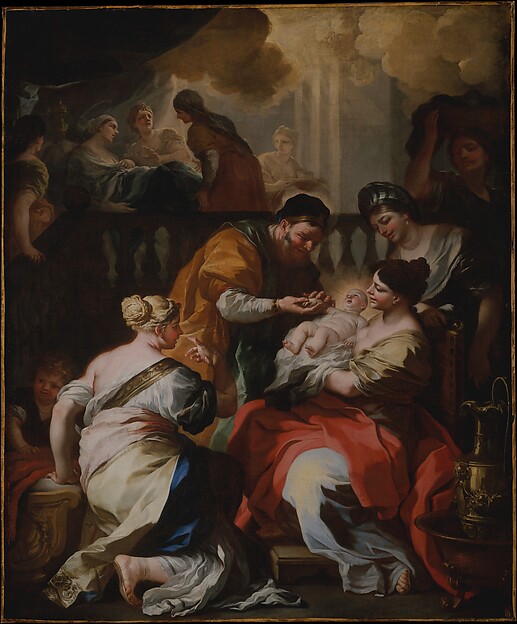
The Birth of the Virgin, Francesco Solimena, ca. 1690

The Birth of the Virgin

ca. 1690 · Museo Metropolitano de Arte

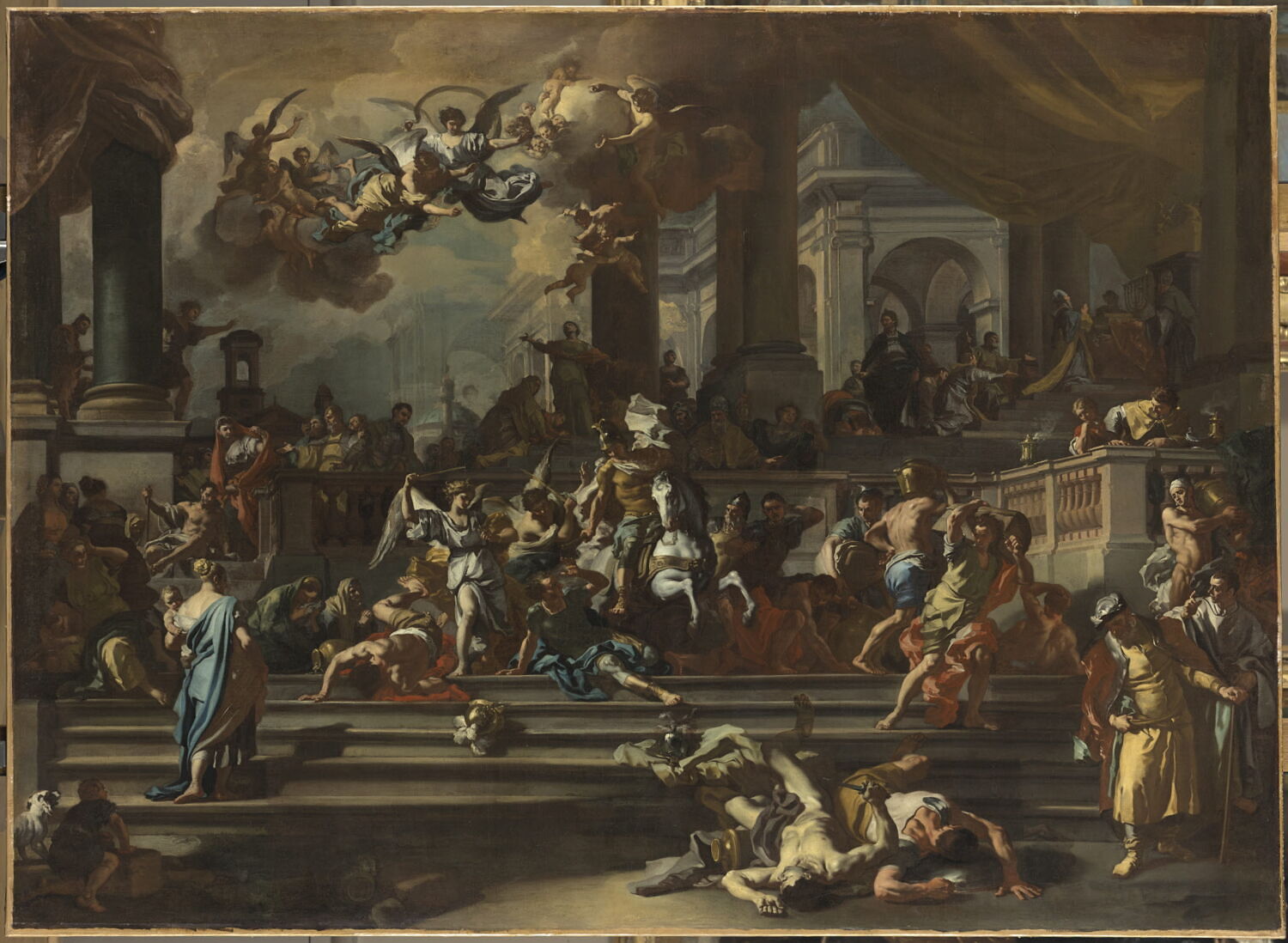
Héliodore chassé du Temple, Solimena, Francesco, 1e quart du XVIIIe siècle (vers 1725)

Héliodore chassé du Temple

1e quart du XVIIIe siècle (vers 1725) · Museo del Louvre

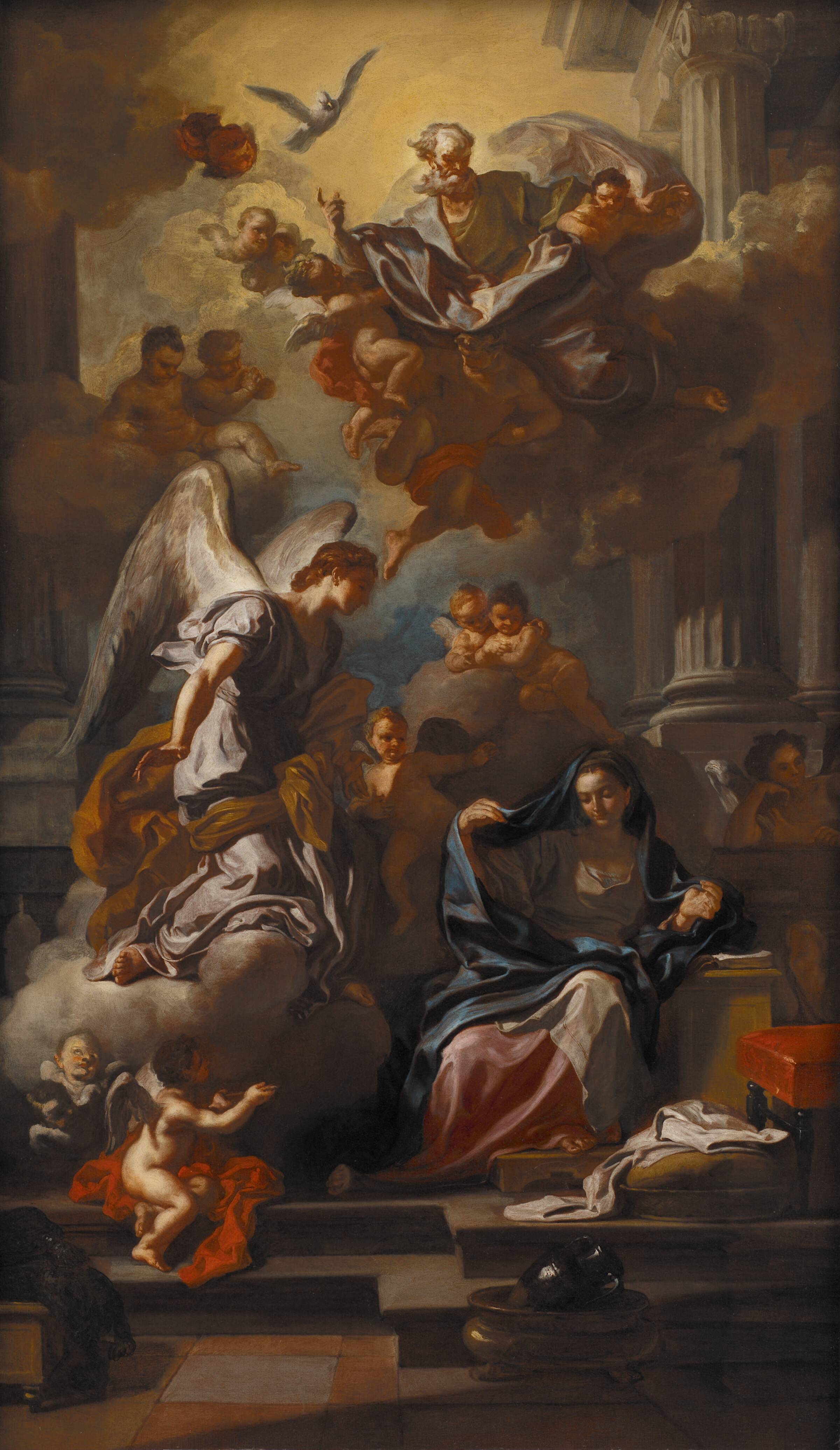
Mariæ Bebudelse, Francesco Solimena, 1672-1747

Mariæ Bebudelse

1672-1747 · Galería Nacional de Dinamarca

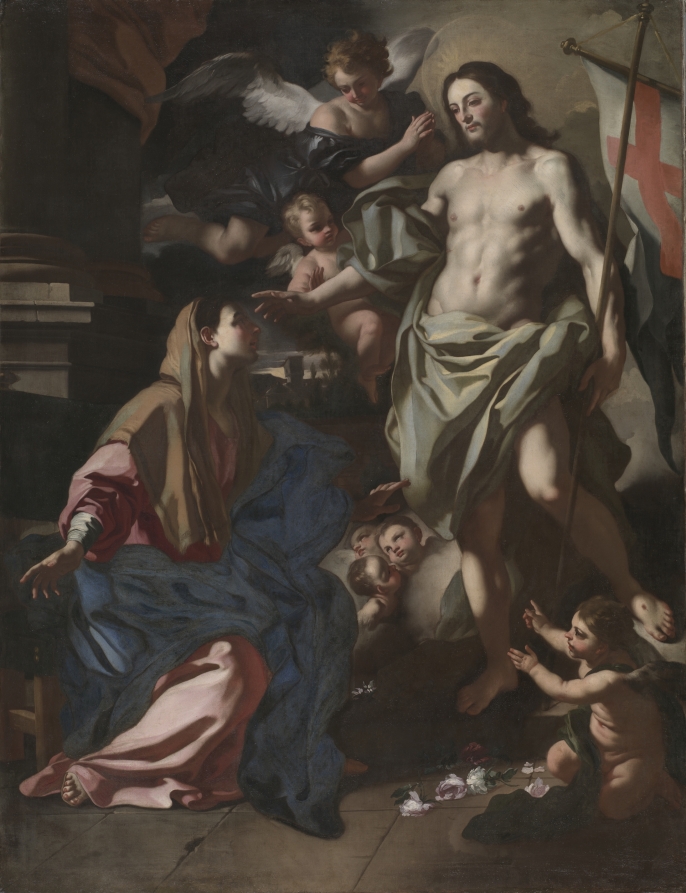
The Risen Christ Appearing to the Virgin, Francesco Solimena, c. 1708

The Risen Christ Appearing to the Virgin

c. 1708 · Museo de Arte de Cleveland

A Nude Man Chained to a Rock, Francesco Solimena

A Nude Man Chained to a Rock

No expuesta · Galería Nacional de Arte

A Seated Nude Man Pointing to the Right, Francesco Solimena

A Seated Nude Man Pointing to the Right

No expuesta · Galería Nacional de Arte

The Marriage of Bacchus and Ariadne, Francesco Solimena

The Marriage of Bacchus and Ariadne

No expuesta · Galería Nacional de Arte

De la colección: Mauritshuis

Página del museo
Portrait of a Nobleman, possibly Adriaan van der Borcht, Anthony van Dyck, 1634 - c. 1635

Anthony van Dyck

Portrait of a Nobleman, possibly Adriaan van der Borcht, 1634 - c. 1635

Self-portrait, Rembrandt, 1669

Rembrandt van Rijn

Self-portrait, 1669

Portrait of an old man, Rembrandt, 1667

Rembrandt van Rijn

Portrait of an old man, 1667

Homer, Rembrandt, 1663

Rembrandt van Rijn

Homer, 1663

Two African men, Rembrandt, 1661

Rembrandt van Rijn

Two African men, 1661

Saul and David, Rembrandt, 1650

Rembrandt van Rijn

Saúl y David, 1650

Portrait of an older man, Rembrandt, 1650

Rembrandt van Rijn

Portrait of an older man, 1650

Susanna, Rembrandt, 1636

Rembrandt van Rijn

Susanna, 1636