 William-Adolphe BouguereauFrancia, 1825–1905
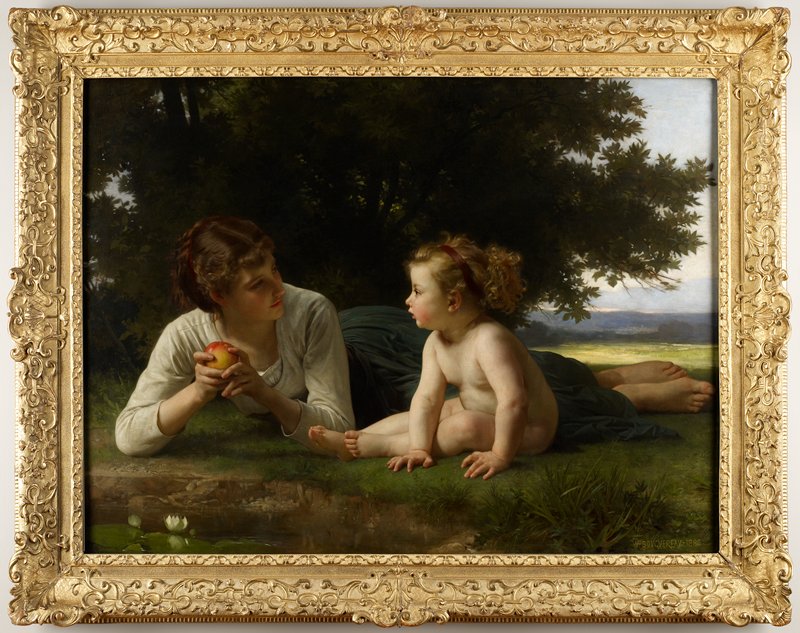
Temptation
¿Se puede contemplar?
Sí, recibe visitas

Instituto de Artes de Mineápolis
SalaG357Minneapolis, Estados Unidos
Expuesta al público. Quién lo avala figura más abajo.
- Comprobado
- anteayer
- En este estado desde
- 25 sept 2026
- Fuente
- Los datos de colección del propio museo
About the painting
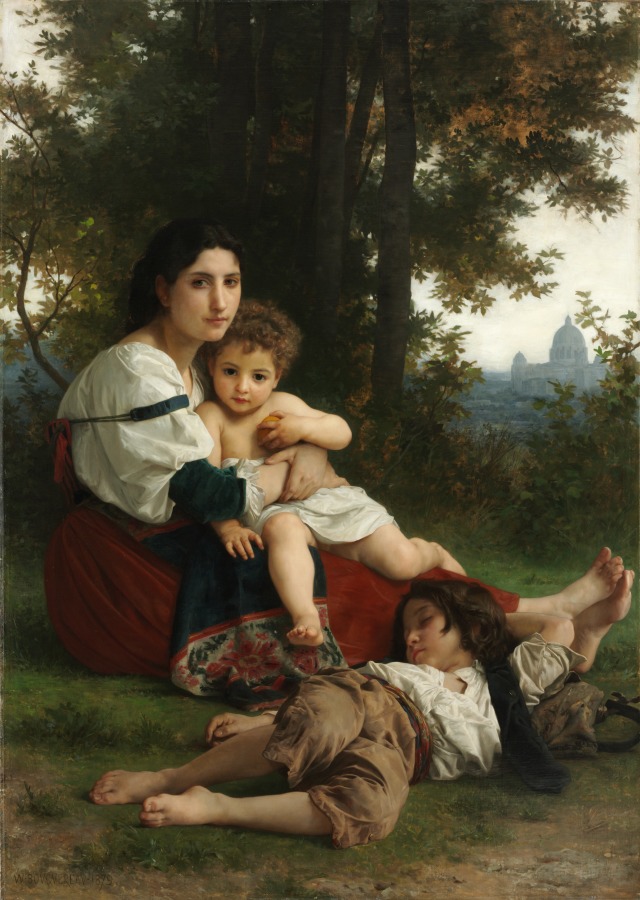
The title, although ambiguous, suggests a biblical interpretation of the shiny apple that woman holds in her hand. It thus refers to the apple of knowledge and the innocence of the child on the right. The outdoor setting suggests the landscape of Bouguereau’s native La Rochelle, a coastal town in northern France. It has also been described as an Arcadian background, based upon the seventeenth century idyllic representations of the Greek pastoral landscapes.
Instituto de Artes de Mineápolis
Ficha
- Número de inventario
- 74.74
En el catálogo
Fuentes
- Instituto de Artes de Mineápolis: the museum's own open data · obtenido hace 5 días
- Imagen: Instituto de Artes de Mineápolis — public domain
Mientras tanto, en la vida de William-Adolphe Bouguereau
La vida enteraMay 1878
The Paris Universal Exhibition: twelve paintings
For the opening of the Paris Universal Exhibition in May 1878, showcasing French work, Bouguereau finds and borrows twelve of his paintings from their owners, including his new work “Nymphaeum”.
1879
“The Birth of Venus”: rivalry with Cabanel
In 1879 Bouguereau starts on the large canvas “The Birth of Venus” — possibly out of rivalry with Cabanel, whose picture had long been regarded as the standard of academic painting. Critics receive the work coolly: Huysmans writes that Bouguereau “invented aerated painting”; yet it begins a consistent series of nudes — about ten percent of all the artist’s paintings.
11 de julio de 1881 · Distinción
Commander of the Legion of Honour
1882
A house on rue Verdière in La Rochelle
From the early 1870s Bouguereau and his family spend every summer in La Rochelle; in 1882 he decides to buy a house, and farm buildings, rather than rent, and by August the family has a permanent summer base on rue Verdière: he begins several paintings here and completes them in his Paris studio.