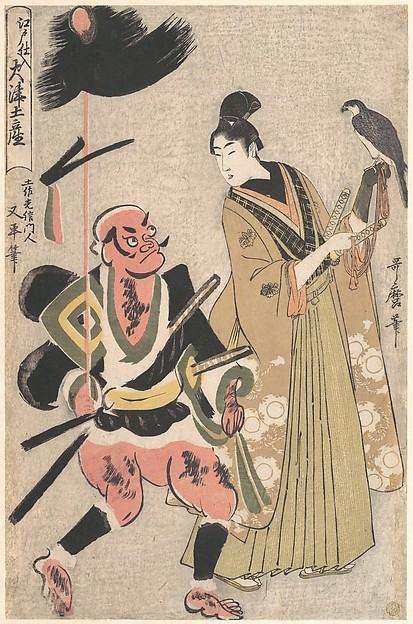
Kitagawa UtamaroJapón, 1754–1806
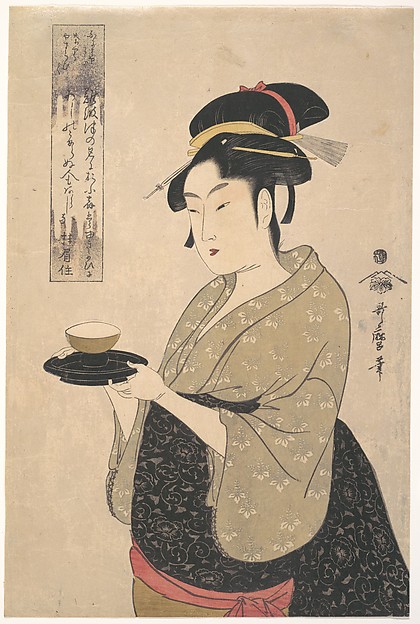
Takashima Ohisa
¿Puedo verla?
Sí, expuesta ahora
¿Dónde está «Takashima Ohisa» hoy? Instituto de Arte de Chicago, Sala 107, Chicago. Sí, expuesta ahora. Comprobado 29 de septiembre de 2026.

Chicago, Estados Unidos
Cerrado· abre a las 11:00
Expuesta al público.
- Comprobado
- En este estado desde
- Fuente
- El museo
Ficha
- Número de inventario
- 1928.1038
En el catálogo
Fuentes
- Instituto de Arte de Chicago
- Imagen: Instituto de Arte de Chicago — CC0
En la vida de Kitagawa Utamaro
La vida entera1790–1801
Tightening censorship: seals on prints
From 1790 prints can be sold only with a censor's seal of approval; over the following decades censorship grows stricter, and violators can receive harsh punishments. From 1799 even preliminary drafts need approval, and in 1801 the works of a group of Utagawa-school offenders, including Toyokuni, are repressed.
c. 1791
Giving up book prints for half-length portraits of beauties
Around 1791 Utamaro gives up designing prints for books and concentrates on single portraits of women shown half-length, rather than the group scenes favoured by other ukiyo-e artists. He was the first in Japanese woodblock printing to use half-length compositions for women's portraits; none of his work from 1790–1792 has survived.
1793
Recognition and the end of the arrangement with Tsutaya
In 1793 Utamaro achieves recognition as an artist, and his semi-exclusive arrangement with the publisher Tsutaya Jūzaburō ends. He then goes on to produce several well-known series featuring women of the Yoshiwara district, and becomes one of the few ukiyo-e artists to win fame throughout Japan in his lifetime.