 Max LiebermannAlemania, 1847–1935
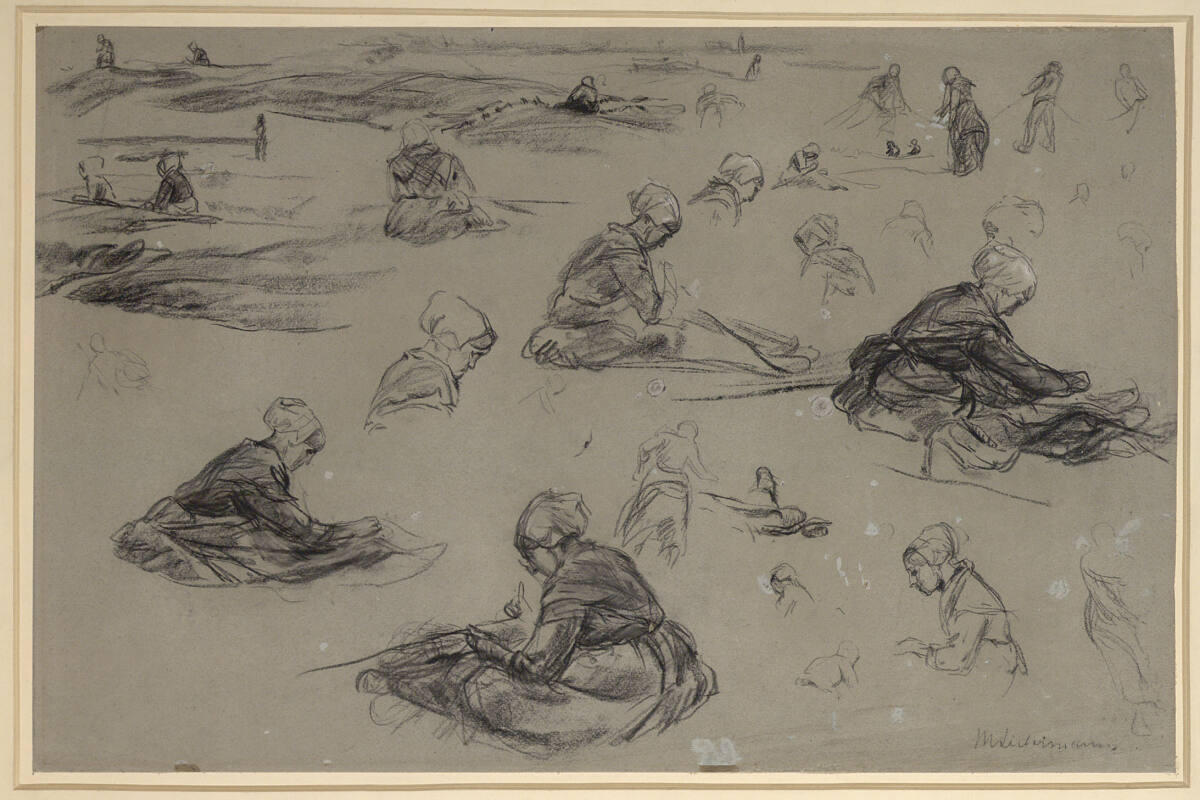
Studie zu den "Netzflickerinnen"
¿Se puede contemplar?
Se desconoce

Viena, Austria
Se conoce el propietario; no se sabe si hoy está expuesta.
- En este estado desde
- Fuente
- El museo
Ficha
En el catálogo
Fuentes
- Albertina
- Imagen: Albertina — Public Domain Mark 1.0
Mientras tanto, en la vida de Max Liebermann
La vida entera20 de julio de 1847
Born
1868–1872 · Formación
Weimar Saxon-Grand Ducal Art School
1873
Move to Paris: a studio in Montmartre
In the art capital of the world Liebermann hoped to make contact with the leading realists and Impressionists, but the French painters refused to have anything to do with “the German”.
c. 1879
Scandal over “The Twelve-Year-Old Jesus”
The painting set off a wave of outrage across the empire: the Augsburger Allgemeine wrote of “the ugliest” Jewish boy imaginable, a Bavarian state deputy denied a Jew the right to depict Jesus this way, and the court preacher Adolf Stoecker carried the antisemitic debate on in Berlin. Colleagues including Wilhelm Leibl and Friedrich August von Kaulbach rallied to his side, yet Liebermann himself painted over the figure of Jesus in response — the overpainting was discovered only in 1993.
1884
Decides to return to Berlin
Liebermann knew that Berlin would bring fresh conflicts, but he believed the city would sooner or later take its place among the leading art centres: it held an important place on the European art market, and Munich's traditions weighed on him. The family's first home was an apartment at In den Zelten 11, on the northern edge of the Tiergarten.
1898
President of the Berlin Secession
When the jury of the Great Berlin Art Exhibition, chaired by Anton von Werner, rejected a work by Walter Leistikow, Leistikow called on independent artists to unite, and Liebermann was elected president of the association. He appointed the gallerists Bruno and Paul Cassirer as secretaries, and his fame secured the Secession public interest.