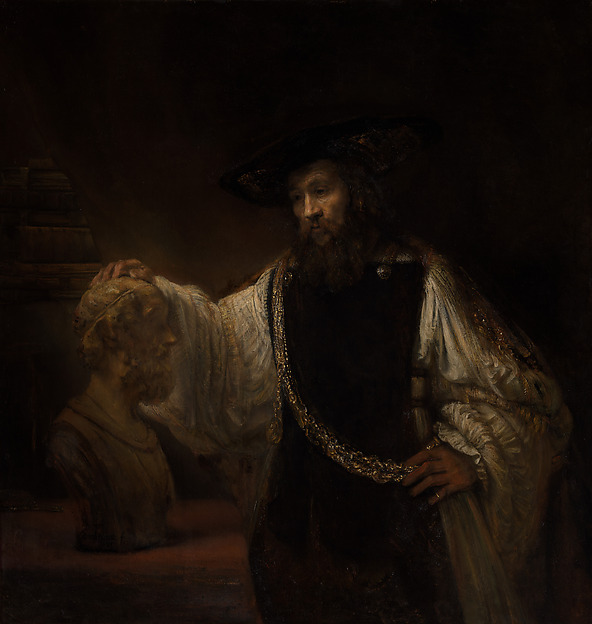
Hans HolbeinAlemania, 1497–1543
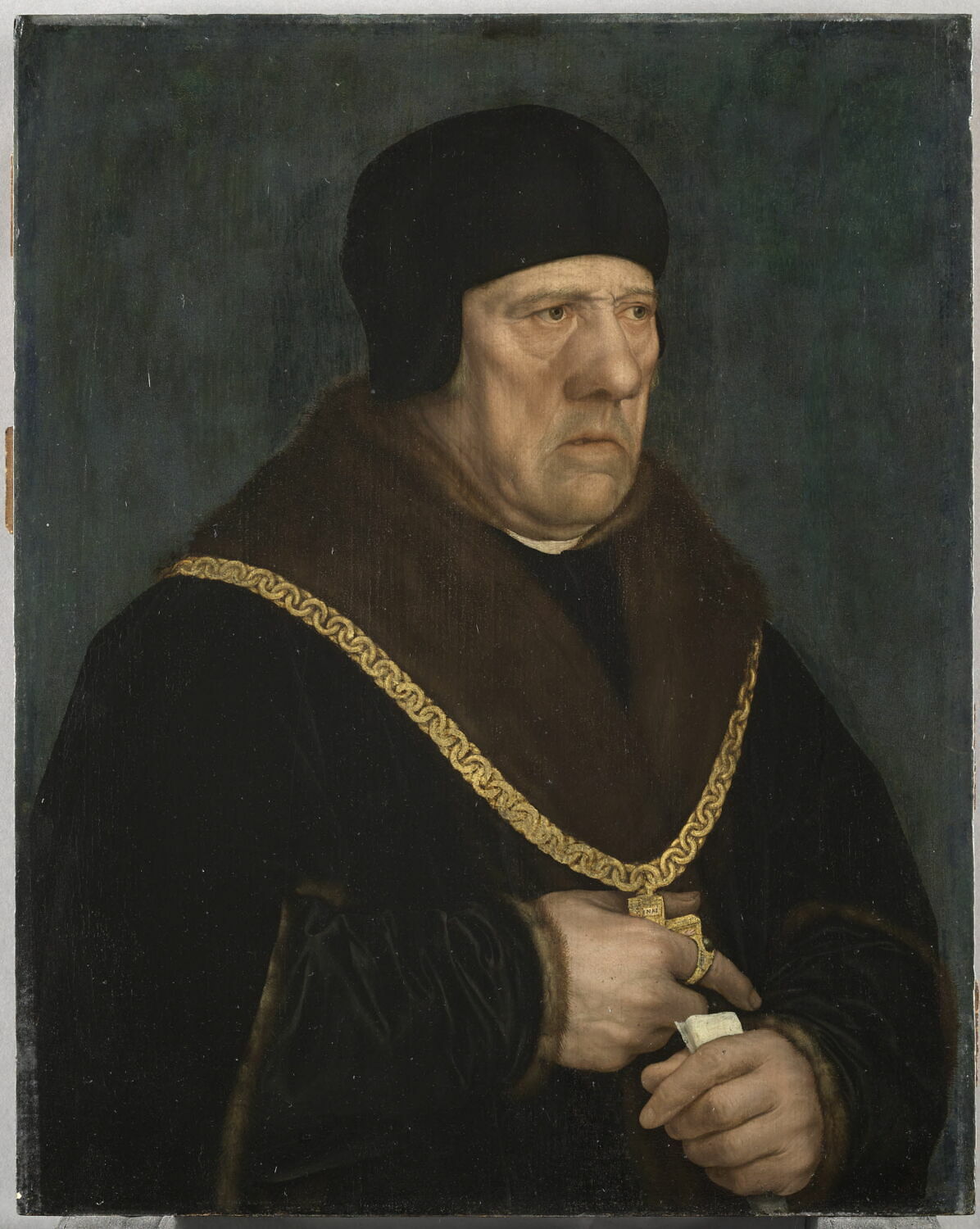
Sir Brian Tuke
¿Puedo verla?
Sí, expuesta ahora
¿Dónde está «Sir Brian Tuke» hoy? Galería Nacional de Arte, Sala 35 · Edificio Oeste, planta principal, Washington D. C. Sí, expuesta ahora. Comprobado 29 de septiembre de 2026.

Abierto· hasta las 17:00
Expuesta al público.
- Comprobado
- En este estado desde
- Fuente
- El museo
Ficha
- Número de inventario
- 1937.1.65
Lo que muestra
En el catálogo
Fuentes
- Galería Nacional de Arte
- Imagen: Galería Nacional de Arte — Museum open access
En la vida de Hans Holbein
La vida entera1526
Departure for England on Erasmus's Recommendation
On the advice of Erasmus of Rotterdam he set out for England in search of work, visiting France and the Netherlands on the way; Erasmus recommended him to Thomas More.
1526
Received into Thomas More's Humanist Circle
In England he was received by Sir Thomas More, who found him a series of commissions; in the humanist circle Holbein quickly won a high reputation. More wrote to Erasmus: "Your painter is a wonderful artist."
1528
Return to Basel, Purchase of a House
He returned to Basel and bought a house in the St. Johanns-Vorstadt, becoming a neighbor of the publisher Hieronymus Froben; in 1531, having grown wealthy from his English commissions, he bought the adjoining house as well.
1529
Iconoclasm in Basel
Reformers influenced by the ideas of Zwingli staged iconoclastic actions and banned images in the churches; some of Holbein's religious works were probably destroyed, and in April 1529 Erasmus left Basel.
early 1532
Return to England: The Second English Period
In early 1532 he returned to England and resumed his career under the patronage of Anne Boleyn and Thomas Cromwell; he painted portraits of the Lutheran merchants of the Hanseatic Steelyard.
1535
Court Painter to Henry VIII
He became court painter to King Henry VIII: he painted portraits, designed court festivities, and produced designs for fountains, stained glass, jewelry, and objects for the royal household. By 1536 he was receiving an annual salary of thirty pounds.



![Lot and His Daughters [reverse], Albrecht Dürer, c. 1496/1499](https://api.nga.gov/iiif/7565a449-f82a-414b-9bda-c93f55a51b4d/full/!2400,2400/0/default.jpg)
![Madonna and Child [obverse], Albrecht Dürer, c. 1496/1499](https://api.nga.gov/iiif/878db7e6-10ae-4cae-ba5d-6d6f5c413ae8/full/!2400,2400/0/default.jpg)