 Robert DelaunayFrancia, 1885–1941
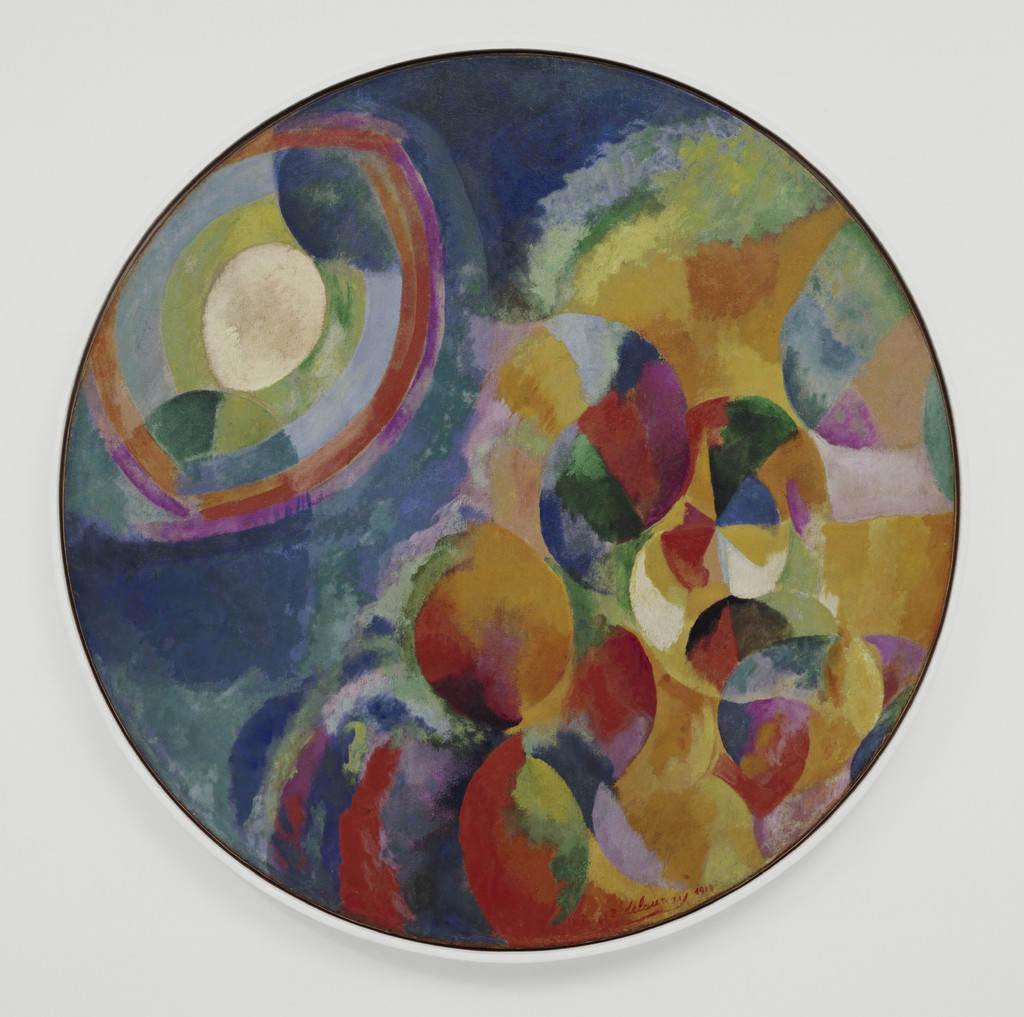
Simultaneous Contrasts: Sun and Moon
¿Se puede contemplar?
Por ahora no recibe

Nueva York, Estados Unidos
Pertenece a la colección, pero ahora mismo no está expuesta.
- Comprobado
- Fuente
- El museo
Ficha
- Número de inventario
- 1.1954
En el catálogo
Fuentes
- MoMA
- Imagen: MoMA — © the artist or rights holder
Mientras tanto, en la vida de Robert Delaunay
La vida entera1910
Marries Sonia Terk; the founding of Orphism
In 1910 Delaunay married Sonia Terk; together with a few others they founded the Orphism art movement, and the couple settled in a studio apartment in Paris.
1911
Joins the “Blue Rider” at Kandinsky’s invitation
In 1911, at the invitation of Wassily Kandinsky, Delaunay joined the Munich-based Blue Rider (Der Blaue Reiter) group, took part in its first exhibition and sold four works; he was also successful in Germany, Switzerland and Russia.
1912
The move from Cubism to Orphism
From 1912, together with his wife Sonia Terk-Delaunay, Delaunay moved from Cubism to a distinctive manner of abstract painting that Guillaume Apollinaire named Orphism. Unlike Kandinsky and Mondrian, he rejected idealist metaphysics and saw the main task of abstraction as the study of the dynamic qualities of colour.
1912
Break with the Cubists: “the heretic of Cubism”
1912 was a turning point for Delaunay: his paintings, like prisms compared with the Cubism of his fellow artists, provoked great arguments with comrades who banned colour from their palette, and he called himself “the heretic of Cubism”. The first published suggestion that he had broken with the Cubists appeared in James Burkley’s review of the Salon des Indépendants in L’Assiette au Beurre of 23 March 1912.
1912
The second Blue Rider exhibition and the Knave of Diamonds
In February 1912 Delaunay exhibited in the second Blaue Reiter exhibition in Munich and in the Knave of Diamonds exhibition in Moscow.
closed 13 March 1912
First major Paris exhibition, Galerie Barbazanges
His first major exhibition in Paris closed on 13 March 1912 after two weeks at the Galerie Barbazanges: organised by the mathematician and actuary Maurice Princet, it showed 46 works, from the Divisionist period of 1906–07 to the Proto-Cubist and Cubist Eiffel Tower paintings of 1909–12. Apollinaire praised the exhibition and saw in Delaunay an artist with a monumental vision of the world.