 Berthe MorisotFrancia, 1841–1895
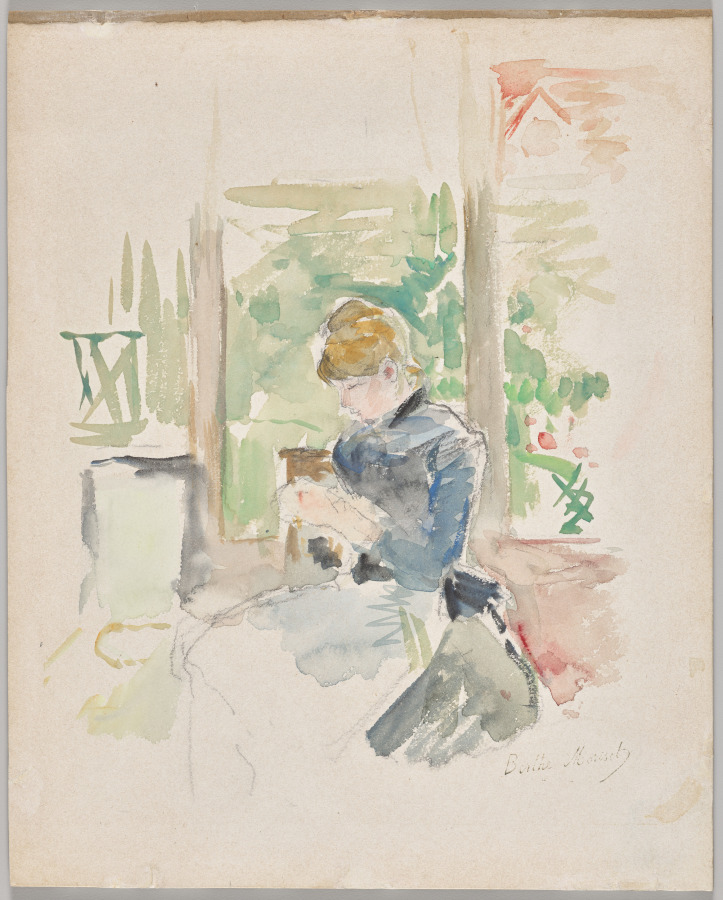
Sewing near the Window
¿Puedo verla?
No expuesta por ahora
¿Dónde está «Sewing near the Window» hoy? Colección: Museo de Arte de Cleveland, Cleveland. No expuesta por ahora. Comprobado 29 de septiembre de 2026.

Cleveland, Estados Unidos
Pertenece a la colección, pero ahora mismo no está expuesta.
- Comprobado
- En este estado desde
- Fuente
- El museo
Sobre la obra
This watercolor depicts Euphrasie, or Pasie, the nanny for Berthe Morisot’s young daughter Julie. Pasie appears in the artist’s apartment, sewing before a window during a contemplative moment. As with many of Morisot’s works in the medium, she used this example to develop the composition of a future painting into which she added Julie and more tightly cropped the scene. Watercolor was a constant interest for Morisot, and she practiced it from around 1870 throughout the rest of her career, creating both finished and preparatory works.
Museo de Arte de Cleveland
Ficha
- Número de inventario
- 2025.209
En el catálogo
Fuentes
- Museo de Arte de Cleveland
- Imagen: Museo de Arte de Cleveland — Museum open access
En la vida de Berthe Morisot
La vida entera1875–1885
Oil, watercolour and pastel at once
Grown more confident in oil, Morisot, like Degas, works in oil, watercolour and pastel at the same time. She paints very quickly but prepares with countless studies, so that she can paint “a mouth, eyes, and a nose with a single brushstroke”.
1885–1887
A turn to drawing: line and form
After 1885 drawing begins to dominate Morisot's work: she experiments with charcoal and coloured pencils and clarifies form and line, influenced by photography and Japonism. Like the Japanese prints of the time, she places objects away from the centre of the composition.
1887–1895
Squaring and tracing paper: the synthesis of her last years
Morisot starts to use squaring and tracing paper to transcribe her drawings exactly onto the canvas, which lets her build compositions with more complicated interaction between figures. Her late works are distinctive for their synthesis of the Impressionist touch with broad strokes and light reflections and the graphic approach of clear lines.