ART WIKI32.963 en sala
MapaColecciónArtistasMuseosExposicionesRevista
Acceder

ART WIKI

Dónde cuelga la obra maestra y cuándo le dejan pasar.

Colecciones: Galería Nacional de Arte, Galería Nacional de Dinamarca, Galería Nacional de Retratos, Galería Tretiakov, Harvard Art Museums, Instituto de Arte de Chicago, Instituto de Artes de Mineápolis, MoMA, Museo de Arte de Cleveland, Museo de Victoria y Alberto, Museo del Hermitage, Museo del Louvre, Museo Estatal Ruso, Museo Hirshhorn y Jardín de Esculturas, Museo J. Paul Getty, Museo Metropolitano de Arte, Museo Pushkin, Museo Smithsoniano de Arte Americano, Museo Whitney de Arte Estadounidense, National Museum of Asian Art, Rijksmuseum, Villa Getty, Catálogo Estatal del Fondo Museístico de Rusia (274 museos), Europeana (19 museos), Wikidata (6 museos), Paris Musées (12 museos) y Joconde, la base de museos del Ministerio de Cultura de Francia (495 museos). Las imágenes pertenecen a sus titulares de derechos.

Secciones

  • Mapa
  • Búsqueda
  • Colección
  • Obras maestras
  • Expuestas ahora
  • Artistas

Más

  • Museos y galerías
  • Exposiciones
  • Revista
  • De dónde salen los datos
  • Privacidad y cookies
InicioMapaCatálogo
  1. Colección/
  2. Instituto de Arte de Chicago/
  3. Seated Bodhisattva
Seated Bodhisattva, Japan, 8th century

Japan

Seated Bodhisattva

8th century · Sculpture

Sobre la escultura

This rare and important sculpture represents a Buddhist bodhisattva, or bosatsu, an enlightened and compassionate being who postponed Buddhahood in order to help save others. Calm, stately, and full-bodied, the bosatsu is seated in a frontal, meditative pose; his gracefully held hands, raised midair, make a gesture of assurance. Buddhism, which originated in India with the teachings of the Buddha Sakyamuni, or Siddhartha Gautama (c. 563-c. 483 B.C.), was named the official religion of Japan at the beginning of the eighth century by the Emperor Shomu (701-56). This small, finely crafted lacquer figure is the only Buddhist sculpture outside Japan that is firmly attributed to the influential sculpture workshop of Todai-ji, the largest and most prestigious of the great state-sponsored Buddhist temples built during the Nara period.

Seguir leyendo

This sculpture represents a dramatic shift in Japanese sculptural tradition—a move away from the expensive, time-consuming technique of using lacquer (a resin extracted from the sap of a tree) over a temporary clay core that, once removed, left a sculpture that was completely hollow except for perhaps a wood bracing system. Here a sculpted wood core is overlaid with lacquer-soaked cloth. The innovative sculptors at the Nara temple modeled the wet and pliable surface of the cloth to create fine details such as facial features and jewelry. Finally the sculpture was gilt; traces of gold remain on the bodhisattva's face and chest.

Instituto de Arte de Chicago

En la misma sala · Gallery 102, Instituto de Arte de Chicago
Página del museo

Sobre el mismo tema · Buddhism

Todas las obras sobre el tema
· CC BY 4.0

Ficha

Número de inventario
1962.356

Fuentes

  • Instituto de Arte de Chicago
  • Imagen: Instituto de Arte de Chicago — CC0
¿Se puede contemplar?

Sí, recibe visitas

Instituto de Arte de Chicago
Chicago, Estados Unidos

Sala102

Expuesta al público. Quién lo avala figura más abajo.

Comprobado
hace 3 días
En este estado desde
19 ago 2026
Fuente
El museo
En el mapaPágina del museo
Partial Figure of a Pregnant Women, Japan, 1000–300 BC

Japan

Partial Figure of a Pregnant Women, 1000–300 BC

Smiling Figurine, Japan, c. 1000–300 B.C.

Japan

Smiling Figurine, c. 1000–300 B.C.

Female Figurine with Topknot, Japan, 1000–300 B.C.

Japan

Female Figurine with Topknot, 1000–300 B.C.

Horse, Japan, 5th–6th century

Japan

Horse, 5th–6th century

Bishamon, Japan, 11th century

Japan

Bishamon, 11th century

Head of a Warrior, Japan, 6th century
Kofun period (mid 3rd–6th century A.D.)

Japan

Head of a Warrior, 6th century Kofun period (mid 3rd–6th century A.D.)

Yakushi Nyorai, Japan, 10th/11th century

Japan

Yakushi Nyorai, 10th/11th century

Buddha of Medicine Bhaishajyaguru (Yaoshi fo), ca. 1319

Paraíso de Bhaisajyaguru, ca. 1319

Museo Metropolitano de Arte

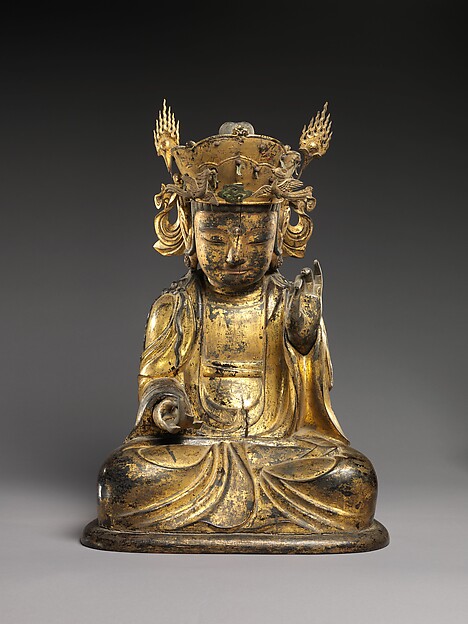
Seated bodhisattva (left attendant of a triad), ca. mid-17th century

Seated bodhisattva (left attendant of a triad), ca. mid-17th century

Museo Metropolitano de Arte

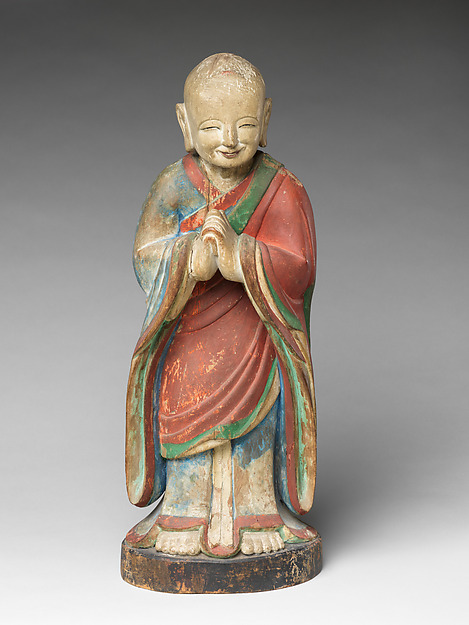
Kashyapa, dated 1700

Kashyapa, dated 1700

Museo Metropolitano de Arte

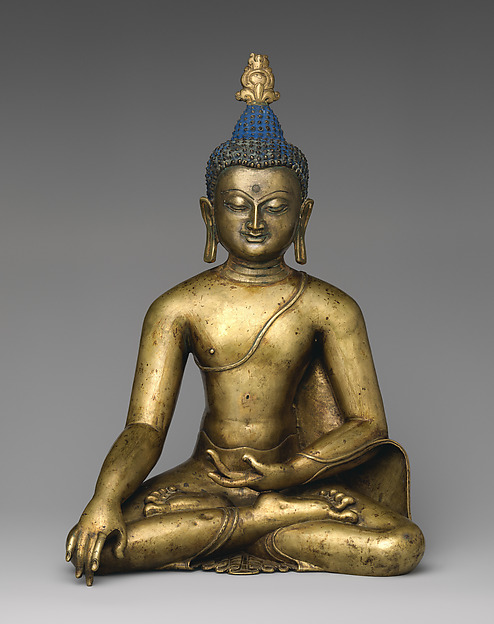
Buddha Shakyamuni, 12th century

Buddha Shakyamuni, 12th century

Museo Metropolitano de Arte

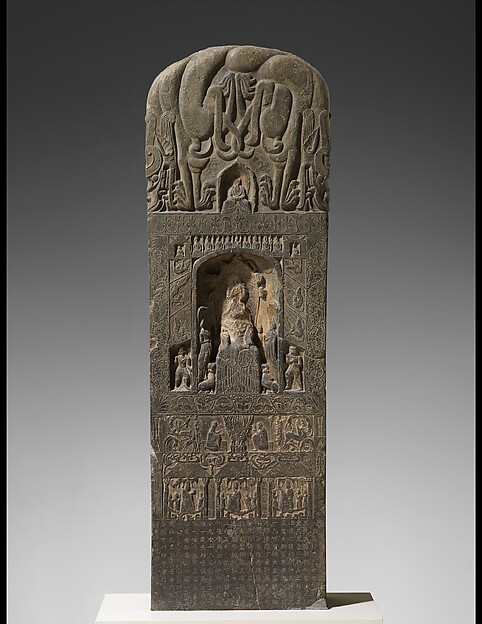
Stele commissioned by members of a devotional society, dated 528

Stele commissioned by members of a devotional society, dated 528

Museo Metropolitano de Arte

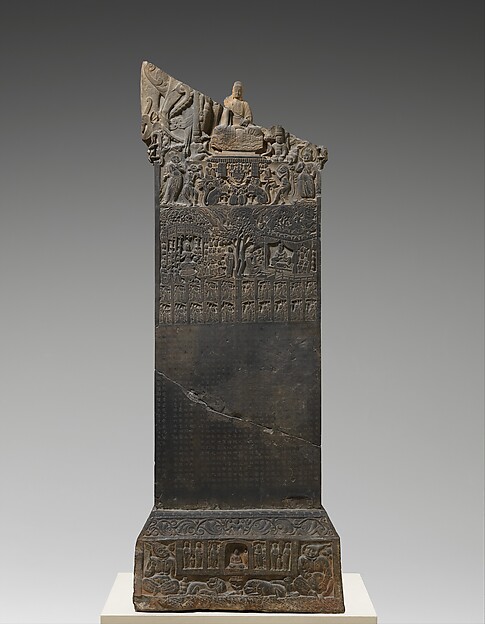
Stele Commissioned by Helian Ziyue (赫蓮子悅) and a Devotional Society of Five Hundred Individuals, dated 533–43

Stele Commissioned by Helian Ziyue (赫蓮子悅) and a Devotional Society of Five Hundred Individuals, dated 533–43

Museo Metropolitano de Arte

Legends of the Yūzū Nembutsu Sect, Artist unknown, Kamakura period (1185–1333), 14th century

Artist unknown

Legends of the Yūzū Nembutsu Sect, Kamakura period (1185–1333), 14th century

No expuesta · Instituto de Arte de Chicago

Head of a Luohan, China, Northern Song, Liao, or Jin dynasty, c. 11th century

China

Head of a Luohan, Northern Song, Liao, or Jin dynasty, c. 11th century

Instituto de Arte de Chicago

Lo que muestra

BuddhismReligion

En el catálogo

EsculturaMaderaJapanese (culture or style)NaraJapón