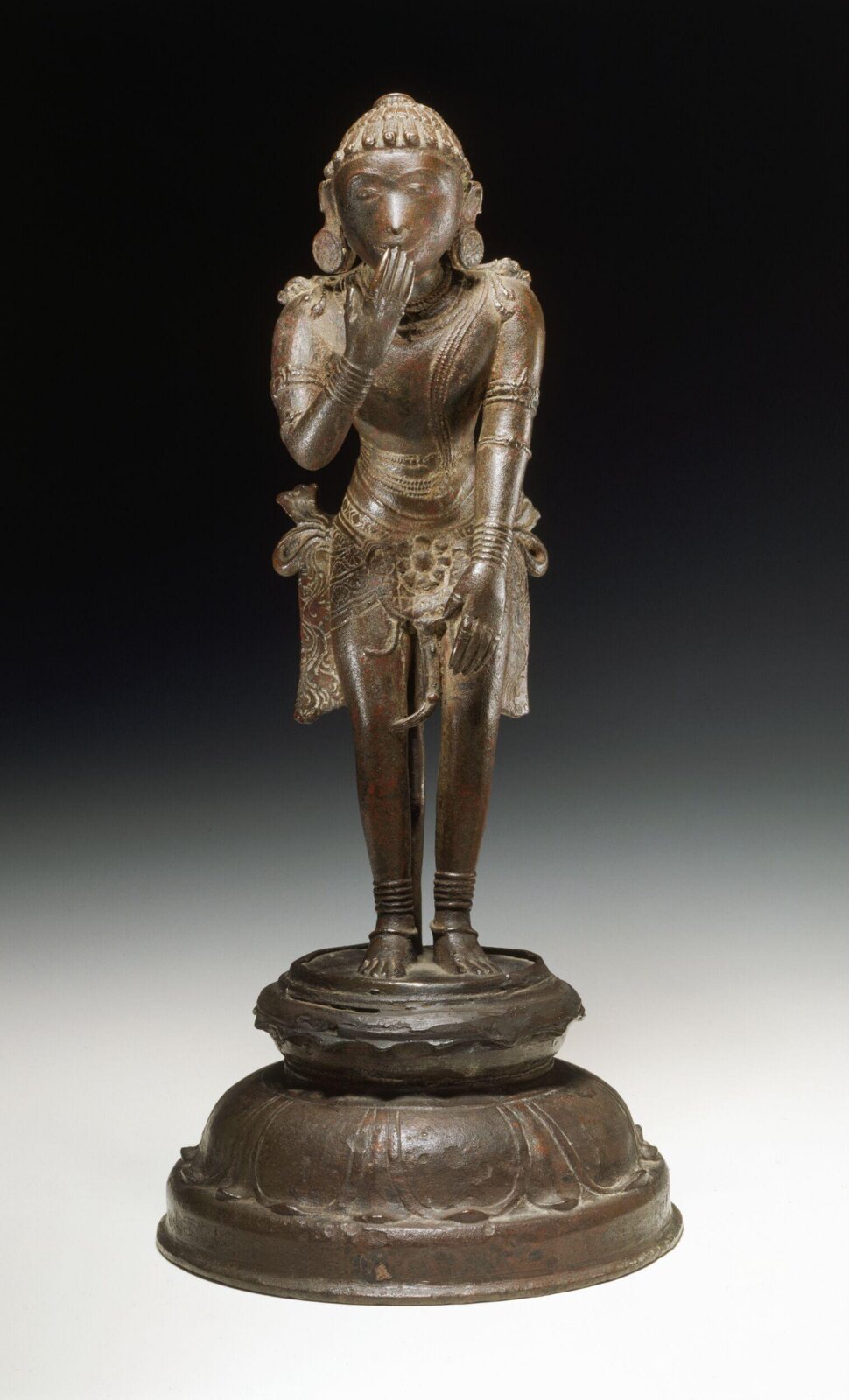
Sculpture
¿Se puede contemplar?
Se desconoce: el museo guarda silencio

Museo de Victoria y Alberto
Londres, Reino Unido
Se sabe quién es el propietario. Si hoy está expuesta, el museo no lo dice, y a adivinar no nos enseñaron.
- En este estado desde
- 25 sept 2026
- Fuente
- Los datos de colección del propio museo
About the sculpture
The monkey deity, general of the monkey army and staunch ally of Rama in his war with Ravana, the demon-king of Lanka, as described in the epic Ramayana. Hanuman is worshipped as a minor god attending Visnu as Rama, akin in status to Garuda, Visnu’s bird-vehicle (vahana). He is also venerated as an independent folk-deity, much admired for the high human virtues he displays, most notably bravery and loyalty. His physical strength and prowess has earned him the role of patron-deity of wandering acrobats and wrestlers. Images in his honour are a regular feature of rural settings and wayside shrines. In the context of temple Hinduism, Hanuman forms part of a four-part ensemble along with Rama, his brother Laksmana and his wife Sita. Processional bronzes such as this would be expected to have belonged to such a group.
Read on
The part-human figure of Hanuman flexes slightly forward in humility and gestures obeisance with his raised hand, expressing respect for his god. He wears a short waist-cloth, finely patterned, and an ornate girdle and sash, the latter tied in projecting bows at the hips. The hair is in neat tresses and curls, capped with a small circular crown ornament and he wears jewellery, including circular earplug ornaments, and a sacred cord. This figure achieves a touching humility and tenderness rarely encountered in late Chola art.
The figure is fixed to a thinly cast circular lotus pedestal (padmapitha). The presence of encrusted carbonate material in the surface patina indicates a period of burial. This image was one of a group discovered at Coimbatore, in Kongunadu, and presented to Lord Curzon of Kedleston during his term as Viceroy of India, between 1898 and 1905.
Museo de Victoria y Alberto
Ficha
- Número de inventario
- IM.135-1927
What it shows
En el catálogo
Fuentes
- Museo de Victoria y Alberto: the museum's own open data · obtenido hace 4 días
- Imagen: Museo de Victoria y Alberto — © Victoria and Albert Museum, London