 CanalettoItalia, 1697–1768
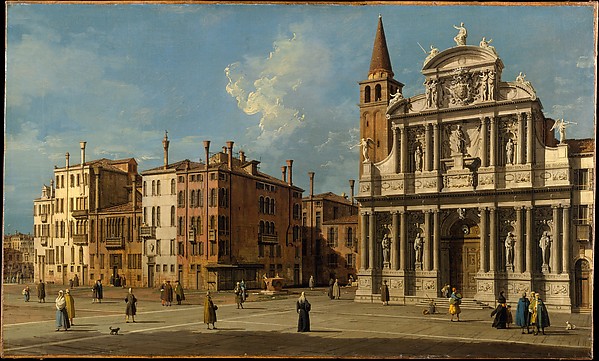
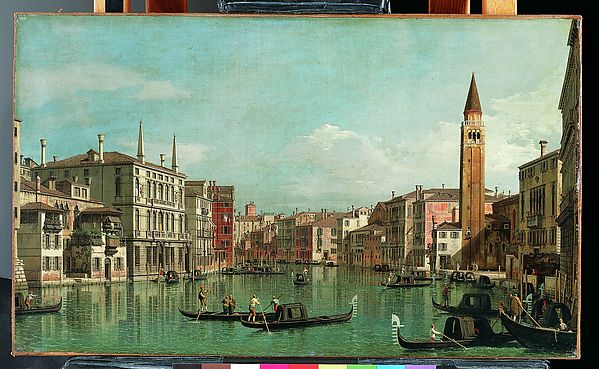
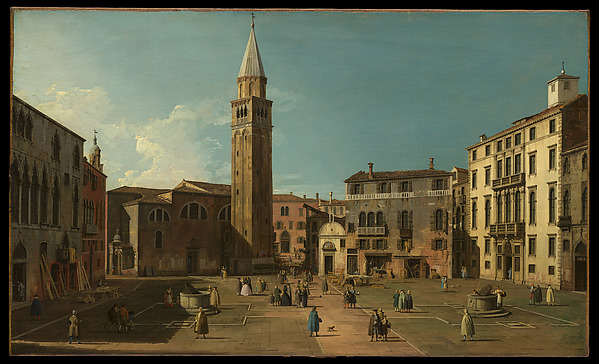
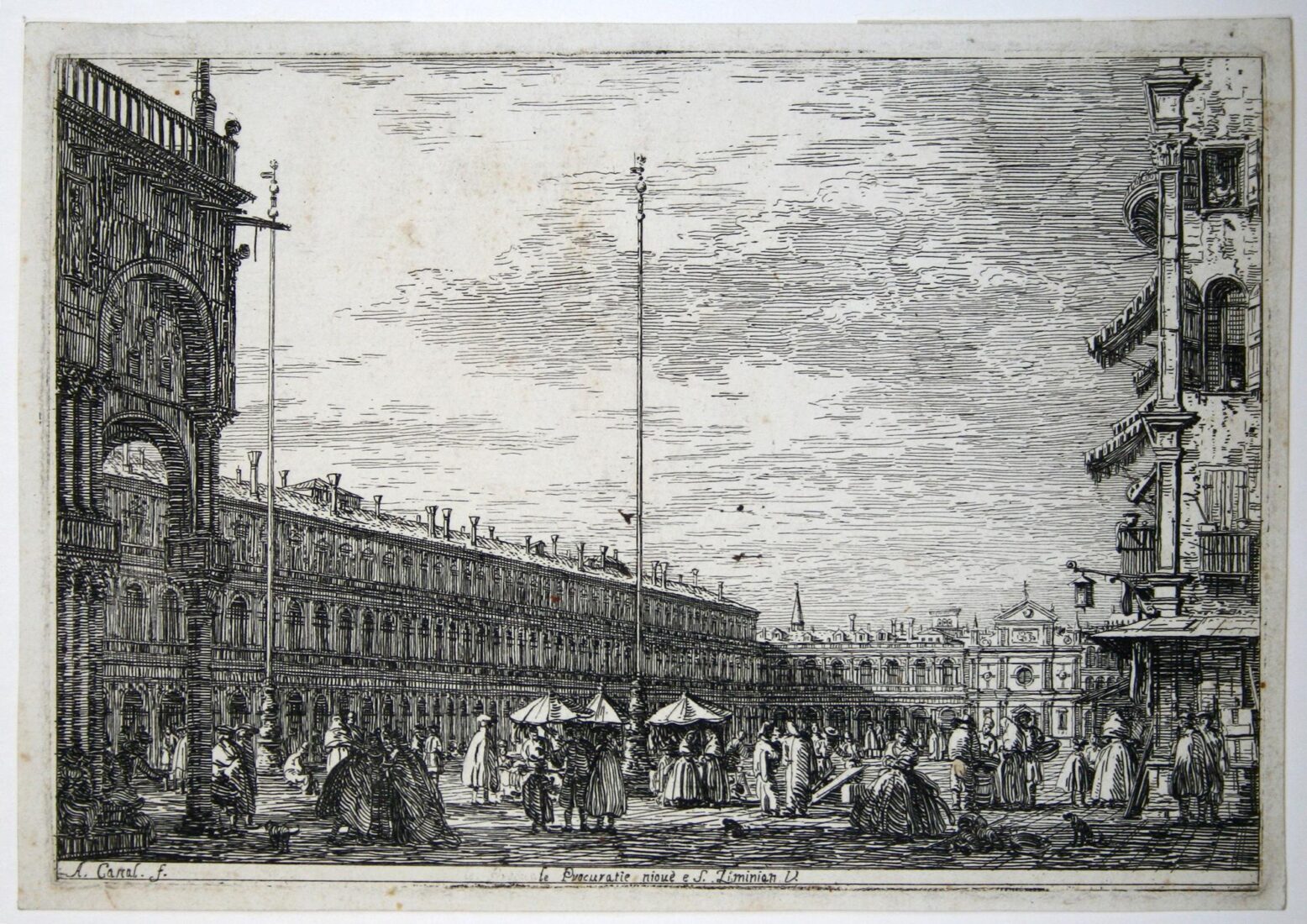
Τα Νέα Δικαστήρια και η εκκλησία του San Gimignano στη Βενετία
¿Se puede contemplar?
Se desconoce

Atenas, Grecia
Se conoce el propietario; no se sabe si hoy está expuesta.
- En este estado desde
- Fuente
- El museo
Ficha
Lo que muestra
En el catálogo
Fuentes
- National Gallery – Alexandros Soutsos Museum
- Imagen: National Gallery – Alexandros Soutsos Museum — CC BY-NC-ND 4.0
Mientras tanto, en la vida de Canaletto
La vida entera1720–1746 · Lugar de trabajo
Venice
1740s
The War of the Austrian Succession: the British stop coming
In the 1740s Canaletto's market is disrupted when the War of the Austrian Succession reduces the number of British visitors to Venice. Smith arranges for the publication of a series of etchings of “capricci” (architectural fantasies), but the returns are not high enough.
1744
His father, Bernardo Canal, dies
In 1744 Canaletto's father, the painter Bernardo Canal, from whom he had learned his trade, dies.
1746
Moving to London because of wars and a collapsing market
Smith inspires Canaletto to travel to London; because of the wars shaking continental Europe he decides in 1746 to move to England, where he will live for the next ten years.
1746–1755
Rumours of an impostor: a newspaper advertisement
Canaletto's English paintings become repetitive and mechanical, and the critic George Vertue suggests that the man painting under the name “Canaletto” is an impostor — perhaps because his nephew Bernardo Bellotto was also using his uncle's nickname, or, more likely, because unscrupulous dealers passing off copies were anxious to see him return to Venice. To refute the claim the artist invites “any Gentleman”, through a newspaper advertisement, to inspect his latest painting of St James's Park at his studio in Silver Street, but his reputation never fully recovers in his lifetime.
1746–1756 · Lugar de trabajo
Great Britain