 Gerard van HonthorstPaíses Bajos, 1592–1656
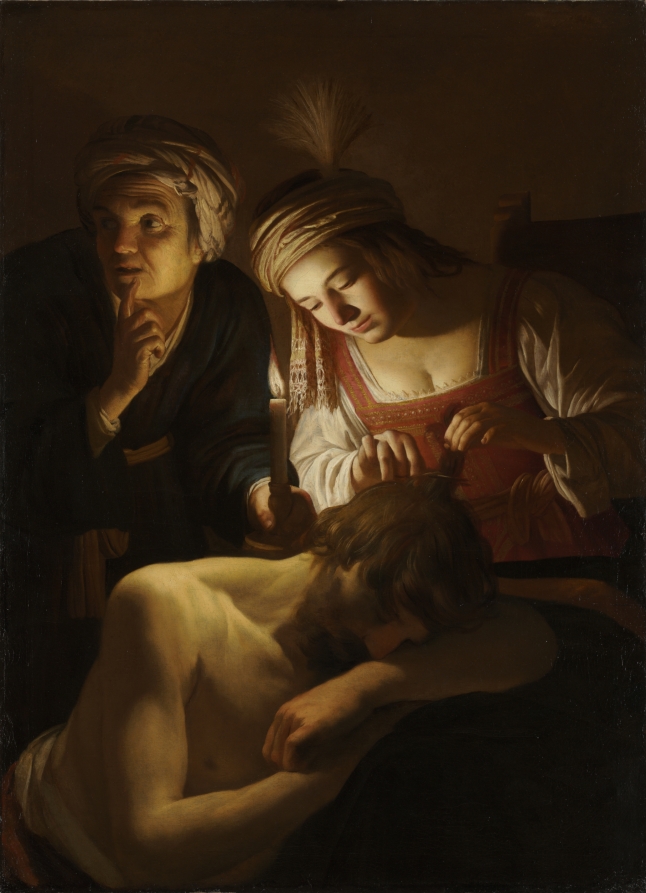
Samson and Delilah
Sobre el cuadro
In retaliation for Samson’s single-handed decimation of their army, the Philistines bribed his lover Delilah to discover the source of his strength: his hair, uncut since birth. Samson’s hair was shorn as he lay sleeping in Delilah’s lap, draining his strength and allowing the Philistines to capture him. Honthorst intensified the inherent drama of the scene by limiting his depiction to just three closely packed figures, starkly illuminated by a single candle. The old woman’s silencing gesture involves the viewer in the action, making us complicit in Delilah’s deceit.
Museo de Arte de Cleveland

Ficha
- Número de inventario
- 1968.23
Mientras tanto, en la vida de Gerard van Honthorst
La vida entera1610–1615 · Lugar de trabajo
Rome
c. 1610 – 1620
At the palace of Marquis Giustiniani in Rome
In Rome Honthorst lodged at the palace of Marquis Vincenzo Giustiniani, where he painted “Christ Before the High Priest” (now in the National Gallery, London), and under Caravaggio's influence took up night scenes lit by a hidden artificial source. Italian documents of his day call him “Gherardo Fiammingo” or “Gherardo Hollandese”: the nickname “Gherardo delle Notti” came into use only in the 18th century.
c. 1610 – 1620
Commissions from Cardinal Scipione Borghese
Cardinal Scipione Borghese became another important patron, securing him commissions at San Silvestro in Monte Compatri and Santa Maria della Vittoria in Rome. The artist also worked for Cosimo II de' Medici, Grand Duke of Tuscany.