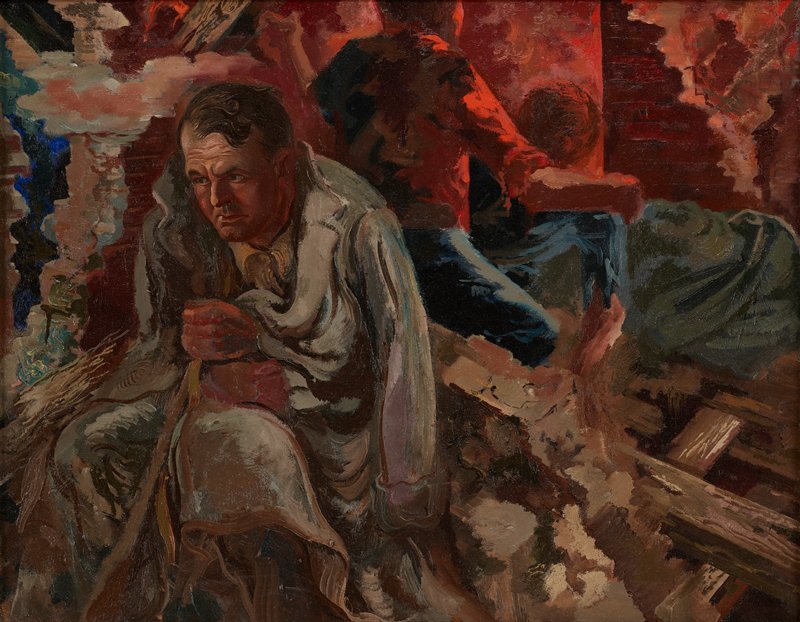
 Grosz, GeorgeAlemania, 1893–1959
Remembering
¿Se puede contemplar?
Por ahora no recibe

Instituto de Artes de Mineápolis
Minneapolis, Estados Unidos
Pertenece a la colección, pero ahora mismo no está expuesta.
- Comprobado
- En este estado desde
- Fuente
- Los datos de colección del propio museo
About the painting
George Grosz made this self-portrait following a visit to his native Germany in 1935. Grosz shivers in the shell of a ruined building, replaying images in his mind, which we see behind him. He had moved to the United States in 1932 to escape the rise of Fascism in Europe and to teach. During his return trip, Grosz witnessed the gravity of Nazi persecution in his home country, and he made this image to express his anxiety about the situation. He was haunted by what he saw, and he felt visited by premonitions of the future—World War II (1939–45).
Read on
Years later he reflected on the impulse behind such images. “I could not explain exactly what was really troubling me. But after I had returned to the States, my paintings became prophetic. I was compelled by an inner warning to paint destruction and ruins; some of my paintings I called ‘Apocalyptic Landscapes, ’ though that was quite some time before the real thing took place.” Grosz had been an early and forceful critic of the Nazi Party, and from his vantage point as an exile in 1937 anticipated its reign of terror.
Instituto de Artes de Mineápolis
Ficha
- Número de inventario
- 2017.107
En el catálogo
Fuentes
- Instituto de Artes de Mineápolis: the museum's own open data · obtenido hace 6 días
- Imagen: Instituto de Artes de Mineápolis — © Estate of George Grosz / Licensed by VAGA at Artists Rights Society (ARS), NY
Mientras tanto, en la vida de Grosz, George
La vida entera1933–1945
His work is classed as “degenerate art”
In Nazi Germany Grosz's work is classed as 'degenerate art'.
1933–1955
Teaching at the Art Students League
Grosz teaches at the Art Students League of New York until 1955; his students include Romare Bearden, who was influenced by his collage style, Joseph Glasco and Robert Cenedella, whom he mentored from 1957 to 1959.
1937 · Distinción
Guggenheim Fellowship
1938
American citizenship
Grosz becomes a naturalised US citizen and makes his home in Bayside, New York.
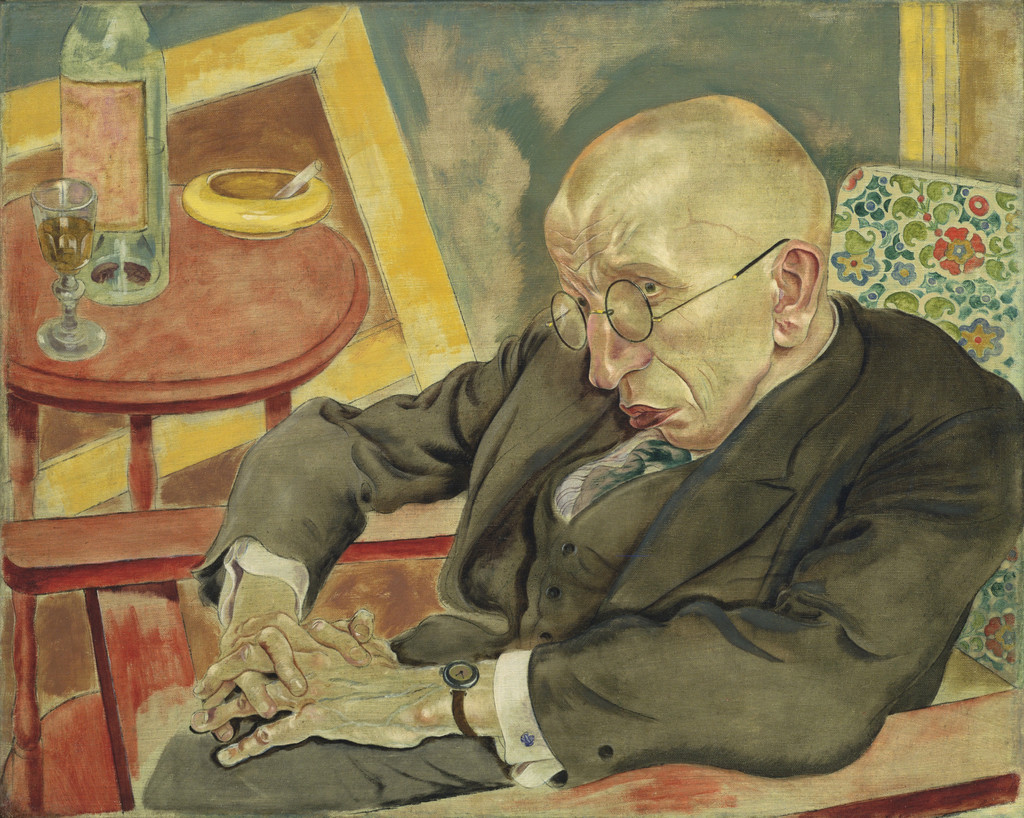
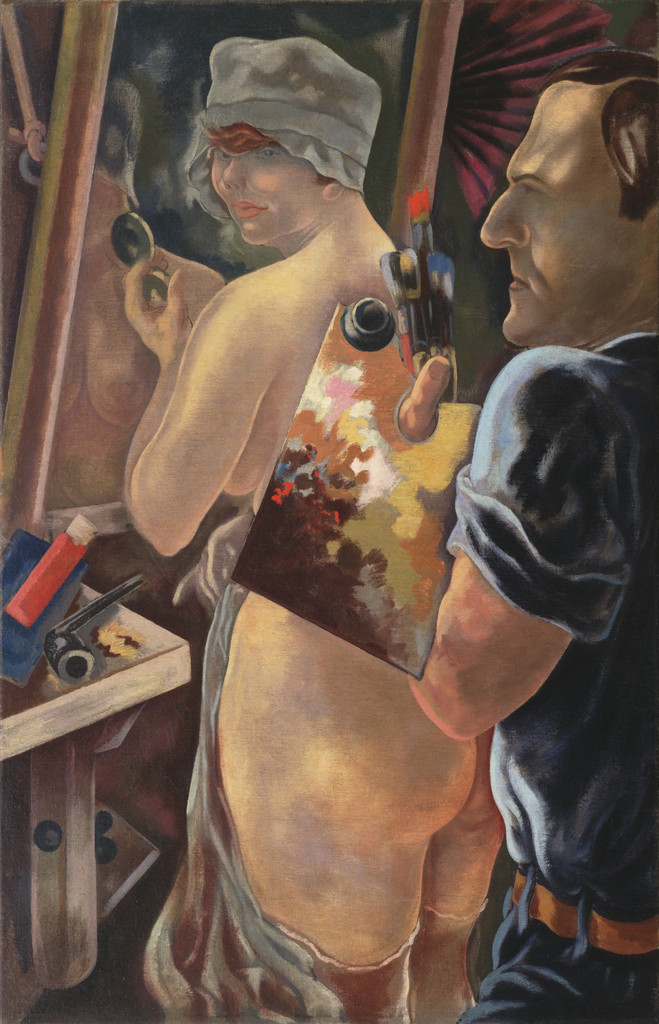

![In The Drawing Room [The Art Critics], George Grosz, late 1920s](https://api.nga.gov/iiif/4ab386b6-bf31-4ce2-8d4f-dffa98ae7480/full/!2400,2400/0/default.jpg)
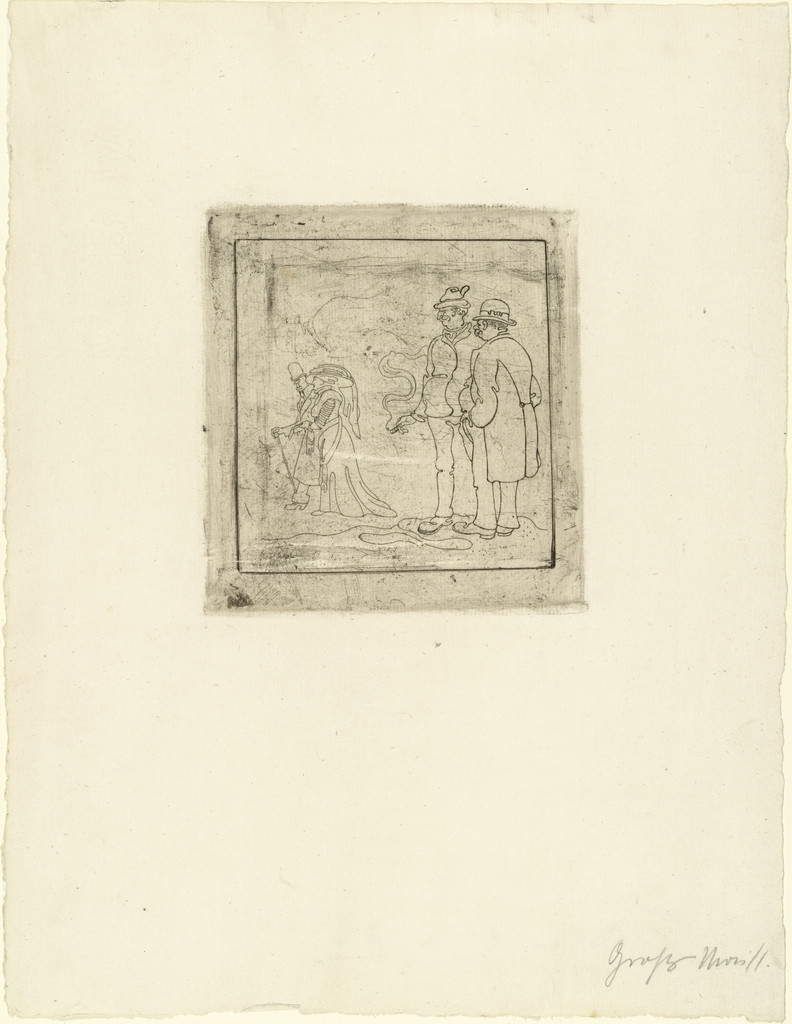

![The End of the Road (Out of Fear of Starvation) [Das Ende des Weges (Aus Nahrungssorgen)], George Grosz, 1913](https://www.moma.org/media/W1siZiIsIjEyMTkwNyJdLFsicCIsImNvbnZlcnQiLCItcmVzaXplIDEwMjR4MTAyNFx1MDAzZSJdXQ.jpg?sha=864379f3ce59af36)








