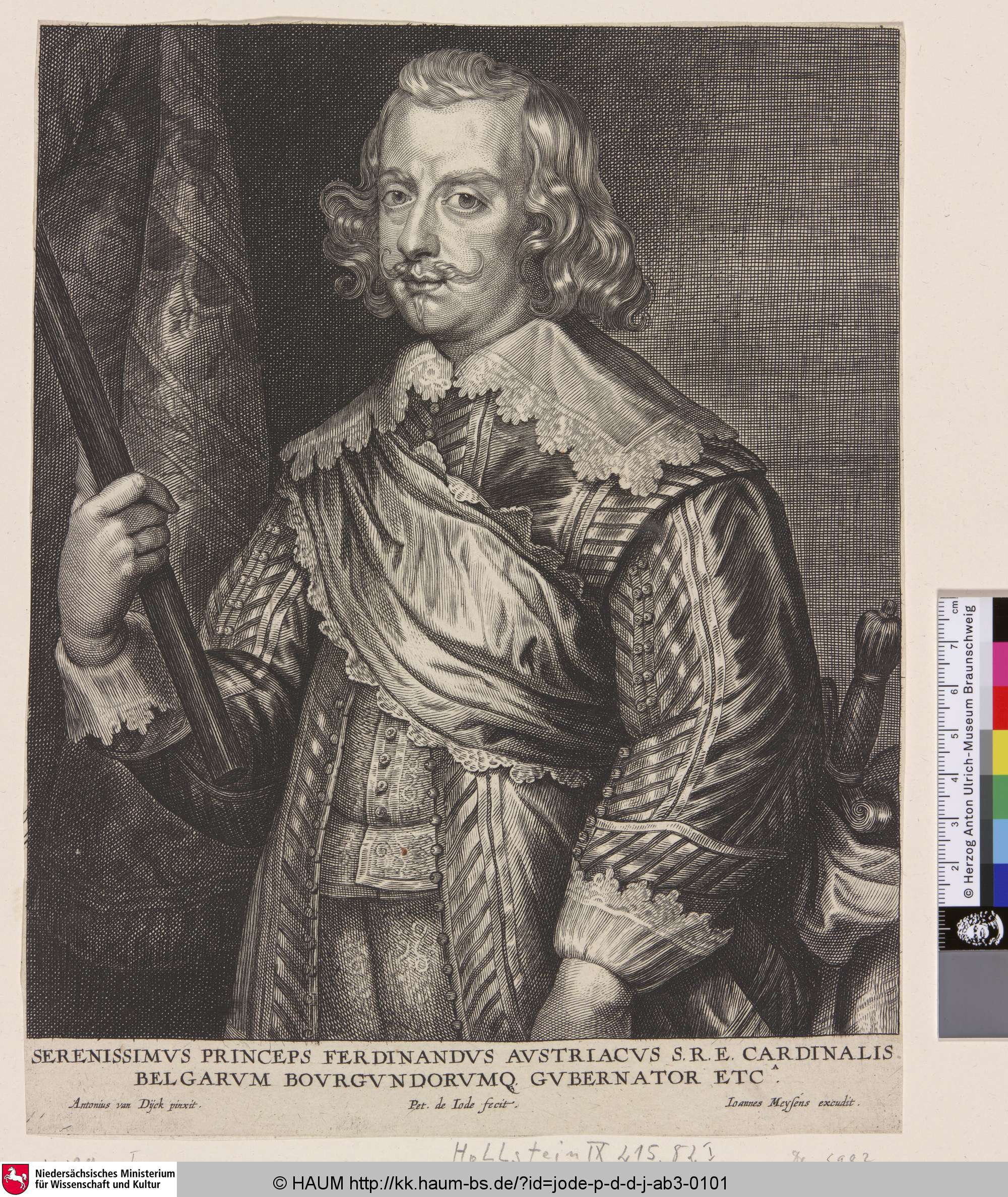
 Anthony van DyckFlandes, 1599–1641
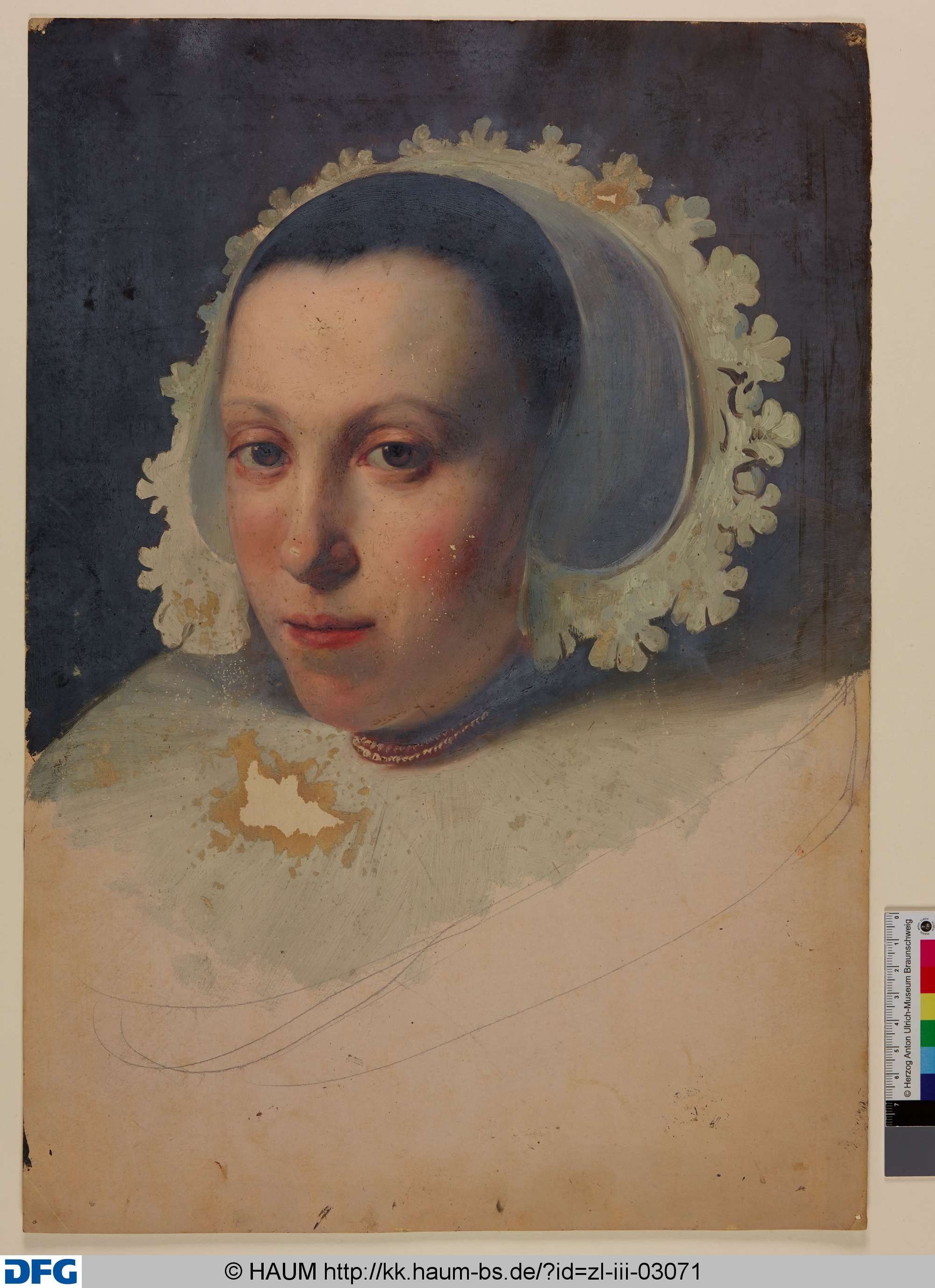
Princeps Ferdinandus Austriacus
¿Se puede contemplar?
Se desconoce

Brunswick, Alemania
Se conoce el propietario; no se sabe si hoy está expuesta.
- En este estado desde
- Fuente
- El museo
Ficha
Lo que muestra
En el catálogo
Fuentes
- Museo Herzog Anton Ulrich
- Imagen: Museo Herzog Anton Ulrich — CC BY-NC-SA 4.0
Mientras tanto, en la vida de Anthony van Dyck
La vida entera1624
Quarantine During the Plague in Palermo
In Palermo Van Dyck found himself in quarantine during the plague of 1624, one of the most severe in Sicily's history; there he created an important series of paintings of Saint Rosalia, the city's patroness, establishing her iconography for the Italian Baroque.
1624
Invitation to Palermo
In April 1624 Emmanuel Philibert of Savoy, Viceroy of Sicily, invited Van Dyck to Palermo to paint his portrait.
1626–1632
The Iconography Print Series
After returning to Antwerp, Van Dyck conceived a large series of engraved portraits of his contemporaries, the Iconography; he etched eighteen plates himself, executing the preparatory drawings mainly between 1626 and 1633. The first edition (80 plates) appeared in Antwerp in 1632.
5 July 1632
Principal Painter to King Charles I
On 5 July 1632 Charles I officially appointed Van Dyck principal painter to the king, guaranteeing an annual income of two hundred pounds sterling; the king gave him a large house with a garden on the banks of the Thames.
27 de febrero de 1640
Married: Mary Ruthven
9 de diciembre de 1641
Died







![[The Triumph of Julius Caesar; Le triomphe de Jules César; Die Musikanten], Andrea Mantegna, 1599](https://diglib.hab.de/varia/haum/andreani-a-v2-0150-8/max/000001.jpg)
![[The Triumph of Julius Caesar; Le triomphe de Jules César; Die Trophäenträger], Andrea Mantegna, 1599](https://diglib.hab.de/varia/haum/andreani-a-v2-0150-3/max/000001.jpg)


