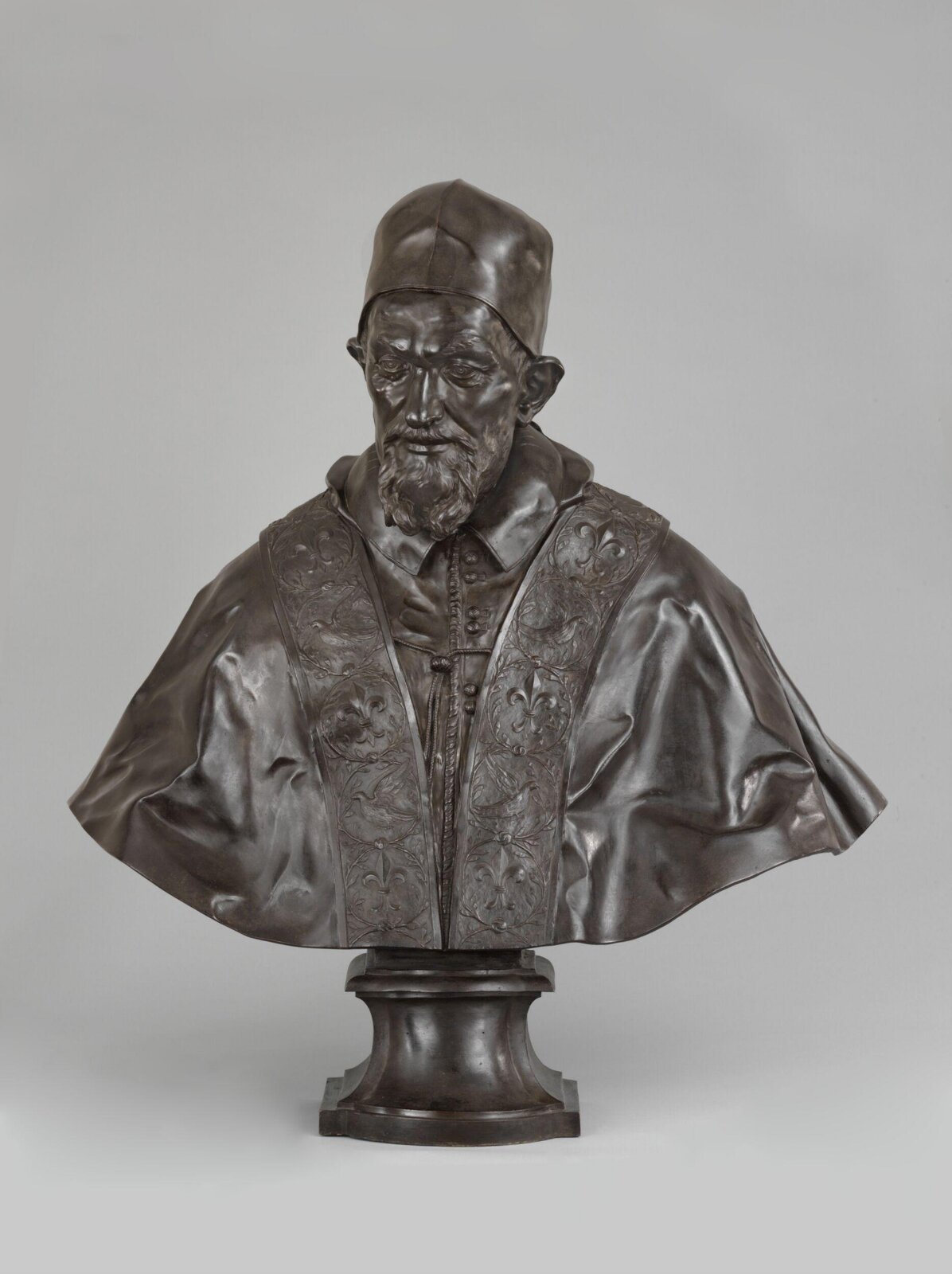
 Domenico GuidiItalia, 1625–1701
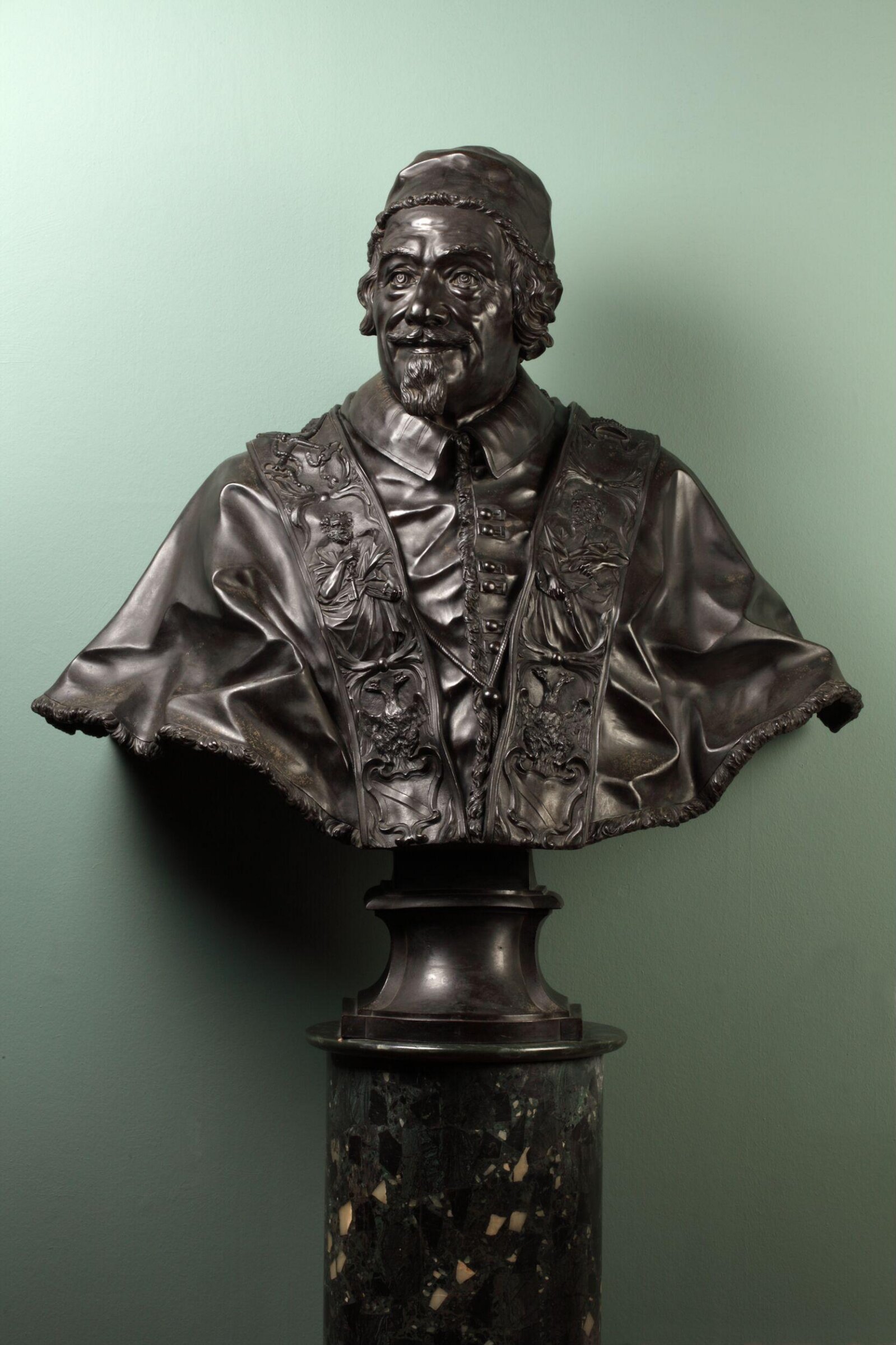
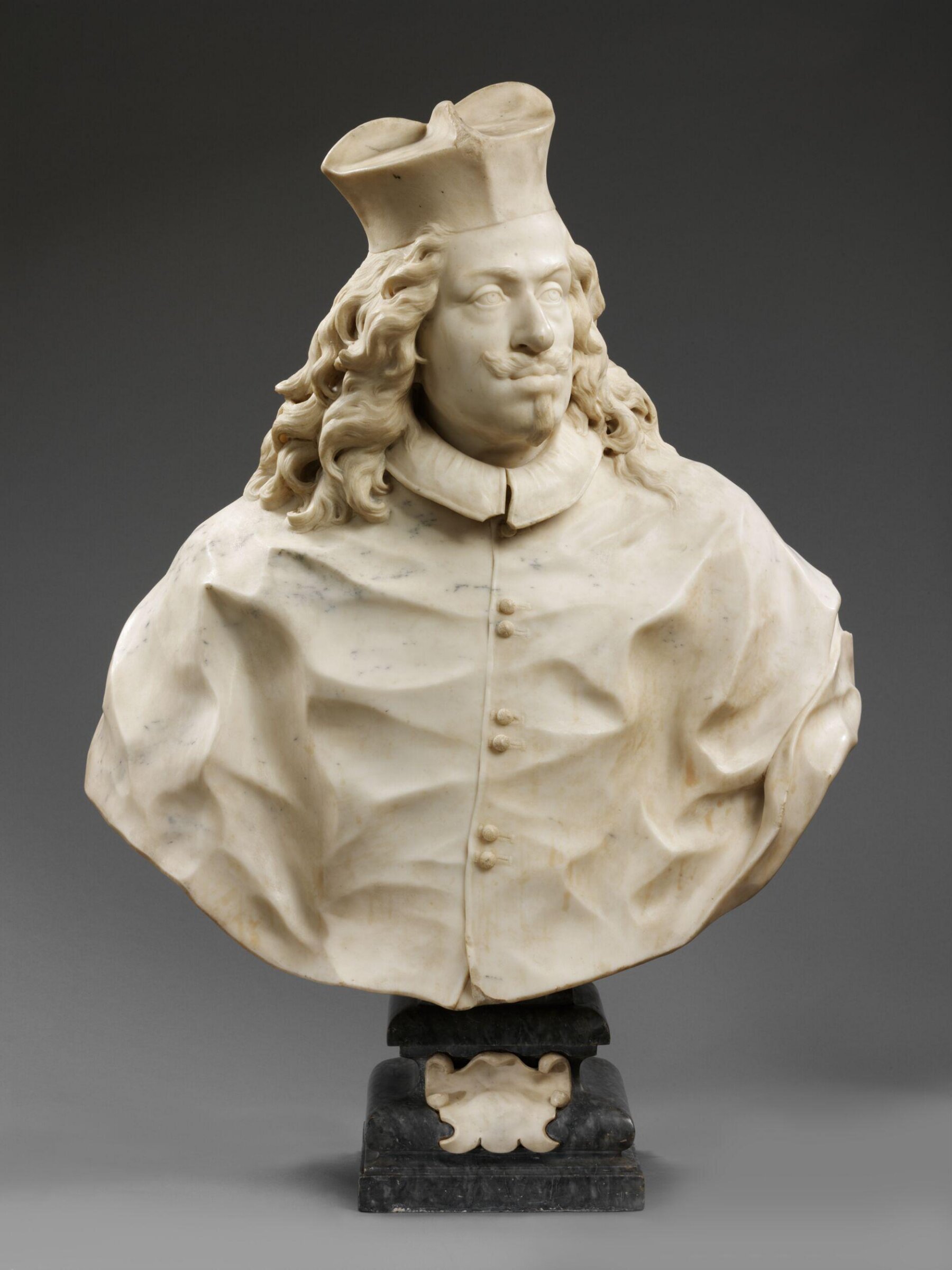
Pope Innocent X
¿Puedo verla?
Sí, expuesta ahora
¿Dónde está «Pope Innocent X» hoy? Museo de Victoria y Alberto, Europe 1600-1815, Room 7, The Sheikha Amna Bint Mohammed Al Thani Gallery, Londres. Sí, expuesta ahora. Comprobado 25 de septiembre de 2026.

Londres, Reino Unido
SalaEurope 1600-1815, Room 7, The Sheikha Amna Bint Mohammed Al Thani Gallery
Cerrado· abre mañana a las 10:00
Expuesta al público.
- Comprobado
- En este estado desde
- Fuente
- El museo
Sobre la escultura
This bust of Pope Innocent X Pamphili (1574-1655; elected pope in 1644) is a pair to one of the later Pope, Alexander VIII Ottoboni (1610-1691; elected Pope 1689) also by Domenico Guidi; both bronze busts are in the V&A's collection.
Guidi's portrait of Innocent X is ultimately based on an earlier terracotta model of circa 1650 by Alessandro Algardi (1598-1654), who was Guidi's master; this terracotta is now in the Museo Nazionale del Palazzo di Venezia (formerly it was in the Palazzo Odescalchi) in Rome.
Leer más
Algardi's original bust of about 1650 provides a deeply sensitive interpretation of the man and the pontiff, his tired and irascible eyes reflecting the bitterness of his many disappointments, together with an awareness of his power and the dignity of his role. It was carved in rivalry with Bernini, the more fiery sculptor of the two, who produced two portrait busts in marble of the same pope, both now in Palazzo Doria-Pamphili, Rome. Algardi's calm and contemplative image is probably physiognomically the more accurate, as can be gauged by comparison with a third, masterly portrait of Innocent, this time in paint, by Diego Velázquez.
Algardi's terracotta model, as well as several bronzes he had cast from that model, differ from Guidi's portrayals of the Pope, above all in the folds of the drapery, and other details of the vestments. Guidi clearly adapted his master's portrait after both Algardi's and Innocent X's deaths; his terracotta version of this prototype is in the Palazzo Doria Pamphili in Rome. Using the standard model of his deceased master, Guidi strengthened the zig-zagging pattern of folds and altered some details in order to approximate his own style. He was probably commissioned to make a posthumous bronze portrait of Innocent for the then reigning Pope, Alexander VIII, to be paired with a portrait of Alexander himself, in about 1690 (the bust of Alexander is documented as being cast in April of that year).
Innocent X had made the future Alexander VIII (then Pietro Ottoboni) a cardinal in 1652, and this may explain why the latter wanted his bust to be paired with that of his papal predecessor. A pair of Guidi's bronzes of Innocent X and Alexander VIII was formerly in the Ottoboni Palace in Rome; that bust of Innocent X is now lost, and only the Alexander VIII survives there. Another bronze cast attributed to Guidi, after Algardi model, is held at the Metropolitan Museum of Art (Museum number: 08.49)
Guidi unusually cast and finished his own bronzes, and so this was probably produced under his supervision. The high quality of its surface can be seen in the details of the vestments, such as the low relief birds and fleurs-de-lis encircled with foliate designs on the stole, as well as in the subtle representation of the facial features. This sculpture is in the tradition of monumental bronze portraits of Popes, such as the famous examples by Bernini and Algardi. The sweeping vestments and baroque naturalism, while actually rooted in classical traditions of Roman imperial busts, give these portraits immense presence and power. In addition to the likenesses of Innocent X by Algardi, this pontiff had also been portrayed in marble busts by Bernini, and in a celebrated painting by Diego Velázquez (1599-1660) of about 1650.
Domenico Guidi (1625-1701) trained with his uncle Giuliano Finelli in Naples before joining Algardi's workshop in Rome in 1647, where he remained active as a sculptor until his death. His major works include the Holy Family relief in the church of Sant'Agnese in Piazza Navona and the Lamentation in the Cappella Monte di Pieta. After Bernini's death in 1680 and that of Ercole Ferrata six years later, Guidi had the largest and most productive studio in Rome. His patrons included Louis XIV and Queen Christina, as well as a number of Popes, Cardinal and European nobles. Guidi was one of the few sculptors of the seventeenth century to cast and finish his own bronzes.
Museo de Victoria y Alberto
Ficha
- Número de inventario
- 1088-1853
Lo que muestra
En el catálogo
Fuentes
- Museo de Victoria y Alberto
- Imagen: Museo de Victoria y Alberto — © Victoria and Albert Museum, London