Nicolas PoussinFrancia, 1594–1665
Polyphème
¿Puedo verla?
Se desconoce
¿Dónde está «Polyphème» hoy? Colección: Musée municipal de Louhans, Louhans. Se desconoce.
Louhans, Francia
Se conoce el propietario; no se sabe si hoy está expuesta.
- En este estado desde
- Fuente
- El museo
Sobre la obra
En palabras del museo — en francés
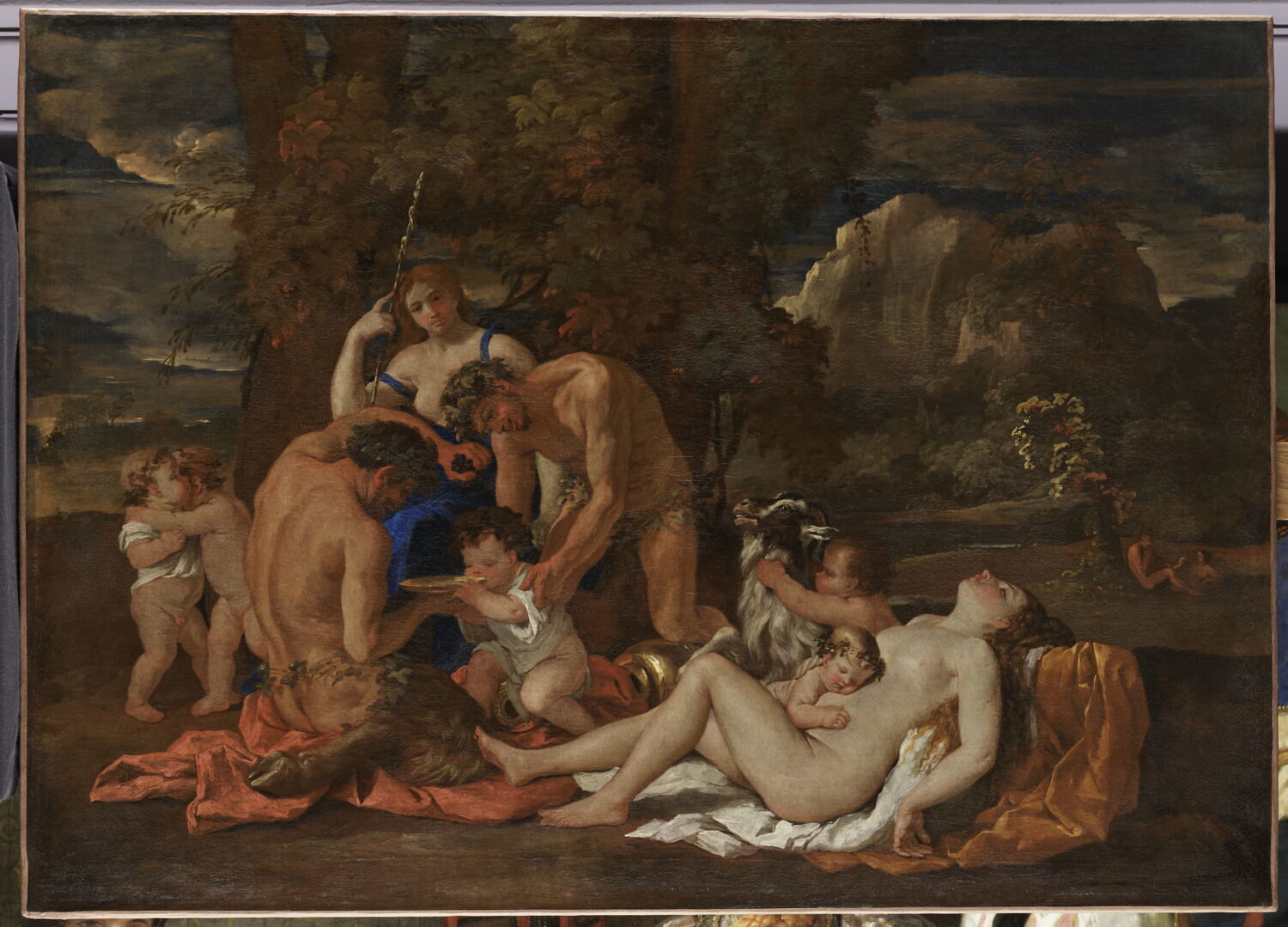
Une estampe représentant une scène mythologique d'après " Polyphème", œuvre de Nicolas Poussin réalisée en 1649, encadrée sous verre.#Sur le tableau, Polyphème, dressé sur la montagne, enchante par sa flûte les nymphes qui sont sur la berge. Un satyre caché dans les buissons cherche à s’approcher d'elles tandis qu’à l’arrière-plan un laboureur suit sa charrue.
Musée municipal de Louhans
Ficha
- Número de inventario
- MPL 92.1.95
En el catálogo
Fuentes
- Musée municipal de Louhans
- Imagen: Musée municipal de Louhans — © CRASH RECORD; Ministère de la Culture (France), base Joconde
En la vida de Nicolas Poussin
La vida enterac. 1612
At eighteen he runs away to Paris
His parents apparently opposed a painting career for him, and around 1612 he ran away to Paris, in the regency of Marie de’ Medici, when art was flourishing thanks to her commissions and to wealthy merchants. But Poussin was not a member of the powerful guild of master painters and sculptors, which held a monopoly on most commissions and brought lawsuits against outsiders trying to break into the profession.
spring 1624
Spring 1624: Poussin arrives in Rome
According to Bellori Poussin settled in Rome in the spring of 1624 (other accounts say he first visited Venice); the lists of the church of San Lorenzo in Lucina name him from March 1624 among twenty-two people, mostly French artists, living in the house of Simon Vouet. He studied Raphael, while Caravaggio, whose literal materiality repelled him, he held to have come “to destroy painting”.
1630
Gives up monumental commissions
In 1630 the commission headed by Domenichino and d’Arpino gave the decoration of the Chapel of the Immaculate Conception in San Luigi dei Francesi to the Lorrainer Charles Mellin, not to Poussin. After that he firmly renounced the monumental genre and turned to “cabinet painting” for private patrons.
1640
December 1640: Poussin returns to Paris
François Sublet de Noyers, Superintendent of the King’s Buildings, whose invitations Poussin had declined, sent his cousins Roland and Paul Fréart to Rome, offering the title of First Painter to the King and a substantial residence at the Tuileries. Poussin yielded, and in December 1640 he was back in Paris.
autumn 1642
Finds a pretext and leaves for Rome for good
Increasingly unhappy with court intrigue and the weight of commissions, in the autumn of 1642, while the king and court were in Languedoc, Poussin found a pretext to leave Paris and returned to Rome permanently.
19 de noviembre de 1665
Died