Peter Paul RubensFlandes, 1577–1640
Feast in the House of Simon the Pharisee
¿Se puede contemplar?
Sí, recibe visitas

San Petersburgo, Rusia
Expuesta al público.
- Comprobado
- En este estado desde
- Fuente
- El museo
Sobre el cuadro
Feast in the House of Simon the Pharisee, also known as Christ in the Home of Simon the Pharisee, is a painting by Peter Paul Rubens. It was painted c. 1618–1620, and is in The Hermitage Museum, St. Petersburg.
The painting depicts an incident from Luke 7 where Jesus visits Simon the Pharisee, and has his feet anointed by a "sinful woman". Jesus proceeds to tell the Parable of the Two Debtors.
En palabras del museo — en ruso
Cогласно Евангелию от Луки, во время пира у фарисея Симона, где присутствовали Христос с учениками, в дом вошла раскаявшаяся грешница, которая омыла ноги Иисуса своими слезами, обтерла длинными волосами и возлила на них миро. Фарисеи осудили Христа за то, что он позволил прикоснуться к себе грешнице и за трату драгоценного масла. Иисус же сказал женщине: "Вера твоя спасла тебя", а фарисеям ответил: "Прощаются грехи ее многие за то, что она возлюбила много". Рубенс сделал содержанием картины драматический конфликт между фарисеями и Христом. Фарисейскому миру материальных ценностей и религиозного догматизма он противопоставил христианский мир возвышенных идей и благородных деяний, мир сострадания, милосердия и добра. Убежденный в правильности принятого решения Христос и его ученики, обдумывающие слова учителя, противостоят фарисеям, на лицах которых читаются недоумение, возмущение, гнев. Идея столкновения противоположных жизненных позиций подчеркнута композиционным построением картины и ее колористическим решением, в основу которых положен динамичный принцип контрастов.
Museo del Hermitage
Ficha
- Número de inventario
- ГЭ-479
En el catálogo
Fuentes
- Museo del Hermitage
- Imagen: Museo del Hermitage — Museum open access
Mientras tanto, en la vida de Peter Paul Rubens
La vida entera1600
Entering the Service of the Duke of Mantua
Almost immediately upon arriving in Italy, the 23-year-old Rubens was presented in Venice to Duke Vincenzo I Gonzaga and entered the service of the Mantuan court, gaining a patron, a salary, and high standing.
5 March 1603
Diplomatic Mission to Spain
On behalf of Duke Gonzaga, Rubens traveled to Spain to deliver gifts to King Philip III; the paintings were damaged by rainstorms en route, and the artist restored them himself in Valladolid. This was the first of his journeys combining art and diplomacy.
28 October 1608
Departure from Italy Forever
Having finished the commission for the Oratorians, Rubens left Rome without permission on 28 October 1608, hurrying to his ailing mother; despite promises to return to Mantua, he never went back to Italy.
9 January 1610
Court Painter to the Archducal Couple
After being presented at court in August 1609, Rubens received his patent as court painter to Archduke Albert and the Infanta Isabella; at the same time he secured the right to remain working in Antwerp rather than Brussels, and to be paid a fee for each painting.
1621
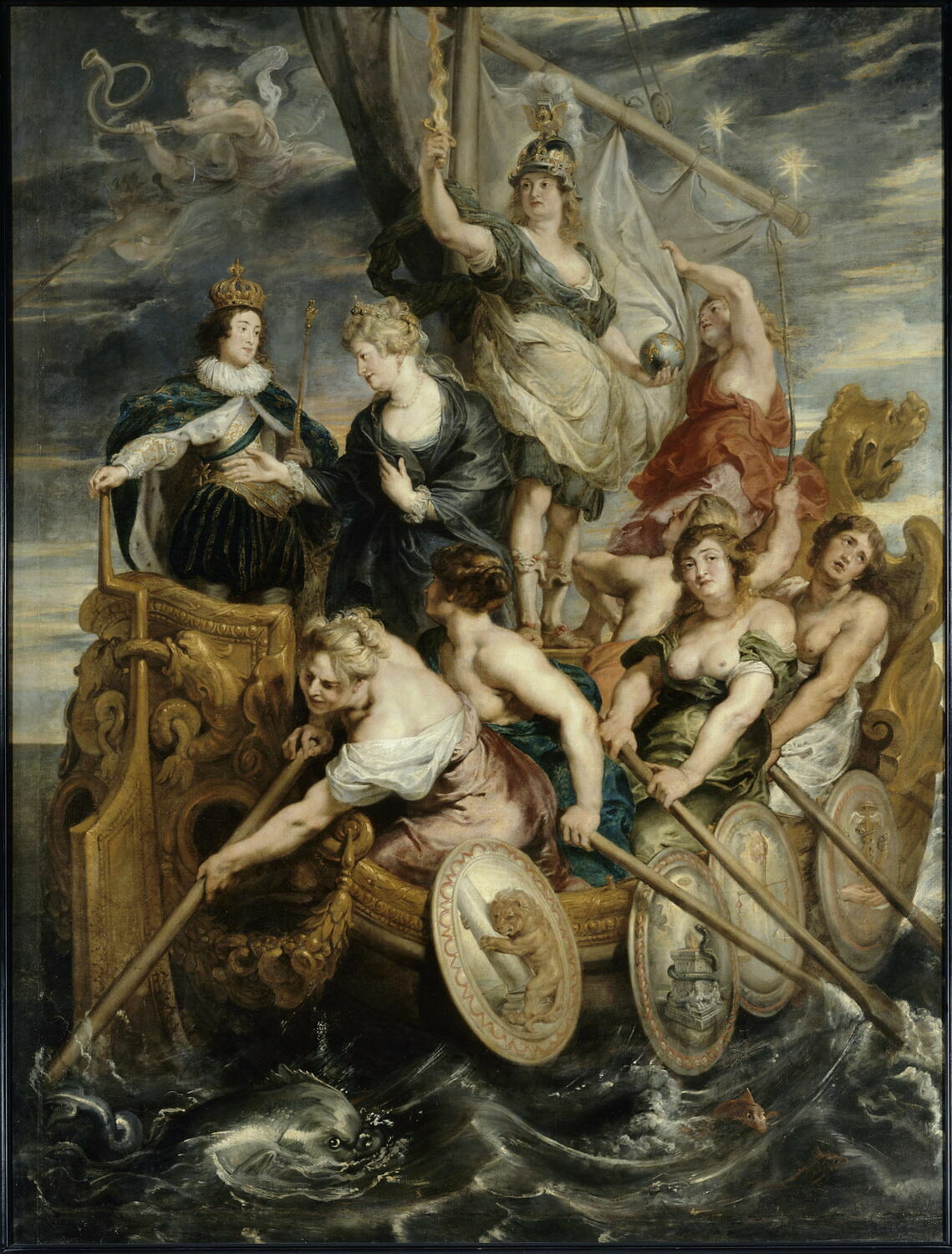
Marie de' Medici's Commission for the Luxembourg Palace Cycles
The Queen Mother of France, Marie de' Medici, commissioned from Rubens two large allegorical cycles for the Luxembourg Palace — one on her own life and one on the life of the late Henry IV; the second series was never completed.
30 de mayo de 1640
Died