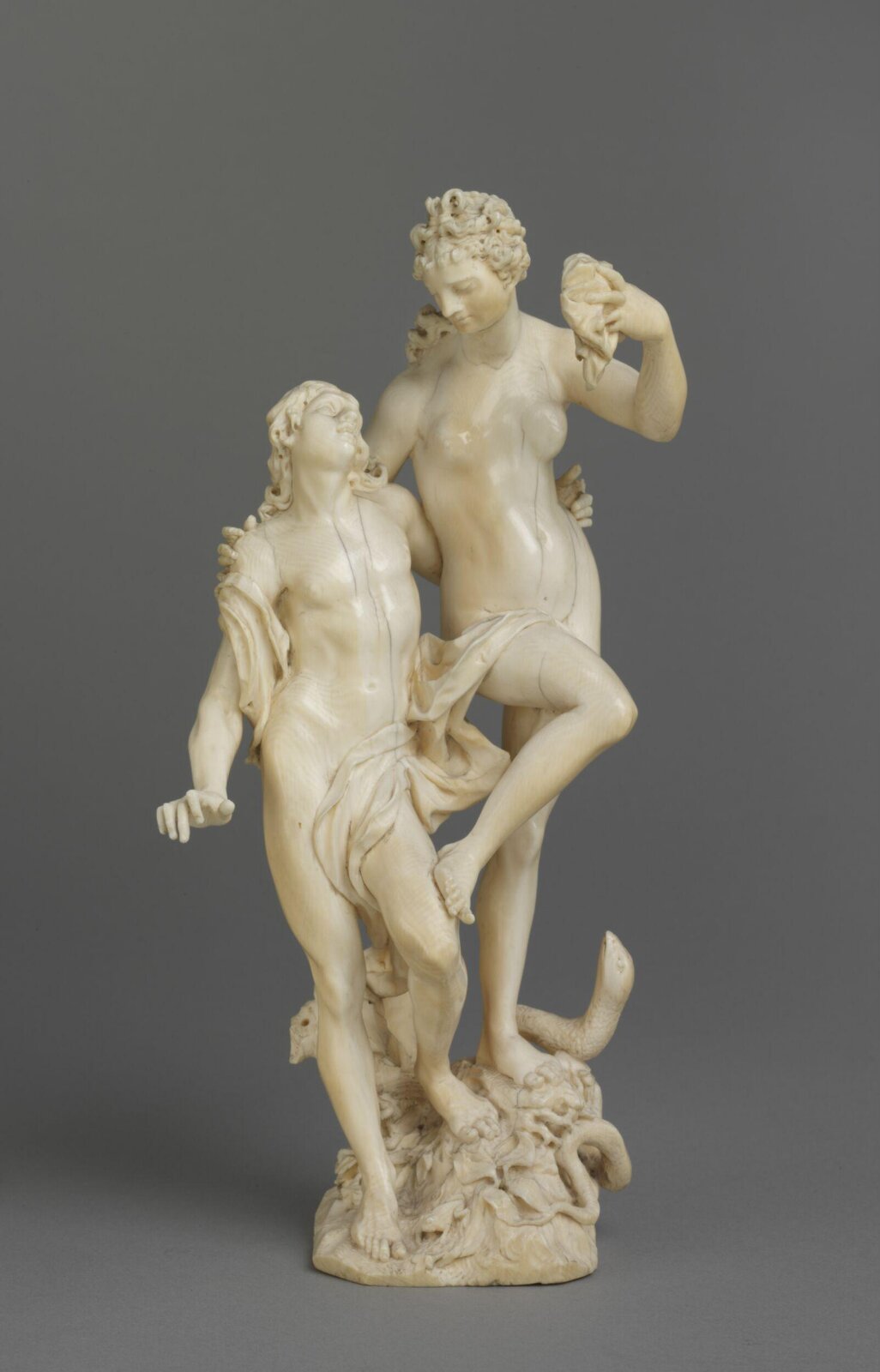
Orpheus and Eurydice
Sobre la escultura
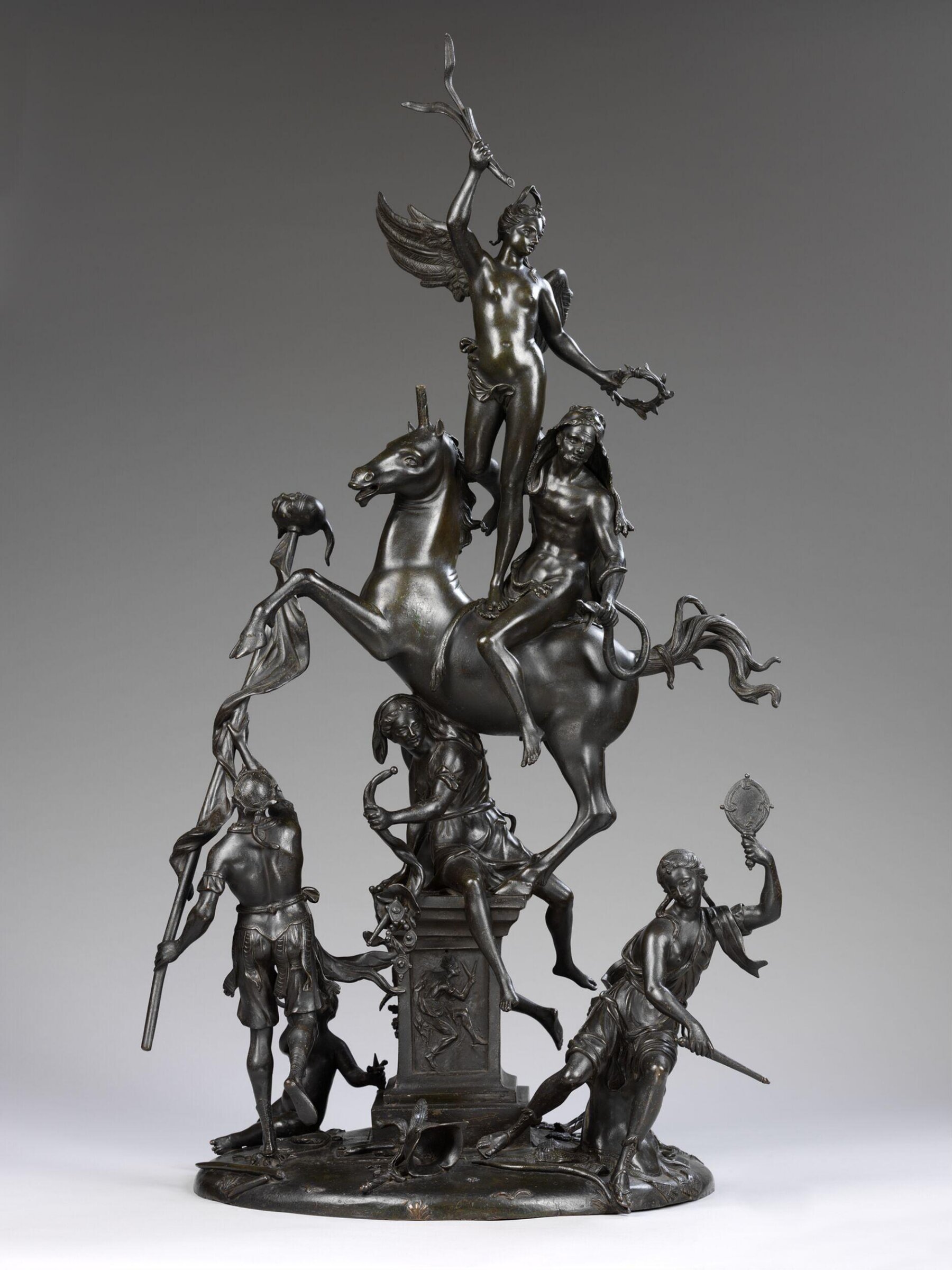
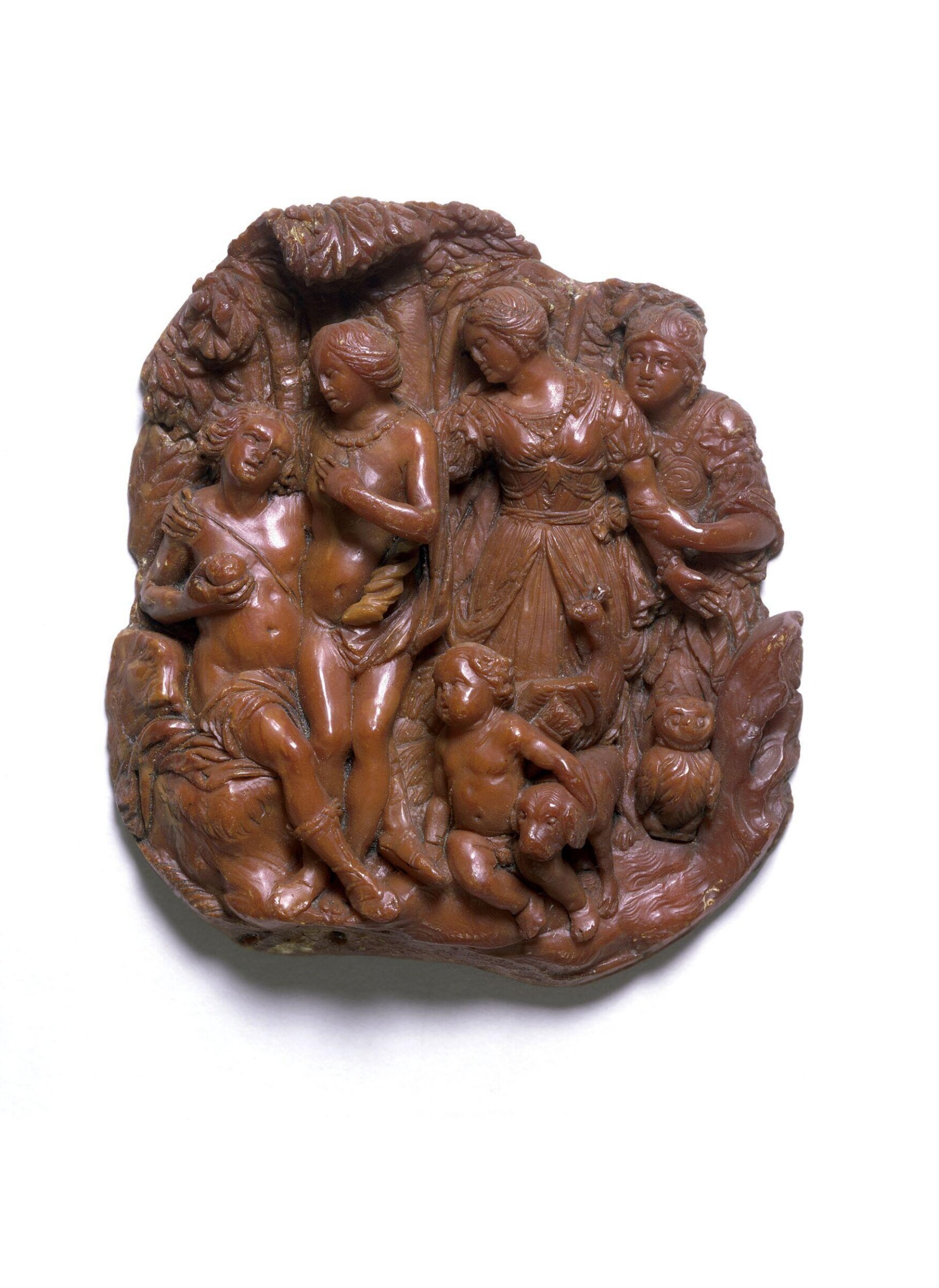
The subject is taken from Ovid's Metamorphoses. Orpheus's wife Eurydice, bitten by a snake, descends into the underworld. Orpheus descends to bring her back to life and is told he must go ahead and not look back at her; he cannot resist turning round and so loses her for ever. Here the two semi-nude figures are shown with the snake at their feet. Eurydice rests her right foot on Orpheus's left thigh and embraces him with her right arm. She stands on a rocky mound with a tree stump slightly above him, and he gazes up at her. A frog is visible on the rocky base. A hole drilled into the tree stump may have been used to affix another animal, or perhaps an extra branch. Other holes are to be seen drilled into the foliage. The group is signed underneath the base with the inscription 'LEON BAUR/1716'.
Seguir leyendo
The figure of Eurydice in particular is reminiscent of the female nudes by Giambologna (1529-1608), such as his bronze versions of the Woman Bathing, a composition which probably dates from the 1580s. The entwined figures recall perhaps even more forcefully the bronze figure groups by Giambologna's assistant and follower, Adriaen de Vries (1556-1626), such as his Hercules, Nessus and Deianara of 1603-8.
Baur (1681-1760) practised as both a sculptor and goldsmith. He trained in Augsburg under the sculptor Joseph Höschler (Heschler) from 1695-9, and then travelled, probably spending several years in Berlin, where he may have been influenced by the work of the sculptor and wax modeller Raimund Faltz, before returning to Augsburg, where he was working as a sculptor by 1708. He carved stone sculpture, and also produced designs for silver and furniture, as well as executing small-scale reliefs in wood, based on engraved sources.
Museo de Victoria y Alberto

Ficha
- Número de inventario
- A.49-1926