ART WIKI32.979 en sala
MapaColecciónArtistasMuseosExposicionesRevista
Acceder

ART WIKI

Dónde cuelga la obra maestra y cuándo le dejan pasar.

Colecciones: Galería Nacional de Arte, Galería Nacional de Dinamarca, Galería Nacional de Retratos, Galería Tretiakov, Harvard Art Museums, Instituto de Arte de Chicago, Instituto de Artes de Mineápolis, MoMA, Museo de Arte de Cleveland, Museo de Victoria y Alberto, Museo del Hermitage, Museo del Louvre, Museo Estatal Ruso, Museo Hirshhorn y Jardín de Esculturas, Museo J. Paul Getty, Museo Metropolitano de Arte, Museo Pushkin, Museo Smithsoniano de Arte Americano, Museo Whitney de Arte Estadounidense, National Museum of Asian Art, Rijksmuseum, Villa Getty, Catálogo Estatal del Fondo Museístico de Rusia (274 museos), Europeana (19 museos), Wikidata (6 museos), Paris Musées (12 museos) y Joconde, la base de museos del Ministerio de Cultura de Francia (495 museos). Las imágenes pertenecen a sus titulares de derechos.

Secciones

  • Mapa
  • Búsqueda
  • Colección
  • Obras maestras
  • Expuestas ahora
  • Artistas

Más

  • Museos y galerías
  • Exposiciones
  • Revista
  • De dónde salen los datos
  • Privacidad y cookies
InicioMapaCatálogo
  1. Colección/
  2. Instituto de Artes de Mineápolis/
  3. New Barbarian
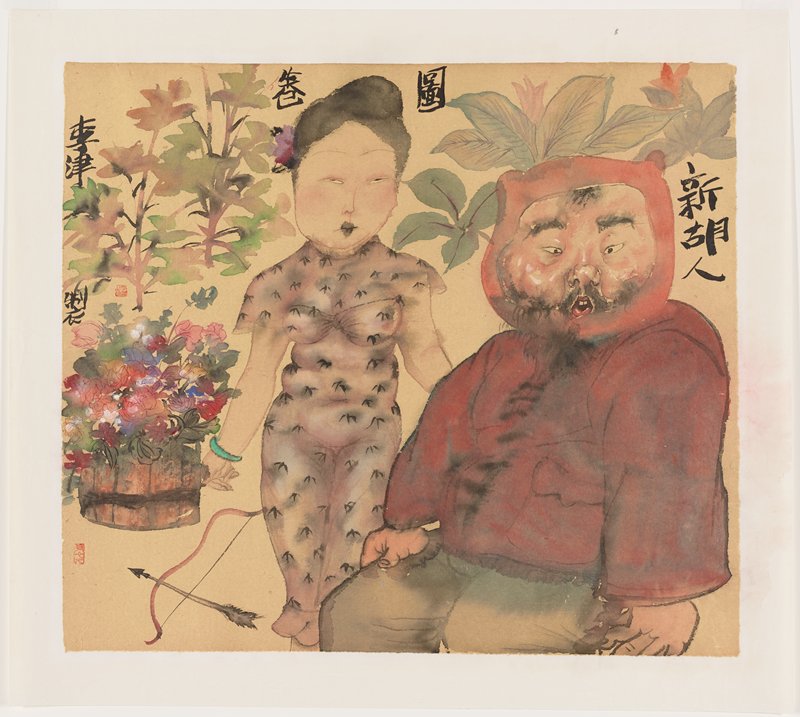
New Barbarian, Li Jin, 2010
LLi JinChina, 1958

New Barbarian

2010 · Paintings, Works on Paper

¿Se puede contemplar?

Por ahora no recibe

Instituto de Artes de Mineápolis

Minneapolis, Estados Unidos

Pertenece a la colección, pero ahora mismo no está expuesta.

Comprobado
hace 3 días
En este estado desde
25 sept 2026
Fuente
El museo
En el mapaPágina del museo

Sobre el cuadro

Generally associated with the “New Literati School, ” which in the mid-1980s sought to regenerate China’s ink painting tradition, Li Jin gradually formed his uniquely playful style in the early 1990s, and is now famous for his seductive depictions of the “vulgar” scenes (as he describes them). His paintings are populated with imperfect characters going about their daily life: eating, bathing, reading, even sitting on the toilet. Recent images emphasize the carnal desires of humanity through banquet tables heavy with meat. The Falstaffian figure that appears repeatedly in his work is modeled on himself, and the flirtatious, enticing young women are artist’s ideal of female beauty. Spontaneous brushwork, idiosyncratic captions and the oftentimes brazenly intimate choice of subject matter are the markings of his distinctive style. The universality of his themes and the humorous way in which he treats them has made Li Jin's work immensely popular.
Instituto de Artes de Mineápolis

Ficha

2010 · a los 52 años
1958hoy
Número de inventario
2014.14.3

En el catálogo

PinturaTintaPintura chinaArte contemporáneoSiglo XXIChina

Fuentes

  • Instituto de Artes de Mineápolis
  • Imagen: Instituto de Artes de Mineápolis — © 2010 Li Jin

Más obras de Li Jin

Todas las obras
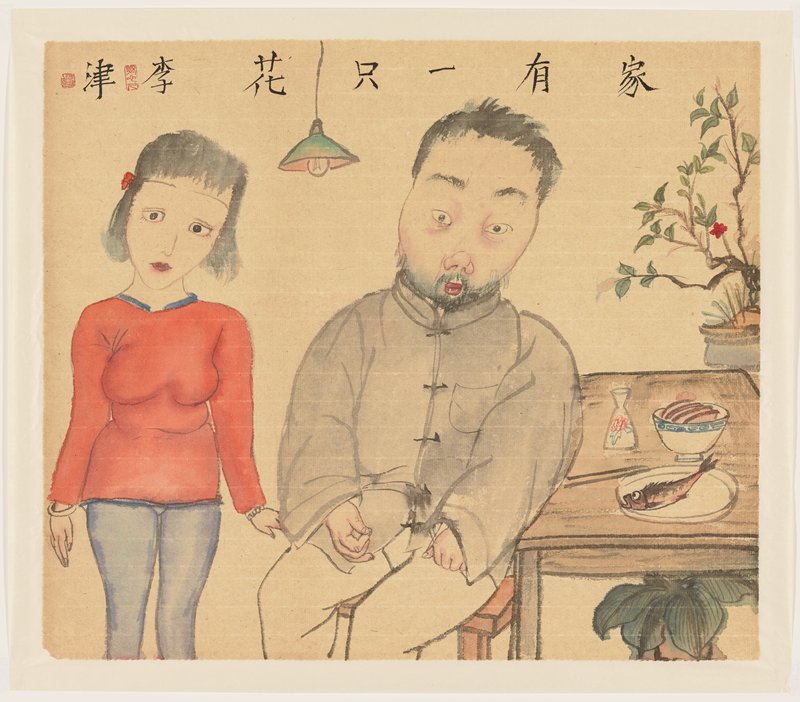
There is a Flower in my Family, Li Jin, 2013

There is a Flower in my Family

2013 · No expuesta · Instituto de Artes de Mineápolis

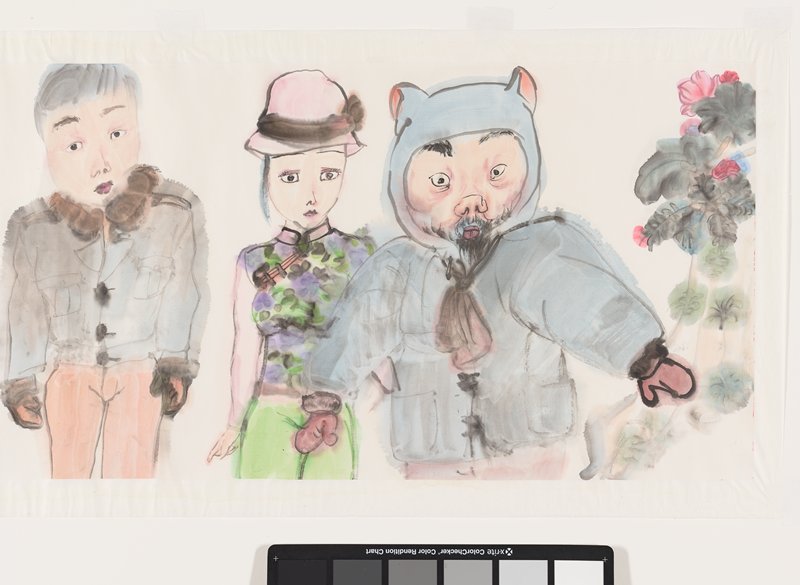
Happiness is Bittersweet and vice-versa, Li Jin, 2013

Happiness is Bittersweet and vice-versa

2013 · No expuesta · Instituto de Artes de Mineápolis

Bajo el mismo techo: Instituto de Artes de Mineápolis

Página del museo
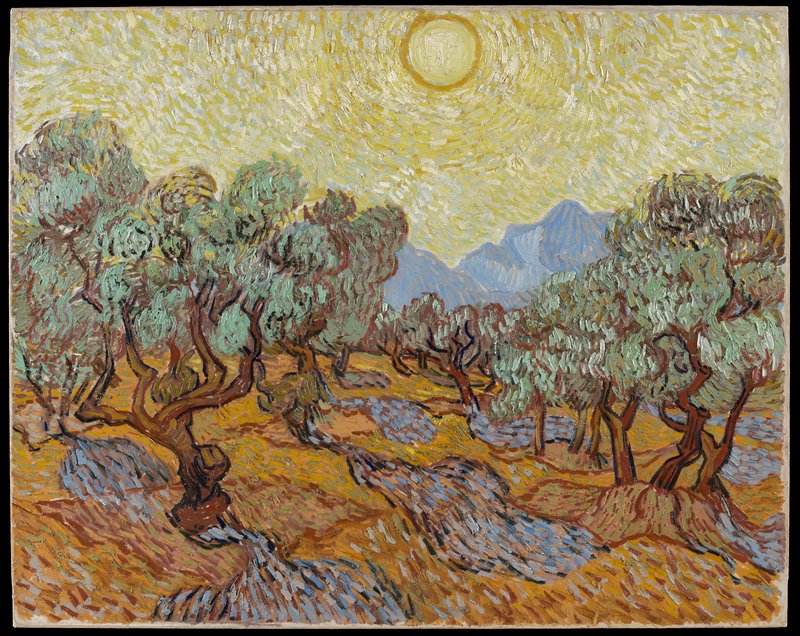
Olive Trees, Vincent van Gogh, 1889

Vincent van Gogh

Olive Trees, 1889

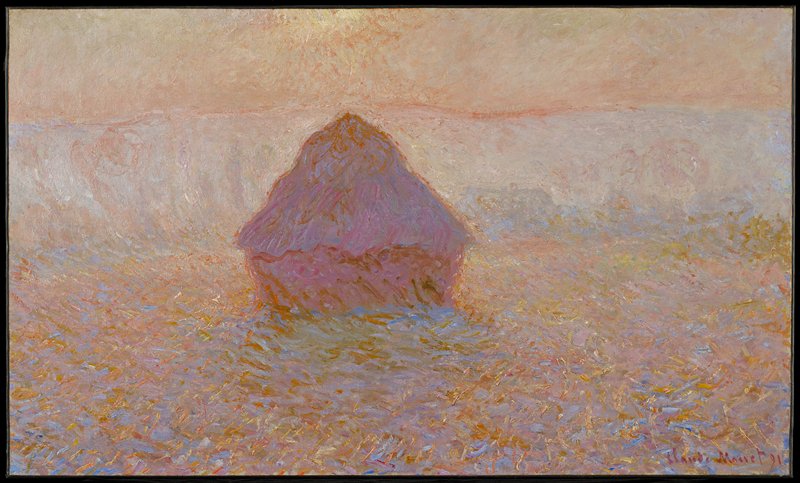
Grainstack, Sun in the Mist, Claude Monet, 1891

Claude Monet

Grainstack, Sun in the Mist, 1891

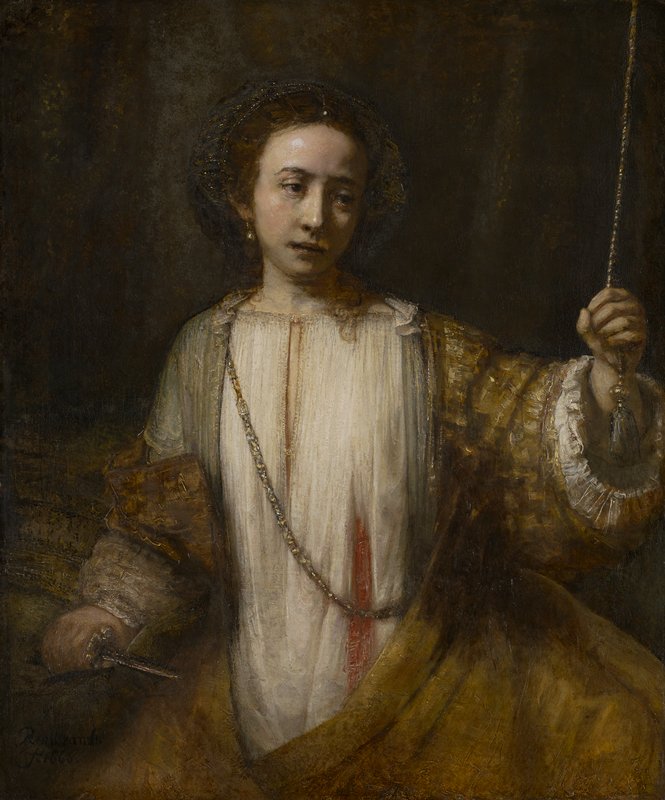
Lucretia, Rembrandt van Rijn, 1666

Rembrandt van Rijn

Lucretia, 1666

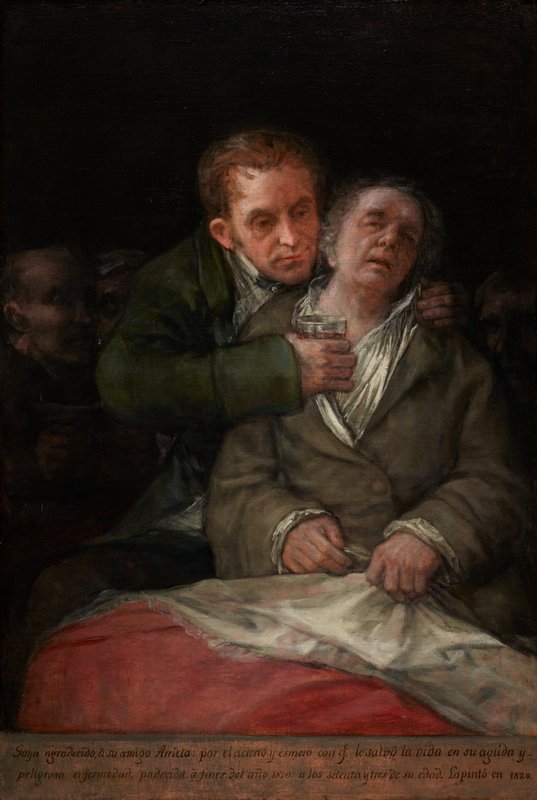
Self-Portrait with Dr. Arrieta, Francisco José de Goya y Lucientes, 1820

Francisco de Goya

Goya atendido por el doctor Arrieta, 1820

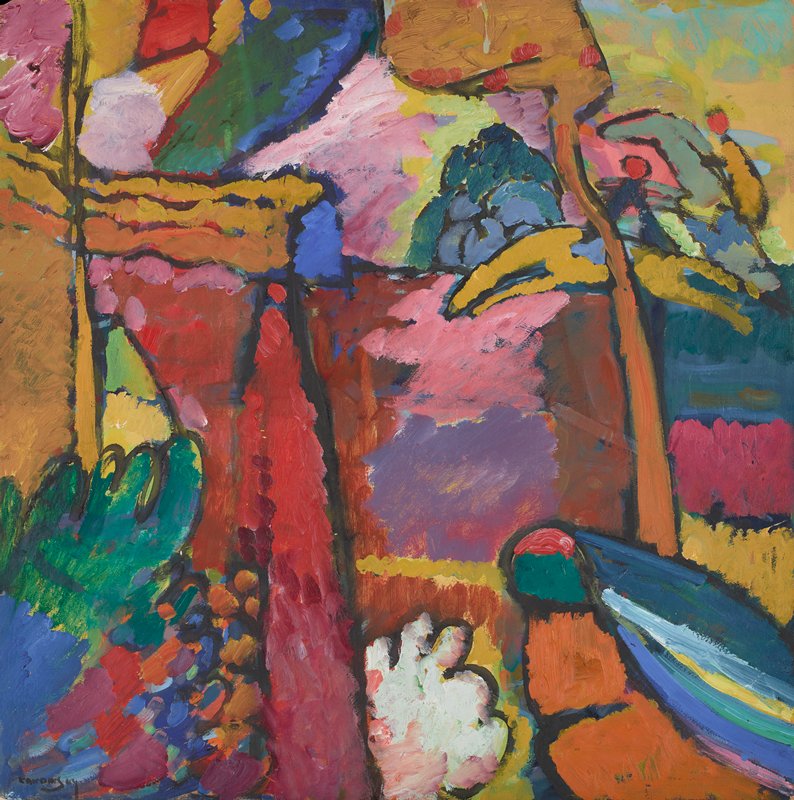
Study for Improvisation V, Vassily Kandinsky, 1910

Vasily Kandinsky

Study for Improvisation V, 1910

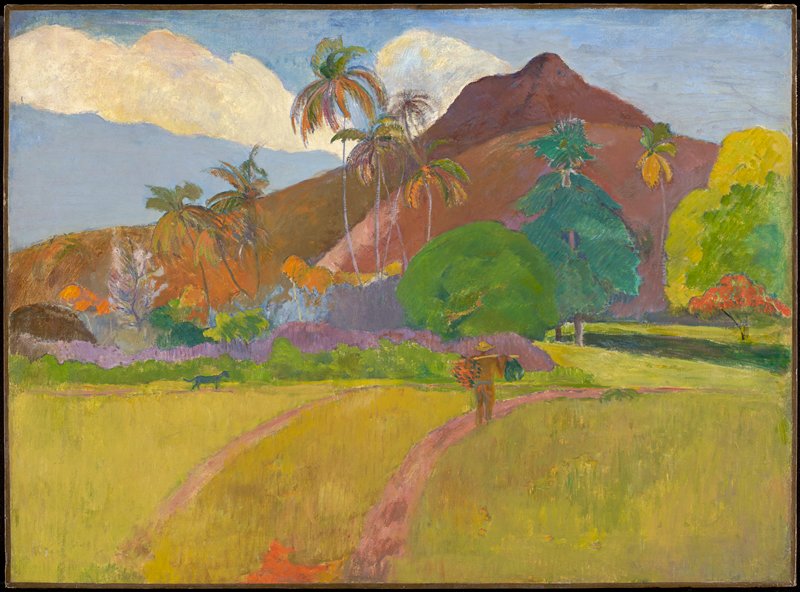
Tahitian Landscape, Paul Gauguin, 1891

Paul Gauguin

Tahitian Landscape, 1891

Chestnut Trees at Jas de Bouffan, Paul Cézanne, c. 1885–86

Paul Cézanne

Chestnut Trees at Jas de Bouffan, c. 1885–86

The Union of England and Scotland (Charles I as the Prince of Wales), Peter Paul Rubens, 1633–34

Peter Paul Rubens

The Union of England and Scotland (Charles I as the Prince of Wales), 1633–34