Paul GauguinFrancia, 1848–1903
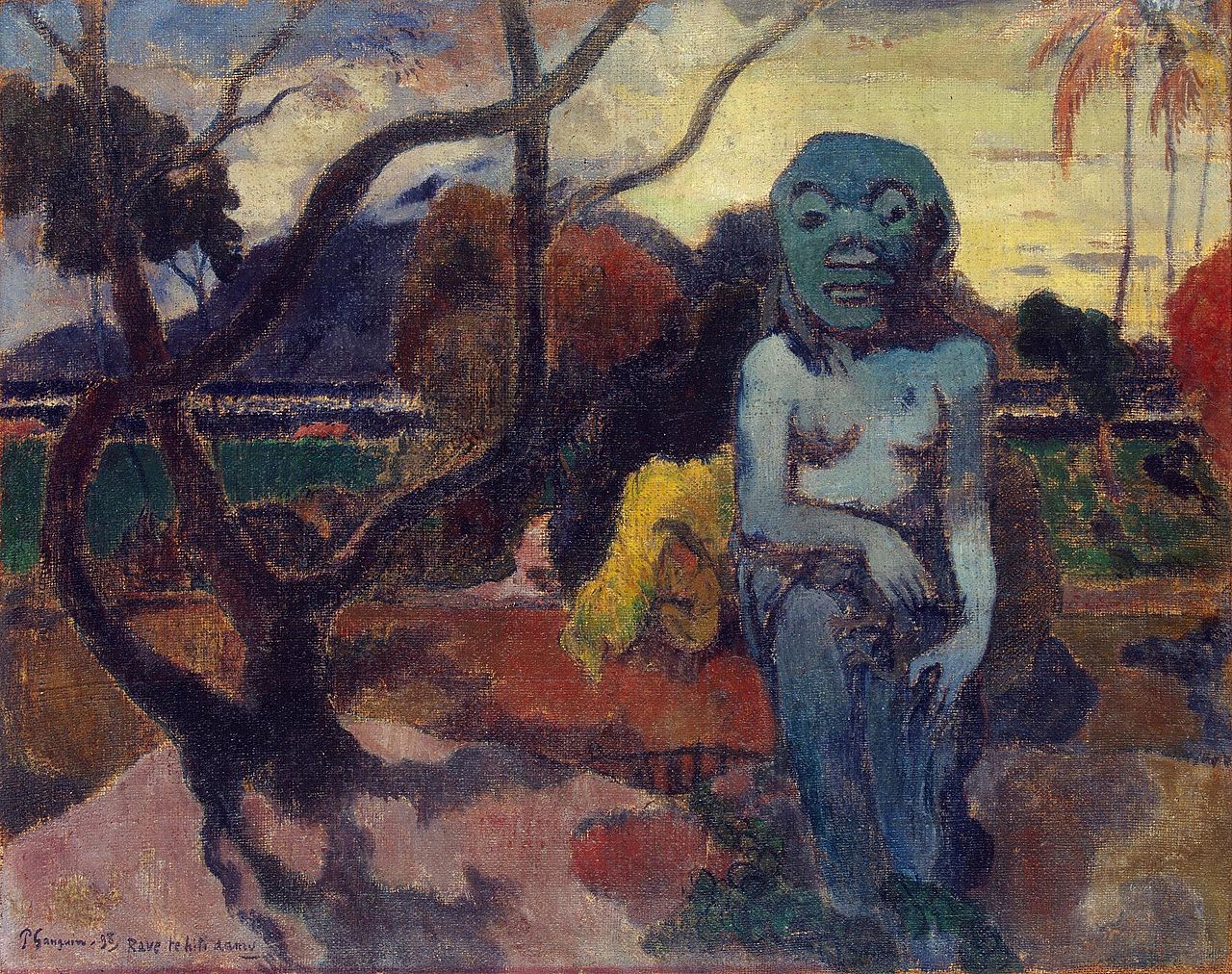
Be Be (The Nativity)
¿Se puede contemplar?
Sí, recibe visitas

San Petersburgo, Rusia
Expuesta al público.
- Comprobado
- En este estado desde
- Fuente
- El museo
Sobre el cuadro
En palabras del museo — en ruso
Во времена пребывания Гогена на Таити Рождество было уже вполне сформировавшимся праздником, обогащенным местными традициями и колоритом. Мотив Богоматери и Младенца органично вписался в жизнь островитян, которые священным считали каждое рождение нового человека. Своим полотнам художник старался давать названия на полинезийском языке, хотя хорошо им так и не овладел. «Be Be» можно перевести как «рождество», «быть», «будущее», а можно услышать в этих двух слогах звукоподражание: блеют животные в хлеву, а может это молодая мать повторяет на французском языке слово «младенец» — «le bébé». Композиция предельно проста и даже иллюстративна — боком к зрителю расположилась жена Гогена Пахура — она держит ребёнка, а рядом стоит ангел. Все происходит в хлеву, как будто в библейские времена.
Leer más
Зная детали биографии Гогена, мы предвосхищаем трагический исход — слабенький ребенок умрет, не прожив и 10 дней, а фигура ангела — это скорее фигура смерти. Гоген, очевидно, проводит параллель между болью Богоматери, знающей будущую судьбу Младенца, и собственным горьким ощущением близкой потери новорожденного.
Museo del Hermitage
Ficha
- Número de inventario
- ГЭ-6568
En el catálogo
Fuentes
- Museo del Hermitage
- Imagen: Museo del Hermitage — Museum open access
Mientras tanto, en la vida de Paul Gauguin
La vida entera1891–1901 · Lugar de trabajo
Tahiti
1894
Exhibition at Durand-Ruel
The exhibition at the Durand-Ruel gallery had moderate success: 11 of the 40 paintings shown were sold at fairly high prices; soon afterwards, however, Gauguin lost Durand-Ruel's patronage.
February – April 1895
Failed Auction and the Oviri Scandal
In February 1895 Gauguin tried to repeat the Hôtel Drouot auction, but without success; in April he submitted the large ceramic sculpture Oviri to the salon of the Société Nationale des Beaux-Arts, whose reception caused a scandal, and wrote an indignant letter on the state of modern ceramics in Le Soir.
28 June 1895
Final Departure for Oceania
On 28 June 1895 Gauguin sailed once more for Tahiti — Eugène Carrière arranged cheap passage for him — arriving in September; he never saw Europe again. He spent the next six years mostly near Papeete, building a spacious house at Punaauia.
1897
News of the Death of His Daughter Aline
In April 1897 Gauguin received news that his beloved daughter Aline had died of pneumonia; the same month he learned that he had to vacate his house, and, taking out a bank loan for a new one, by the end of the year he was on the brink of ruin and despair.
c. 1898
Suicide Attempt
After finishing Where Do We Come From? What Are We? Where Are We Going?, Gauguin attempted suicide by taking arsenic, but the dose proved too large, and a violent fit of vomiting saved his life.



![Pair of Wooden Shoes (Sabots) [left], Paul Gauguin, 1889/1890](https://api.nga.gov/iiif/44a731a9-e900-4898-a282-01034fcaa6ca/full/!2400,2400/0/default.jpg)