ART WIKI32.963 en sala
MapaColecciónArtistasMuseosExposicionesRevista
Acceder

ART WIKI

Dónde cuelga la obra maestra y cuándo le dejan pasar.

Colecciones: Galería Nacional de Arte, Galería Nacional de Dinamarca, Galería Nacional de Retratos, Galería Tretiakov, Harvard Art Museums, Instituto de Arte de Chicago, Instituto de Artes de Mineápolis, MoMA, Museo de Arte de Cleveland, Museo de Victoria y Alberto, Museo del Hermitage, Museo del Louvre, Museo Estatal Ruso, Museo Hirshhorn y Jardín de Esculturas, Museo J. Paul Getty, Museo Metropolitano de Arte, Museo Pushkin, Museo Smithsoniano de Arte Americano, Museo Whitney de Arte Estadounidense, National Museum of Asian Art, Rijksmuseum, Villa Getty, Catálogo Estatal del Fondo Museístico de Rusia (274 museos), Europeana (19 museos), Wikidata (6 museos), Paris Musées (12 museos) y Joconde, la base de museos del Ministerio de Cultura de Francia (495 museos). Las imágenes pertenecen a sus titulares de derechos.

Secciones

  • Mapa
  • Búsqueda
  • Colección
  • Obras maestras
  • Expuestas ahora
  • Artistas

Más

  • Museos y galerías
  • Exposiciones
  • Revista
  • De dónde salen los datos
  • Privacidad y cookies
InicioMapaCatálogo
  1. Colección/
  2. Museo Herzog Anton Ulrich/
  3. [Menschen vor einem Hospiz]
[Menschen vor einem Hospiz], Jacques Callot, 1612–1635
Jacques Callot, retratoJacques CallotFrancia, 1592–1635

[Menschen vor einem Hospiz]

1612–1635 · Print

¿Se puede contemplar?

Se desconoce

Museo Herzog Anton Ulrich

Brunswick, Alemania

Se conoce el propietario; no se sabe si hoy está expuesta.

En este estado desde
27 sept 2026
Fuente
El museo
En el mapaPágina del museo

Ficha

1612–1635
15921635

Mientras tanto, en la vida de Jacques Callot

La vida entera
  1. 1611

    Studies etching with Tempesta in Florence

    Having studied burin engraving in Rome with Philippe Thomassin, Callot moves to Florence, where he works with Antonio Tempesta, who teaches him the technique of line etching (by other accounts, he lived in Florence from 1612).

  2. 1614–1621

    At the court of Cosimo II de’ Medici

    Under Parigi’s direction Callot works at the court of the Grand Duke of Tuscany Cosimo II de’ Medici in the Uffizi, designing festivals and theatrical performances — later these give him themes for his series of grotesque prints; during his Florentine years he becomes an independent master and often works for the Medici.

  3. 1617

    Switches to hard ground and repeated biting

    From 1617 Callot uses, instead of the soft ground customary until then, the acid-resistant hard ground of Florentine joiners and furniture-makers; it allows the plate to be bitten repeatedly, with parts of the spatial planes successively covered by varnish, and gives broad tonal gradations; he is also credited with the échoppe, an etching needle with a slanted end that produces a swelling line.

  4. 1621

    Returns to Nancy after the death of Cosimo II

    After the death of Grand Duke Cosimo II de’ Medici, Callot responds to Duke Charles IV of Lorraine’s wish to see him at his court and returns to Lorraine, where he is received with flattering honours; staying in Nancy, he sends his prints all over Europe, and Rembrandt becomes a keen collector of them.

  5. 1627

Más obras de Jacques Callot

Todas las obras

De la colección: Museo Herzog Anton Ulrich

Página del museo

Sobre el mismo tema · Rock

Todas las obras sobre el tema

In the Netherlands at Infanta Isabella’s invitation

At the invitation of the Infanta Isabella Callot visits the Netherlands; views of Holland, like those of Italy and France, and characteristic portraits of soldiers, circus performers and actors are reflected in his work.

  • 25 de marzo de 1635

    Died

  • Lo que muestra

    RockGeistlicherVarónHouseHutKranke(r)Gehstock

    En el catálogo

    EstampasBarrocoSiglo XVII

    Fuentes

    • Museo Herzog Anton Ulrich
    • Imagen: Museo Herzog Anton Ulrich — CC BY-NC-SA 4.0
    Lust, Jacques Callot, 17th century

    Lust

    17th century · Harvard Art Museums

    Temptation of Saint Anthony, Jacques Callot, 17th century

    Temptation of Saint Anthony

    17th century · Harvard Art Museums

    Envy, Jacques Callot, 17th century

    Envy

    17th century · Harvard Art Museums

    Pardon des Rochelois, Jacques Callot, 17th century

    Pardon des Rochelois

    17th century · Harvard Art Museums

    Pride, Jacques Callot, 17th century

    Pride

    17th century · Harvard Art Museums

    Anger, Jacques Callot, 17th century

    Anger

    17th century · Harvard Art Museums

    Descente dans l'île de Ré, Jacques Callot, 17th century

    Descente dans l'île de Ré

    17th century · Harvard Art Museums

    Gluttony, Jacques Callot, 17th century

    Gluttony

    17th century · Harvard Art Museums

    Portrait d'Adolphe de Vignacourt Grand Maître de Malthe, Caravaggio, 1704–1755

    Caravaggio

    Portrait d'Adolphe de Vignacourt Grand Maître de Malthe, 1704–1755

    Ecce Homo, Caravaggio, 1674–1684

    Caravaggio

    Ecce Homo, 1674–1684

    Heiliger Hieronymus, Caravaggio

    Caravaggio

    Heiliger Hieronymus

    Bildnis eines Mannes, Rembrandt, 1839–1850

    Rembrandt van Rijn

    Bildnis eines Mannes, 1839–1850

    Bildnis einer Frau, Rembrandt, 1839–1850

    Rembrandt van Rijn

    Bildnis einer Frau, 1839–1850

    Tobias und seine Frau, Rembrandt, 1773

    Rembrandt van Rijn

    Tobias und seine Frau, 1773

    Tobias und seine Frau, Rembrandt, 1773

    Rembrandt van Rijn

    Tobias und seine Frau, 1773

    Lot mit seinen Töchtern, Rembrandt, 1771

    Rembrandt van Rijn

    Lot mit seinen Töchtern, 1771

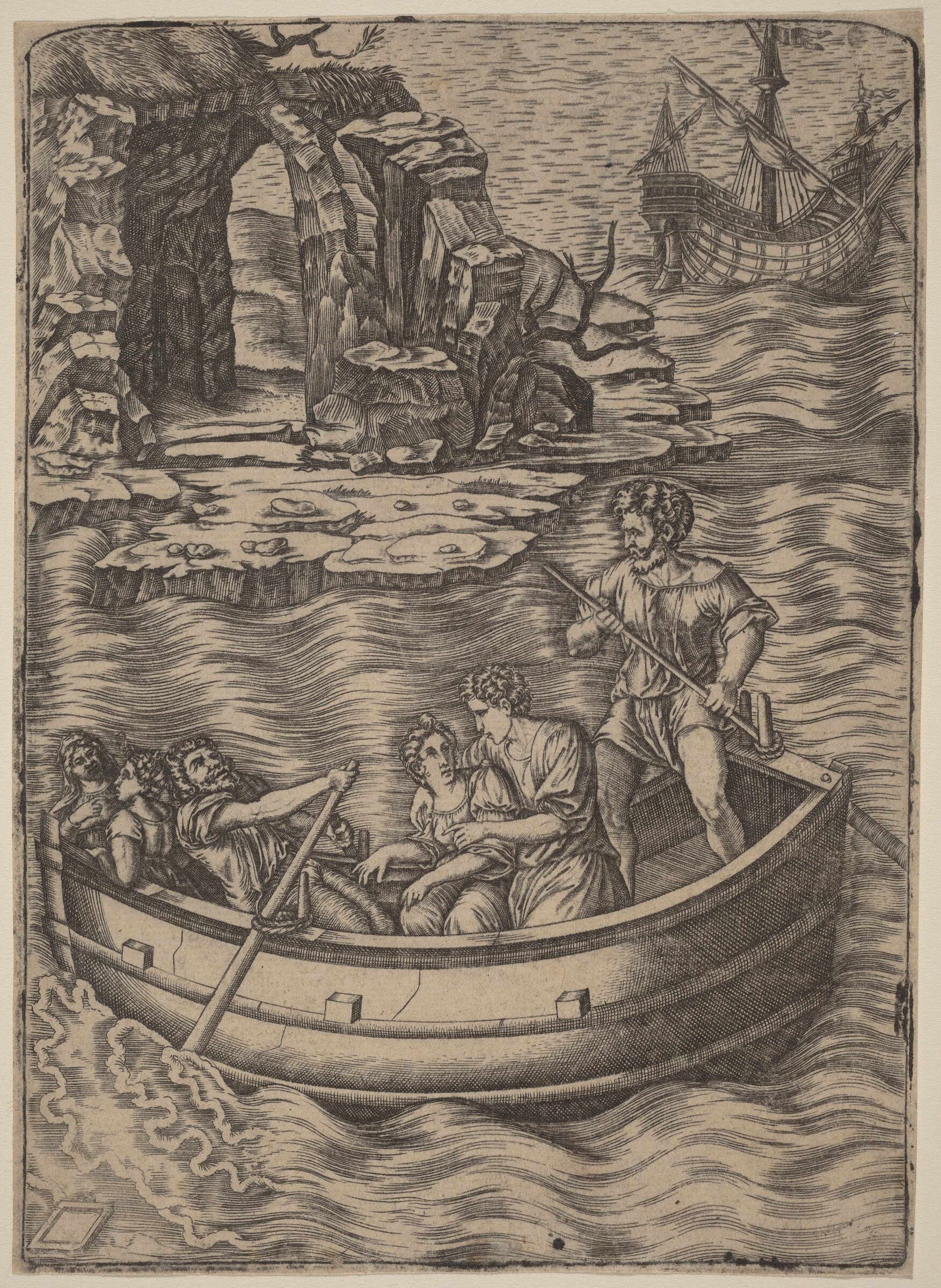
    Two Nude Men, Marcantonio Raimondi after Michelangelo

    Michelangelo

    Two Nude Men

    No expuesta · Galería Nacional de Arte

    Noah Leaving the Ark, Giulio Bonasone, after Raphael, 1544

    Raphael

    Noah Leaving the Ark, 1544

    No expuesta · Galería Nacional de Arte

    The Barc, Agostino dei Musi after Raphael, 1515-1530

    Raphael

    The Barc, 1515-1530

    No expuesta · Galería Nacional de Arte

    The Raising of Lazarus: Small Plate, Rembrandt van Rijn, 1642

    Rembrandt van Rijn

    The Raising of Lazarus: Small Plate, 1642

    No expuesta · Galería Nacional de Arte

    The Stoning of Saint Stephen, Rembrandt van Rijn, 1635

    Rembrandt van Rijn

    The Stoning of Saint Stephen, 1635

    No expuesta · Galería Nacional de Arte

    The Entombment, Rembrandt van Rijn, c. 1654

    Rembrandt van Rijn

    The Entombment, c. 1654

    No expuesta · Galería Nacional de Arte

    [Die Auferweckung des Lazarus; The Raising of Lazarus. Small Plate; Résurrection de Lazare], Rembrandt, 1642

    Rembrandt van Rijn

    [Die Auferweckung des Lazarus; The Raising of Lazarus. Small Plate; Résurrection de Lazare], 1642

    Museo Herzog Anton Ulrich

    [Die kleine Löwenjagd mit zwei Löwen; The Small Lion Hunt with Two Lions; Chasse aux lions], Rembrandt, 1629

    Rembrandt van Rijn

    [Die kleine Löwenjagd mit zwei Löwen; The Small Lion Hunt with Two Lions; Chasse aux lions], 1629

    Museo Herzog Anton Ulrich