 Jean-Antoine WatteauFrancia, 1684–1721
L'Indifférent
¿Se puede contemplar?
Sí, recibe visitas

Expuesta al público. Quién lo avala figura más abajo.
- Comprobado
- En este estado desde
- Fuente
- El museo
Sobre el cuadro
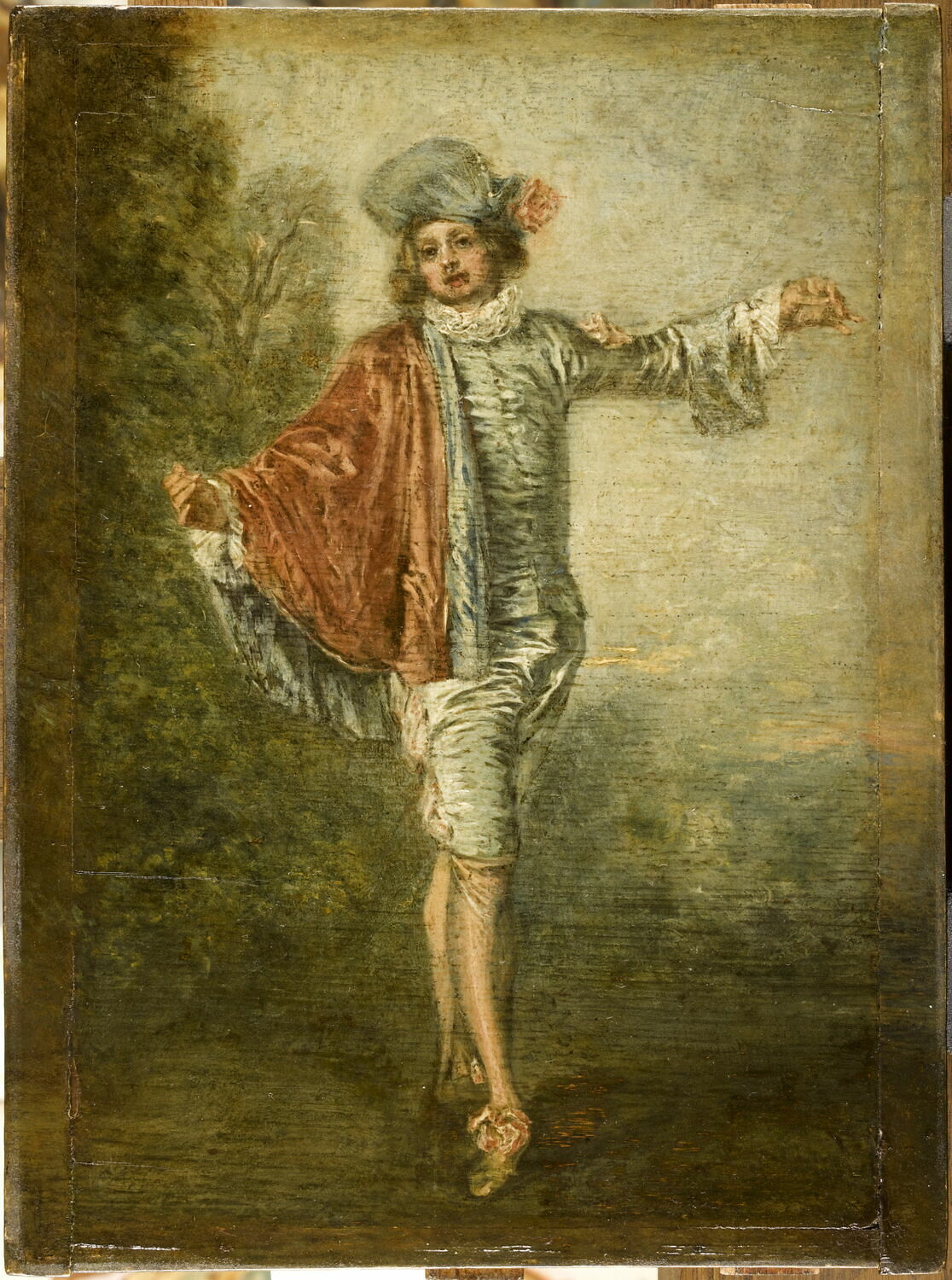
El indiferente (en francés, L’indifférent) es un cuadro del pintor francés Jean-Antoine Watteau. Está realizado en óleo sobre madera. Mide 26 cm de alto y 19 cm de ancho. Se conserva en el Museo del Louvre de París, Francia, que lo adquirió por el legado del Sr. Louis La Caze (1869).
En este cuadro aparece un solo personaje, en el centro de la composición, contra un fondo boscoso. Se realizó sobre soporte de tabla con una simple capa de preparación, delatándose las vetas de la madera a través de las pinceladas. Adopta una postura de baile inestable: el pie izquierdo está girando, formando un ángulo recto con la pierna derecha, y de ésta sólo apoya la punta del pie; se representa así un momento concreto de gracia extrema y artificial, en el curso de la danza.
Seguir leyendo
El título enigmático de la obra contribuye a la seducción ejercida por la gracia del personaje. En 1738 fue creada la Orden de los Indiferentes (Ordre des Indifférents), asociación cuyos miembros juraban sustraerse al imperio del amor.
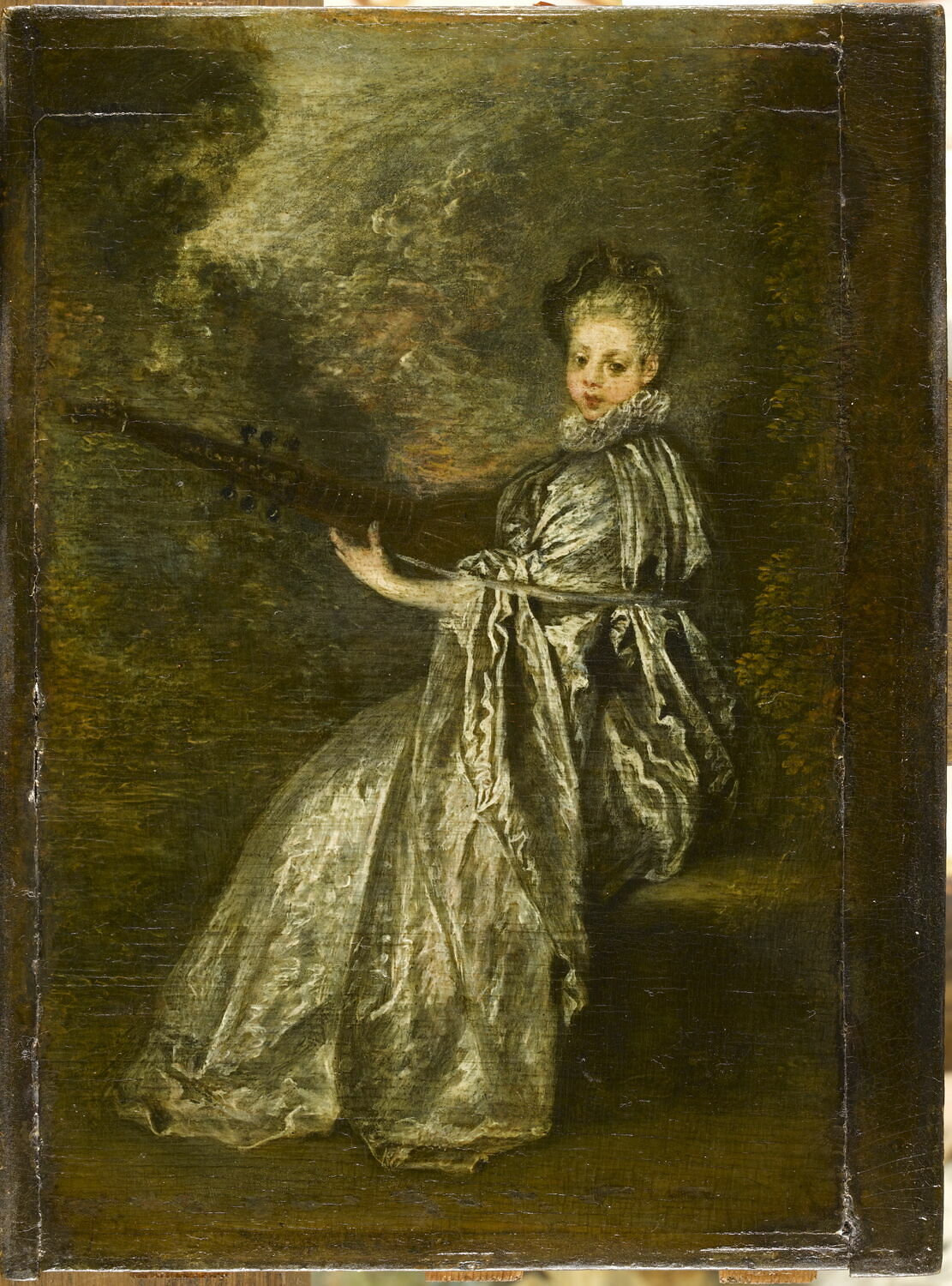
Hay otro cuadro, de una joven tocando el laúd, que forma pareja con éste.
Ficha
- Número de inventario
- MI 1122
En el catálogo
Fuentes
- Museo del Louvre
- Imagen: Museo del Louvre — © 2010 GrandPalaisRmn (musée du Louvre) / Stéphane Maréchalle
Mientras tanto, en la vida de Jean-Antoine Watteau
La vida entera1710s
Meets Edme-François Gersaint
At Sirois's house Watteau meets his son-in-law, the art dealer Edme-François Gersaint, who soon becomes a close friend.
1710s
Tuberculosis sets in
Watteau's fame grows steadily, yet he is as a rule dissatisfied with everything that comes from his brush; at the same time he develops a serious illness, tuberculosis.
1714
Moves into the banker Crozat's mansion
Through Sirois, Watteau finds a patron in the very wealthy banker and collector Pierre Crozat and, at his invitation, moves into Crozat's newly built Paris mansion. There he gains access to the celebrated collection and eagerly copies drawings by the great masters; next door lives the academician Charles de La Fosse, with whom he is on good terms.
c. 1717
Crozat recommends Watteau to Rosalba Carriera
Watteau's fame spreads beyond Paris: the banker Crozat writes to the celebrated portraitist Rosalba Carriera in Venice that among Paris painters he knows no one but Watteau who could produce a work worthy of being shown to her. Crozat's patronage and lucrative commissions help to launch the painter's European reputation.
28 August 1717
Elected to the Academy: a “fête galante”
By 1717 Watteau's “gallant scenes” have had such wide success that an exception is made for his reception piece, “Pilgrimage to Cythera”: in the minutes the words “pilgrimage to Cythera” are struck out and replaced by “fête galante”. Watteau is elected a full member of the Academy; the ceremony is attended by the First Painter to the King, Antoine Coypel, by Claude Gillot and by the Regent, the Duke of Orléans.
1718
Leaves Crozat's house
Watteau's independent character does not let him stay long in such luxurious but constraining circumstances, and in 1718 he leaves the house of his patron, who does not lose interest in his art. “Gilles” was probably one of the last works painted in the large studio put at his disposal in Crozat's mansion.