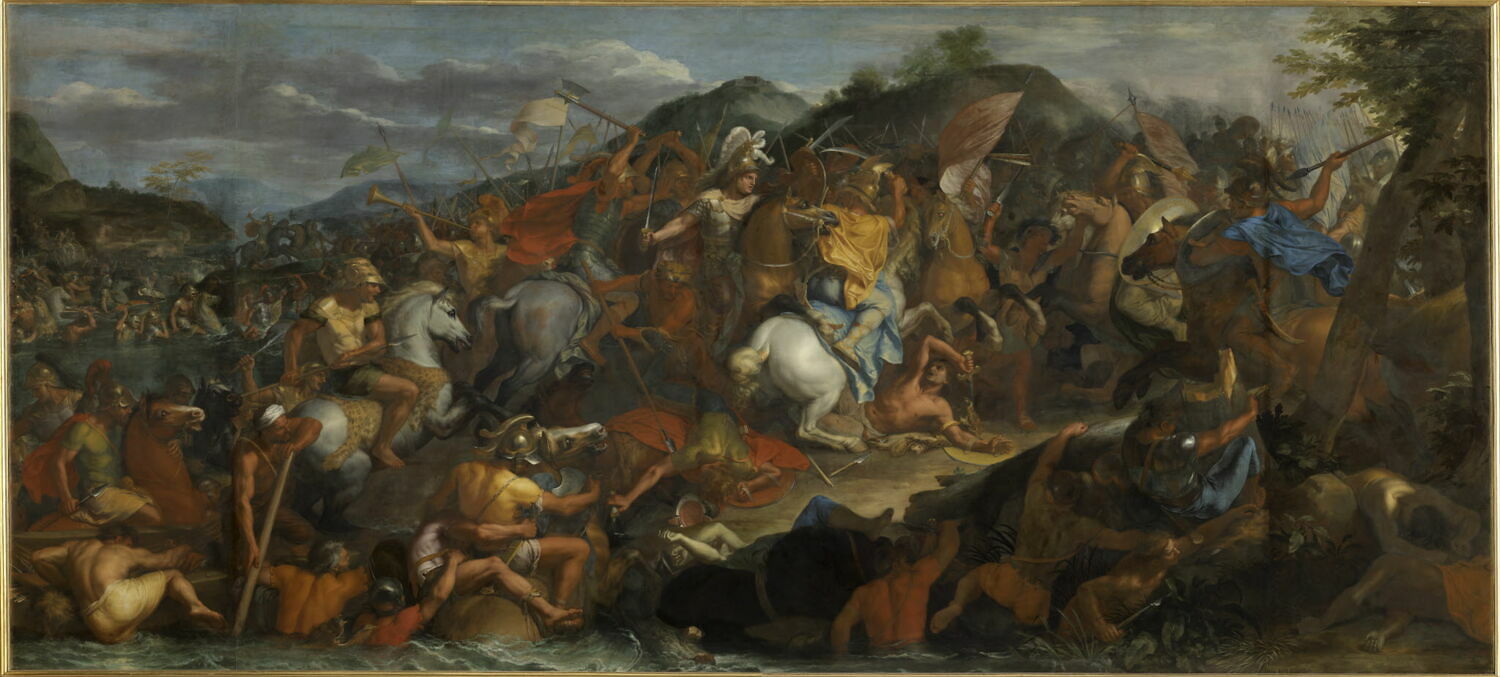
 Charles Le BrunFrancia, 1619–1690
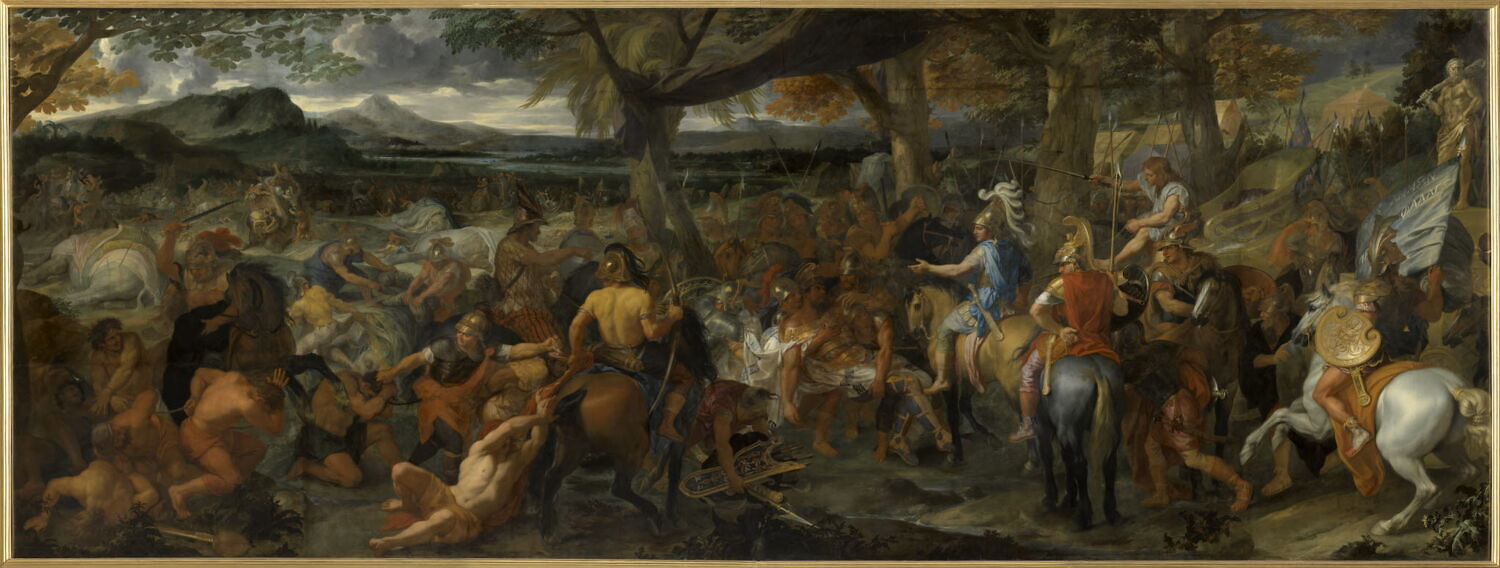
Le passage du Granique
¿Puedo verla?
Sí, expuesta ahora
¿Dónde está «Le passage du Granique» hoy? Museo del Louvre, Salle 914, Aile Sully, Niveau 2, París. Sí, expuesta ahora. Comprobado 26 de septiembre de 2026.

Cerrado· abre a las 9:00
Expuesta al público.
- Comprobado
- En este estado desde
- Fuente
- El museo
Ficha
- Número de inventario
- INV 2894
En el catálogo
Fuentes
- Museo del Louvre
- Imagen: Museo del Louvre — © 2021 GrandPalaisRmn (musée du Louvre) / Rabeau/Didierjean/Chan-Liat
En la vida de Charles Le Brun
La vida entera1662
Louis XIV ennobles Le Brun
The king is so delighted with the first picture of the series, “Alexander and the Family of Darius”, that he at once ennobles the artist and grants him a pension of 12,000 livres, the same sum he had received yearly in Fouquet's service. From then on everything done in the royal palaces is directed by Le Brun.
1664–1690
Post: Premier peintre du Roi
1666
The French Academy in Rome is founded
With Colbert he founds the Academy of France in Rome as a base for promising young artists, who live and study there for a set period at the crown's expense.
1667
Lectures at the Academy and the “Quarrel of the Ancients and the Moderns”
He opens a cycle of lectures at the Royal Academy on the masterpieces of classical painting, thereby joining the famous seventeenth-century debate between the adherents of classicism and of the Baroque, known as the “Quarrel of the Ancients and the Moderns”. In the Academy he defends the “Poussinists” against the “Rubenists” and the primacy of strict drawing over colour; his chief opponent there was Pierre Mignard.