 Johannes VermeerPaíses Bajos, 1632–1675
El astrónomo
L'Astronome
¿Puedo verla?
Sí, expuesta ahora
¿Dónde está «El astrónomo» hoy? Museo del Louvre, Salle 837, Aile Richelieu, Niveau 2, París. Sí, expuesta ahora. Comprobado 26 de septiembre de 2026.

Cerrado· abre a las 9:00
Expuesta al público.
- Comprobado
- En este estado desde
- Fuente
- El museo
Sobre el cuadro
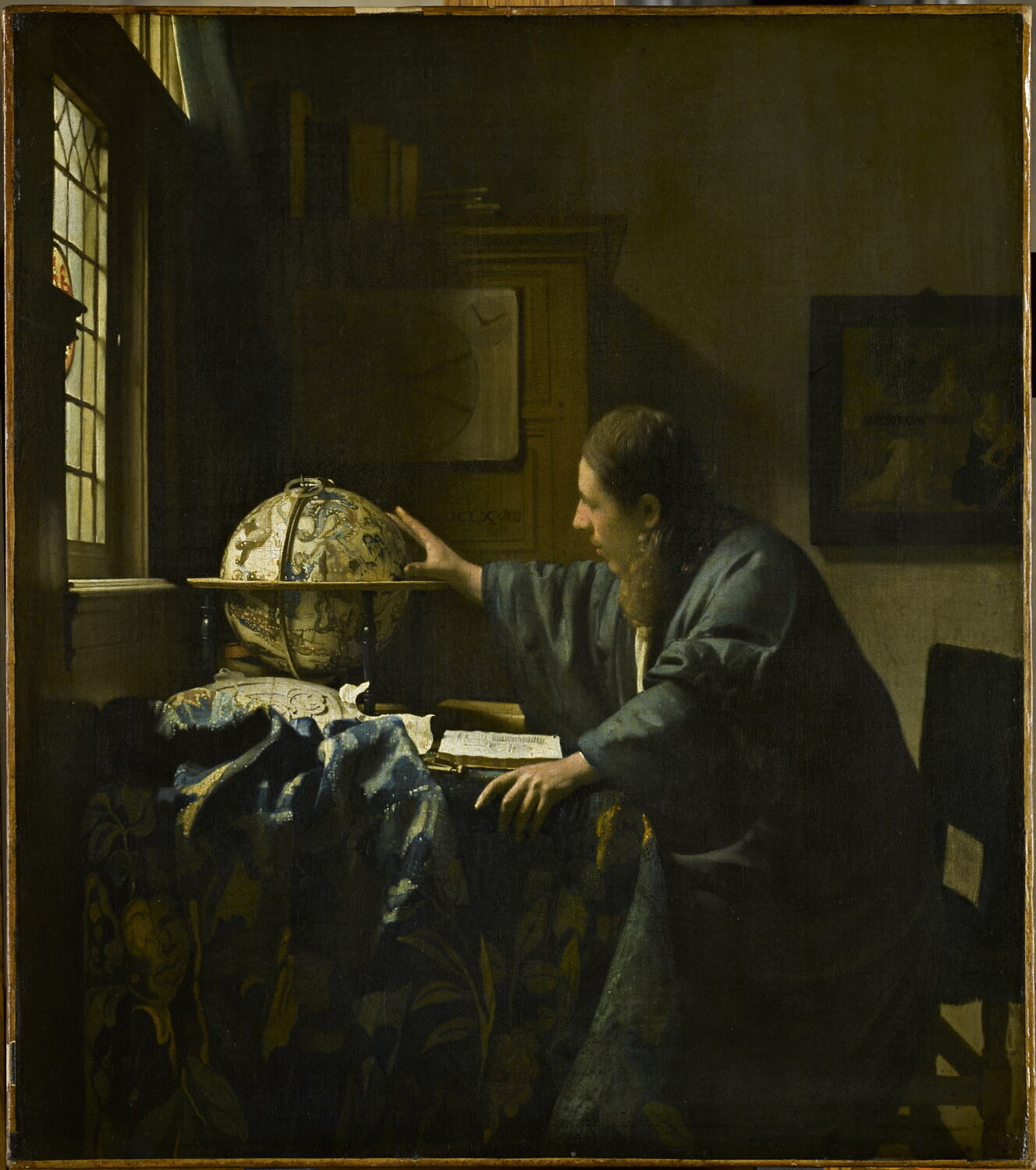
El astrónomo (en holandés, De astronoom) es una pintura (óleo sobre lienzo, 51 cm × 45 cm) de Johannes Vermeer pintada alrededor de 1668, que se encuentra actualmente en el Louvre.
Los retratos de científicos fueron un tema popular en el siglo XVII en la pintura en Holanda. El hombre representado parece ser el mismo que en El Geógrafo, obra similar pintada al mismo tiempo. Podría ser el científico Anton van Leeuwenhoek, un amigo del pintor residente en Delft.
La profesión del personaje es simbolizada por el globo celeste (modelo de Jodocus Hondius) y el libro sobre la mesa, titulado Institutiones Astronomicae Geographicae (o Manual de Metius), abierto en el capítulo III, una sección en la que el astrónomo busca la inspiración de Dios. Por último, el cuadro en la pared evoca el descubrimiento de Moisés, representación del conocimiento y la ciencia.
Leer más
Junto a En casa de la alcahueta, El geógrafo y El astrónomo son los únicos cuadros fechados por Vermeer.
Ficha
- Número de inventario
- RF 1983 28
En el catálogo
Fuentes
- Museo del Louvre
- Imagen: Museo del Louvre — © 2016 GrandPalaisRmn (musée du Louvre) / Franck Raux
En la vida de Johannes Vermeer
La vida entera1653–1675 · Lugar de trabajo
Delft
1653–1675
Patrons: van Ruijven and van Buyten
Pieter van Ruijven and his wife Maria de Knuijt were Vermeer's patrons for the better part of his career: van Ruijven bought much of his output, which kept Vermeer afloat financially but reduced the chances of his fame spreading beyond Delft. The baker Hendrick van Buyten held a couple of his paintings as collateral.
1672
The “Year of Disaster”: war and the collapse of the market
In 1672 the Rampjaar, a severe economic downturn, struck the Dutch Republic after French troops under Louis XIV invaded from the south and troops from Münster and Cologne from the east. Vermeer's sale of a painting that year was his last, and five years passed before circumstances improved.
1672
To The Hague: appraising a collection for the Elector
In 1672 Vermeer, a recognised connoisseur, travelled to The Hague, where together with the painter Jacob Jordaens he appraised Venetian and Roman paintings offered to the Elector of Brandenburg for 30,000 guilders. Before a notary he denied the collection's authenticity and declared it worth no more than a tenth of the asking price.
1675
A sudden death in December 1675
Vermeer's widow wrote to the creditors that during the war he had been forced to sell paintings at a reduced price; falling into despondency, in December 1675 he lost consciousness and died a day and a half later. What exactly happened remains unclear.
1675
Died