 Rembrandt van RijnPaíses Bajos, 1606–1669
Paysage au château. Vue imaginaire
¿Puedo verla?
Sí, expuesta ahora
¿Dónde está «Paysage au château. Vue imaginaire» hoy? Museo del Louvre, Salle 844, Aile Richelieu, Niveau 2, París. Sí, expuesta ahora. Comprobado 26 de septiembre de 2026.

Cierra pronto· hasta las 21:00
Expuesta al público.
- Comprobado
- En este estado desde
- Fuente
- El museo
Sobre el cuadro
Landscape with a Castle is an oil-on-panel painting by Rembrandt, now in the Louvre in Paris. Art historians have variously dated it to 1652 (Rein van Eysinga), 1654 (Frederik Schmidt-Degener), early 1640 (Abraham Bredius and Horst Gerson), 1648 (Kurt Bauch), 1640-1642 (Jacques Foucart), c.1640 (Christian Tümpel) and 1643–1646 (Leonard J. Slatkes).
Leer más
It is first recorded in the 1692 inventory of Geertruyt Brasser in Delft as "a castle by Rembrandt" (Brasser was the widow of Johan van der Chys). It was later recorded in the collection of Jan Pieter van Suchtelen, a Russian general from the Netherlands. In 1859 van Suchtelen's heirs sold it to Pavel Stroganov in St-Petersburg. On his death in 1911 Stroganov left it and the rest of his art collection to Vladimir and Aleksandra Shcherbatov, the children of his brother's daughter. Vladimir and Aleksandra were murdered by the Bolsheviks in 1920, three years after their artworks had been seized by the state.
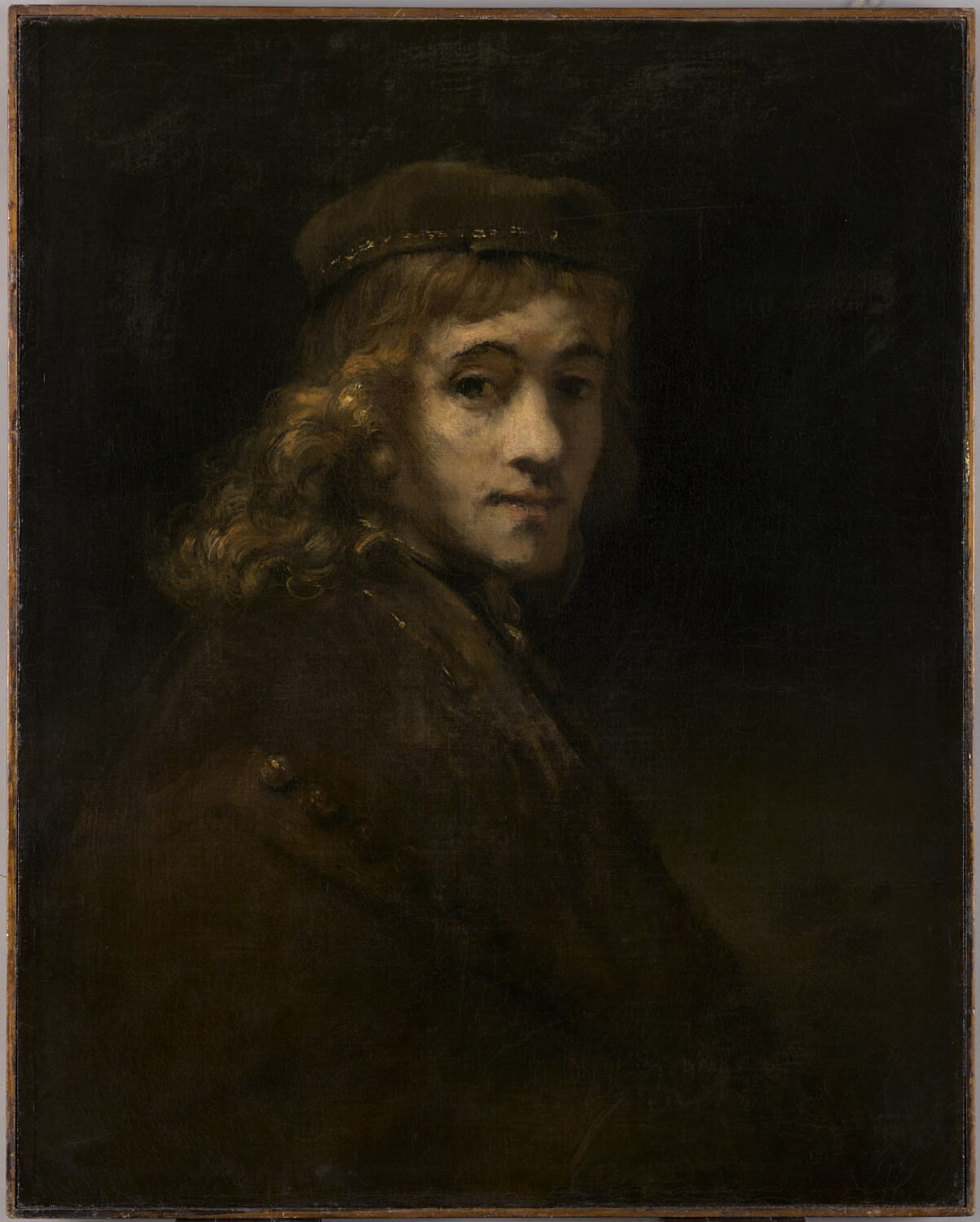
By 1925 at the latest the work had been moved to the Hermitage Museum, but in 1932 it was secretly sold off by the USSR, probably via the art dealer Wildenstein & Company. In 1933 it was probably sold to the Parisian collector Étienne Nicolas, in whose collection it definitively appeared in 1935. In 1942 Nicolas sold it and Portrait of Titus van Rijn to Adolf Hitler via the Berlin-based art dealer Karl Haberstock for 60 million francs – Hitler intended it for his Führermuseum in Linz. After the war's end it was returned to Nicolas via the Central Collecting Point and in 1948 he donated it to the Louvre.
Ficha
- Número de inventario
- RF 1948-35
En el catálogo
Exposiciones
Expuesta · Salle 844, Aile Richelieu, Niveau 2
Museo del Louvre · 27 sept 2026 — hoy · Verificado
Estaba expuesta · Salle 844, Aile Richelieu, Niveau 2
Museo del Louvre · 27 sept 2026 — 27 sept 2026 · Verificado
Estaba expuesta · Salle 844, Aile Richelieu, Niveau 2
Museo del Hermitage · 26 sept 2026 — 27 sept 2026 · Verificado
Estaba expuesta · Salle 844, Aile Richelieu, Niveau 2
Museo del Louvre · 26 sept 2026 — 26 sept 2026 · Verificado
Se desconoce si estaba expuesta
Museo del Hermitage · Sin confirmar
Fuentes
- Museo del Hermitage
- Imagen: Museo del Louvre — Museum open access
En la vida de Rembrandt van Rijn
La vida entera1631–1669
Trabajó en Ámsterdam
1635–1640
Alumno: Leendert van Beijeren
1639–1658
Vivió en la Casa Museo de Rembrandt
1641
Nacimiento de su hijo Titus
En 1641 nació Titus, hijo de Rembrandt y Saskia, el único de sus cuatro hijos que sobrevivió a la infancia.
22 de septiembre de 1641
Nacimiento de su hijo Titus van Rijn
1642
Muerte de Saskia
Saskia murió en 1642, probablemente de tuberculosis, un año después del nacimiento de Titus. Los dibujos de Rembrandt de ella en su lecho de enferma están entre sus obras más sentidas.