René MagritteBélgica, 1898–1967
La durée poignardée (Time Transfixed)
¿Puedo verla?
Sí, expuesta ahora
¿Dónde está «La durée poignardée (Time Transfixed)» hoy? Instituto de Arte de Chicago, Sala 396, Chicago. Sí, expuesta ahora. Comprobado 29 de septiembre de 2026.

Chicago, Estados Unidos
Abierto· hasta las 17:00
Expuesta al público.
- Comprobado
- En este estado desde
- Fuente
- El museo
Sobre el cuadro
Tiempo paralizado (en el original en francés, La Durée poignardée) es un óleo sobre lienzo de 1938 del surrealista belga René Magritte. Es parte de la colección permanente del Instituto de Arte de Chicago y generalmente se exhibe en el Ala Moderna del museo.
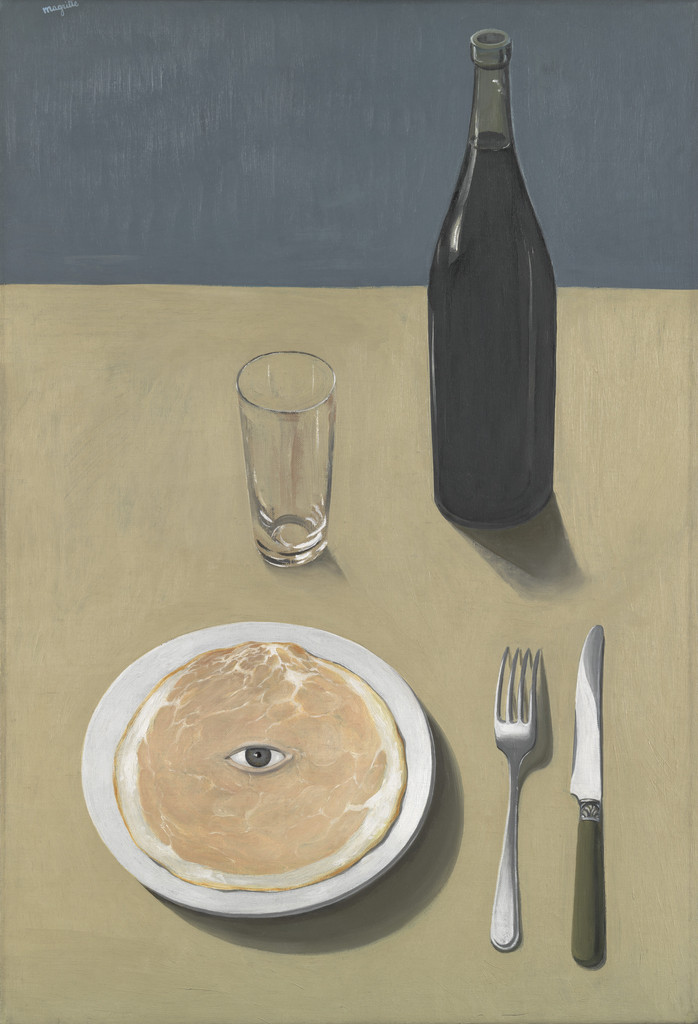
La pintura fue una de las muchas realizadas para el mecenas surrealista y partidario de Magritte, Edward James. Esta fue la segunda pintura entregada a James para su salón de baile en Londres. La primera fue el retrato de James, La reproducción prohibida. Tiempo paralizado fue comprado por el Instituto de Arte a James en 1970 cuando estaba recaudando capital para construir su jardín de esculturas surrealistas de Las Pozas.
Leer más
La pintura, en un estilo realista y encuadre cercano, representa suspendida en el aire una locomotora LMS Stanier 5MT Black 5 4-6-0 a pequeña escala saliendo de una chimenea decorativa, a todo vapor, en una habitación vacía. Sobre la repisa de la chimenea de mármol blanco hay un espejo grande. En el espejo sólo se reflejan el reloj y los candeleros que lo flanquean, que están sobre la repisa de la chimenea.
Como en todas las obras más famosas de Magritte, la yuxtaposición de elementos no relacionados realzada por su composición realista provoca sorpresa y fascinación.
En palabras del museo
René Magritte painted Time Transfixed at a moment when he was attempting to elicit “poetic secrets” through his works. With both philosophy and psychology in mind, the artist challenged himself to juxtapose two images in such a way that they would suggest in the viewer’s mind a third un-pictured thing. Here he connected two highly disparate objects—a train and a fireplace—in a composition that became one of his most iconic works. Although the fireplace is domestic and the train is industrial, they are linked by the smoke. Magritte understood that viewers would connect the locomotive’s billowing exhaust with the plumes of smoke that travel up chimneys, uncovering the painting’s poetic secret.
This is one of thirty-five works that comprise the Winterbotham Collection. Click here to learn more about the collection.
Instituto de Arte de ChicagoCC BY 4.0
Ficha
- Número de inventario
- 1970.426
Lo que muestra
En el catálogo
Fuentes
- Instituto de Arte de Chicago
- Imagen: Instituto de Arte de Chicago — © the artist or rights holder
En la vida de René Magritte
La vida entera1930s
The patronage of Edward James
The British Surrealist patron Edward James let Magritte stay rent-free in his London home, where he studied architecture and painted; James is depicted in two paintings of 1937, “The Pleasure Principle” and “Not to Be Reproduced”.
1930–1954 · Residencia
René Magritte House
1936
First solo exhibition in the United States
In 1936 his first solo exhibition in the United States was held at the Julien Levy Gallery in New York.
1936–1940
An affair with Sheila Legge and a marriage in crisis
In 1936 Magritte met the young performance artist Sheila Legge and began an affair with her; he arranged for his friend Paul Colinet to entertain and distract Georgette, but this led to an affair between Georgette and Colinet. The couple did not reconcile until 1940.
1938
Exhibition at the London Gallery
In 1938 an exhibition of his work was held at the London Gallery, following the New York solo show of 1936.
from 1940
Stays in occupied Brussels and breaks with Breton
During the German occupation of Belgium Magritte remained in Brussels, which led to a break with Breton.