 CaravaggioItalia, 1571–1610
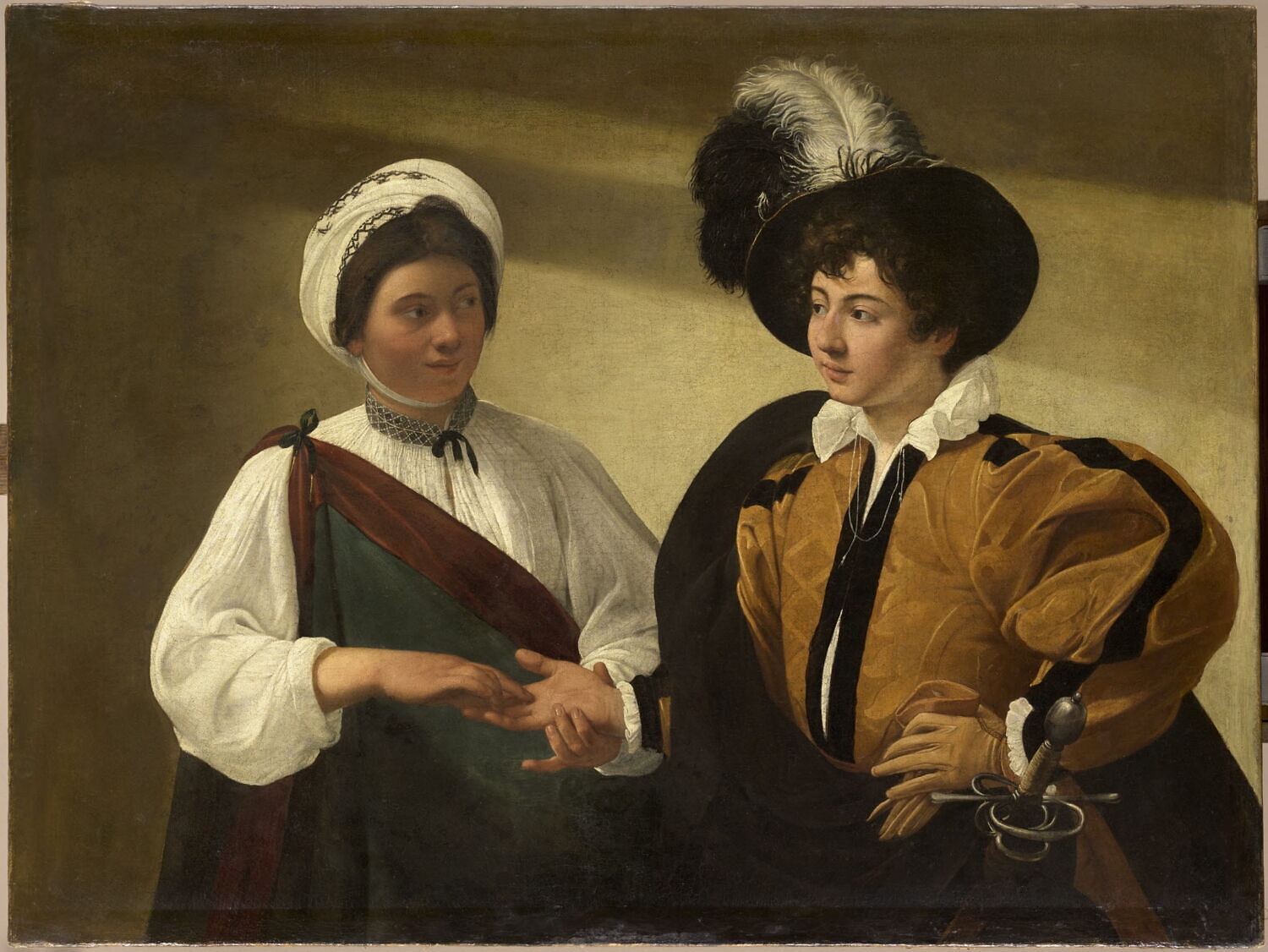
La buenaventura
La diseuse de bonne aventure
¿Puedo verla?
Sí, expuesta ahora
¿Dónde está «La buenaventura» hoy? Museo del Louvre, Salle 712, Aile Denon, Niveau 1, París. Sí, expuesta ahora. Comprobado 26 de septiembre de 2026.

Cerrado· abre mañana a las 9:00
Expuesta al público.
- Comprobado
- En este estado desde
- Fuente
- El museo
Sobre el cuadro
La buenaventura (en italiano, Buona ventura) es un cuadro del pintor italiano Caravaggio. Está realizado al óleo sobre lienzo. Existen dos versiones, la primera de 1594 (actualmente en los Museos Capitolinos en Roma, y la segunda de 1595, que se conserva actualmente en el Museo del Louvre de París, con el título de La diseuse de bonne aventure). La datación de ambas obras es objeto de debate.
Leer más
La buenaventura es una de las dos piezas de género realizadas por Caravaggio en el año 1594, siendo la otra Jugadores de cartas. Se cree que La buenaventura es la primera de las dos, y que data del período durante el cual el artista había dejado recientemente el taller de Giuseppe Cesari para trabajar con independencia vendiendo sus cuadros a través del marchante Costantino Spata. Con ella introduce Caravaggio la temática de género que hasta entonces sólo se cultivaba por los flamencos: escenas de la vida cotidiana que pretenden aleccionar al observador.
Ficha
- Número de inventario
- INV 55
En el catálogo
Fuentes
- Museo del Louvre
- Imagen: Museo del Louvre — © 2018 GrandPalaisRmn (musée du Louvre) / Mathieu Rabeau
En la vida de Caravaggio
La vida entera1593
Roman fever: six months in hospital
Caravaggio fell ill with 'Roman fever' (malaria) and spent six months in hospital between life and death. Possibly under the impression of the illness he painted the 'Sick Bacchus', his first self-portrait.
1593
In the workshop of Cesari d'Arpino
Caravaggio joined the workshop of Cesari d'Arpino, who had him paint flowers and leaves on his frescoes; there the young provincial met influential patrons and artists, among them Jan Brueghel the Elder. In the same years, after yet another brawl, he landed in the Tor di Nona prison, where he met Giordano Bruno, and soon broke with d'Arpino.
autumn 1594
Under the patronage of Cardinal del Monte
Caravaggio began working on commissions for Cardinal Francesco del Monte and moved into his residence, the Madama, where he met Galileo Galilei, Tommaso Campanella, Giacomo della Porta and the poets Marino and Milesi. The period proved highly productive for him.
1594
First mention in Roman records
Caravaggio's name, listed with that of his partner Prospero Orsi, appears among the 'assistants' of a procession in honour of Saint Luke — ostensibly the first archival reference to the artist in Rome. Orsi, already established in the profession, introduced him to influential collectors.
1595
Refused admission to the Academy of Saint Luke
Despite recommendations from Orazio Gentileschi, Grammatica and Prospero Orsi, Caravaggio was refused admission to the Academy of Saint Luke. His chief opponent was its president, Federico Zuccaro, who put the success of his pictures down to a mere 'touch of novelty' prized by rich patrons.
25 June 1599
Contract for the Contarelli Chapel
A contract was signed to decorate the Contarelli family chapel in San Luigi dei Francesi with canvases of scenes from the life of Saint Matthew, for 400 scudi. The commission was presumably arranged through Cardinal del Monte.