 Henri Edmond CrossFrancia, 1856–1910
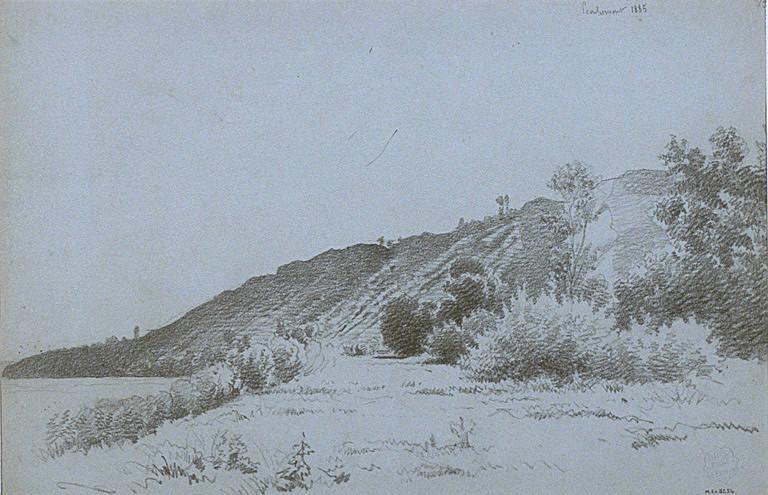
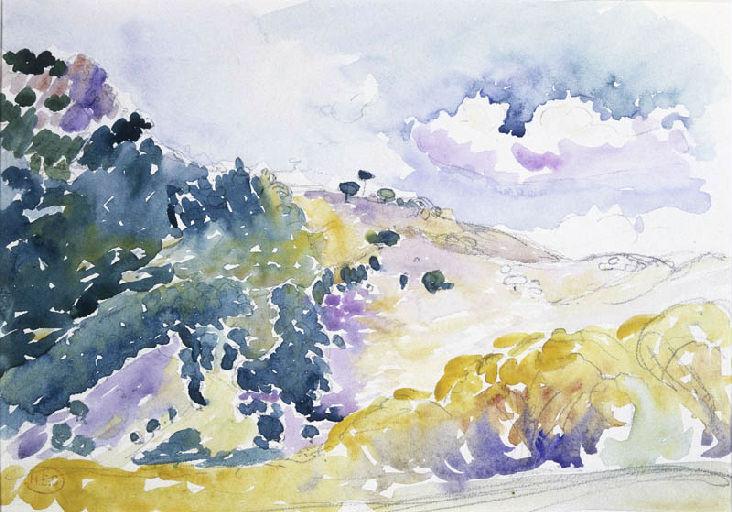
La Colline
¿Puedo verla?
Se desconoce
¿Dónde está «La Colline» hoy? Colección: Museo de Bellas Artes de Dijon, Dijon. Se desconoce.
Dijon, Francia
Se conoce el propietario; no se sabe si hoy está expuesta.
- En este estado desde
- Fuente
- El museo
Sobre la obra
En palabras del museo — en francés
Aquarelle et traits de crayon sur papier
Museo de Bellas Artes de Dijon
Ficha
- Número de inventario
- DG 498 ; 57 (DG 1976)
Lo que muestra
En el catálogo
Fuentes
- Museo de Bellas Artes de Dijon
- Imagen: Museo de Bellas Artes de Dijon — © François Jay - musée des beaux-arts de Dijon; Ministère de la Culture (France), base Joconde
En la vida de Henri Edmond Cross
La vida entera1903
First trip to Italy
The first of two trips to Italy (the second in 1908); apart from them he left Saint-Clair only for the annual Indépendants exhibitions in Paris. His late works show an Italian influence: a softer style and a less systematic technique.
1904
Meets Henri Matisse
In 1904 he meets Matisse; in the final, productive period of his work he turns to mythological motifs. The late Cross strongly influenced Matisse and other artists and helped shape the principles of Fauvism.
1905
First solo exhibition at the Galerie Druet
The Galerie Druet in Paris shows thirty paintings and thirty watercolors by Cross. The success is complete: the critics praise it, most of the works are sold, and the catalogue preface is written by the Belgian Symbolist poet Emile Verhaeren.
1907
Retrospective at the Galerie Bernheim-Jeune
Félix Fénéon assembles a Cross retrospective in Paris at the Galerie Bernheim-Jeune; Maurice Denis contributes the catalogue preface. His last years bring productive work, acclaim from the critics and commercial success.
1908
Second trip to Italy
He travels to Italy again — the second and last of his two trips beyond Provence, apart from the Paris exhibitions.
1909 – January 1910
Cancer: a Paris hospital and the return to Saint-Clair
In 1909 Cross is treated for cancer in a Paris hospital; in January 1910 he returns to Saint-Clair, where he stays until the end of his life.