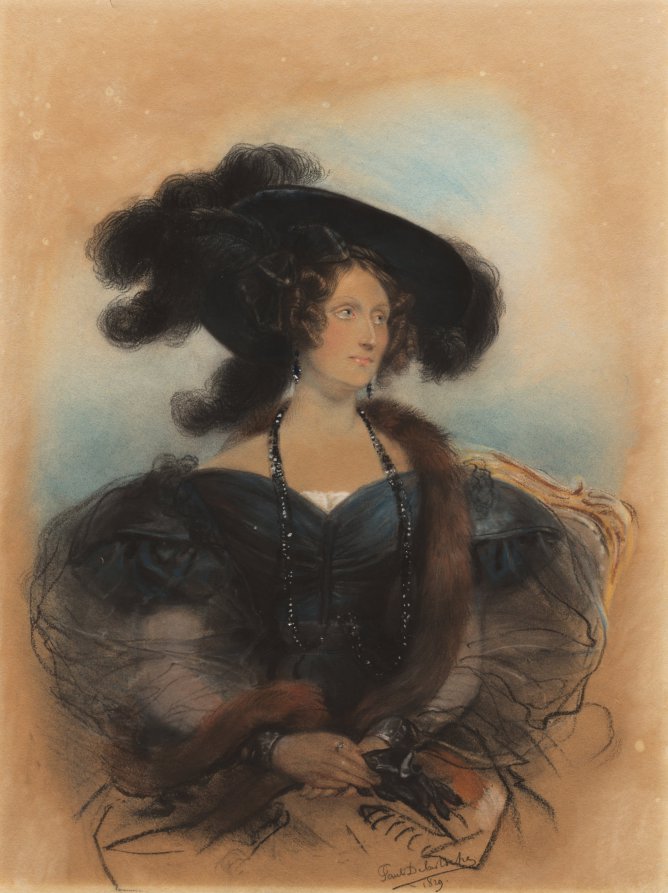
 Paul DelarocheFrancia, 1797–1856
Jane Jarvis
¿Se puede contemplar?
Por ahora no recibe

Cleveland, Estados Unidos
Pertenece a la colección, pero ahora mismo no está expuesta.
- Comprobado
- En este estado desde
- Fuente
- El museo
Sobre la obra
This portrait of an English woman named Jane Jarvis probably shows her not too long after the death of her father. Her jet black jewels are French, but her low-neck dress, which represents the last stage of the mourning period, could be French or English. With his pastels, Delaroche created a dashingly decorative image that highlights and complements the elaborate dress depicted. The large Renaissance-style hat seems to float against the creamy blues and beiges of the background. Below, the chalky pastel describes the particular appearance of the arms seen through the gauzy material of the sleeves, and energetic stray lines around the body add an ornamental flourish of technical virtuosity.
Museo de Arte de Cleveland
Ficha
- Número de inventario
- 2008.348
En el catálogo
Fuentes
- Museo de Arte de Cleveland
- Imagen: Museo de Arte de Cleveland — Museum open access
Mientras tanto, en la vida de Paul Delaroche
La vida entera1828
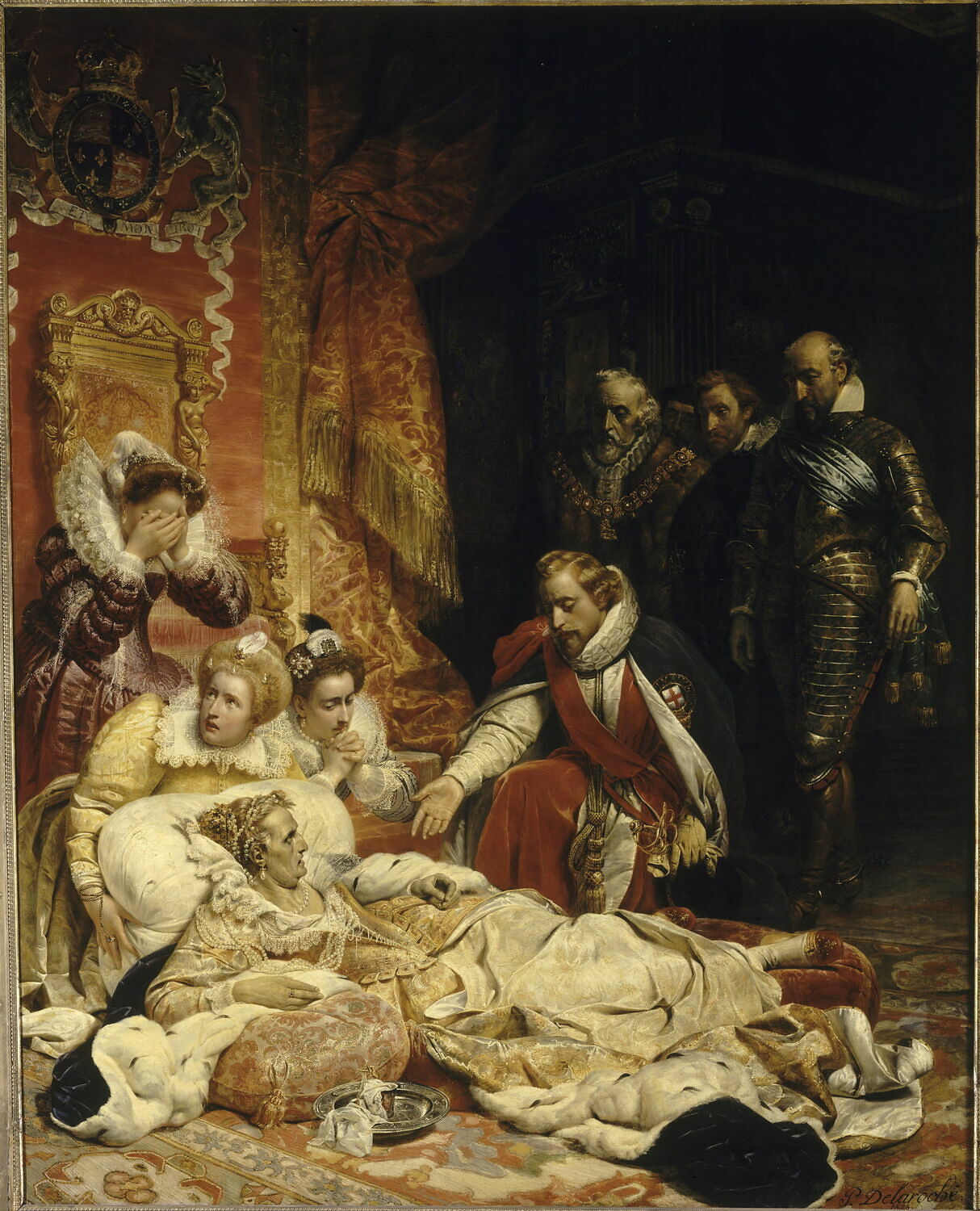
Exhibits “Death of Queen Elizabeth”
The first of his English history paintings; at the time he was studying the recent English tradition of history painting and working its methods into his own art. His focus on English history won him popularity in Britain in the 1830s and 1840s.
1832
Elected to the Académie des Beaux-Arts
Already known as a history painter, he is elected to the Académie des Beaux-Arts of the Institut de France in the painting section, taking seat no. 13.
1833
Becomes a professor at the École des Beaux-Arts
A year after his election to the Académie, he takes up a professorship at the school where he himself once studied. His pupils include Jean-Léon Gérôme, Jean-François Millet and Thomas Couture.
1833
Commissioned to paint a mural in the Madeleine
He is commissioned to paint a large mural for the central nave of the church of the Madeleine in Paris. Aware of his lack of experience in religious painting, he spends a year in Italy studying the religious art of the past; on his return he is told he is to work with Jules-Claude Ziegler and abandons the project altogether, thinking Ziegler would spoil the image he already had in mind.