 Henry MooreInglaterra, 1898–1986
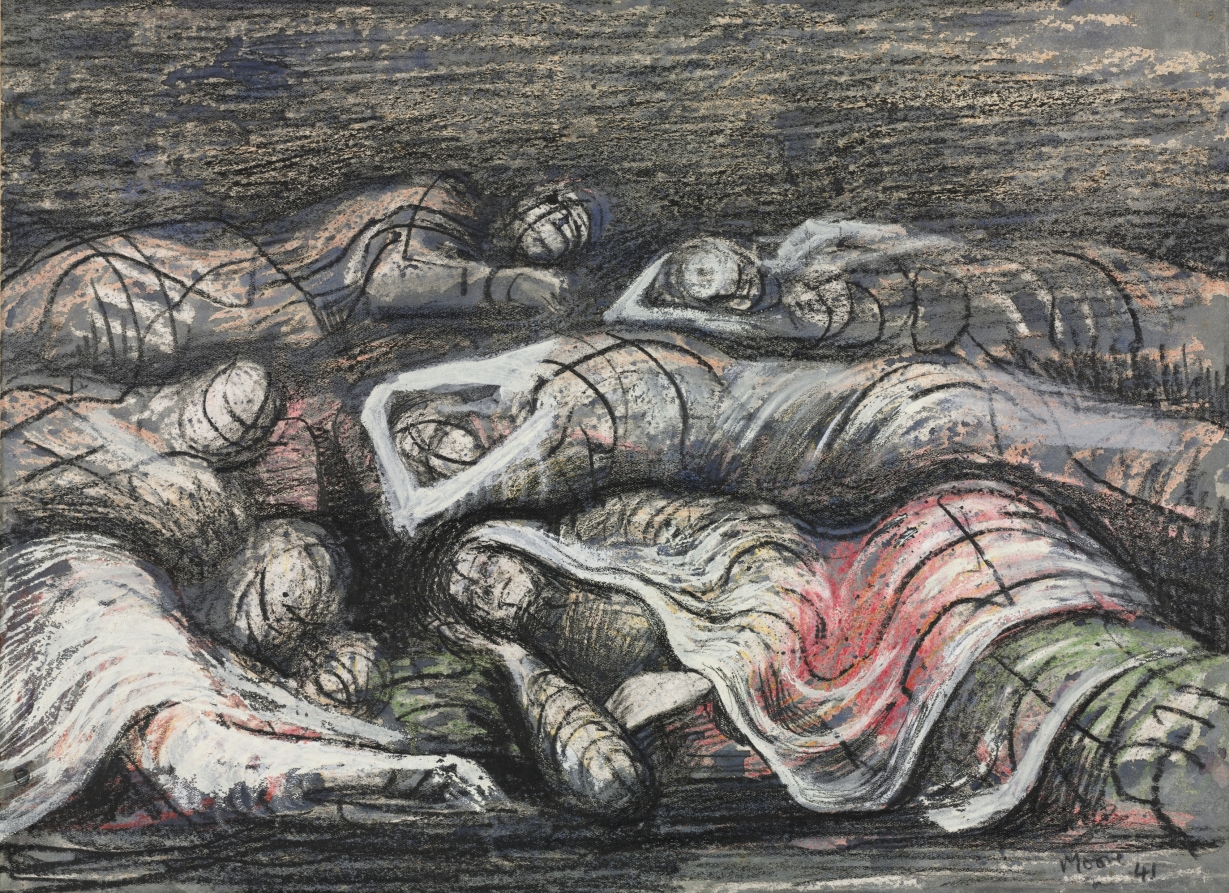
In the Shelters
¿Se puede contemplar?
Por ahora no recibe

Cleveland, Estados Unidos
Pertenece a la colección, pero ahora mismo no está expuesta.
- Comprobado
- En este estado desde
- Fuente
- El museo
Ficha
- Número de inventario
- 1972.234
En el catálogo
Fuentes
- Museo de Arte de Cleveland
- Imagen: Museo de Arte de Cleveland — © 2010 The Henry Moore Foundation. All Rights Reserved / Artists Rights Society (ARS), New York
Mientras tanto, en la vida de Henry Moore
La vida entera1929–1940
A studio in Hampstead, “a nest of gentle artists”
Soon after the wedding the couple moved to a studio at 11a Parkhill Road in Hampstead, joining a colony of avant-garde artists: Hepworth and her husband Ben Nicholson lived around the corner, along with Naum Gabo, Roland Penrose, Cecil Stephenson and the critic Herbert Read, who called the area “a nest of gentle artists”.
1930s
Paris: Picasso, Braque, Arp, Giacometti
Moore, Hepworth and other members of the Seven and Five Society moved steadily towards abstraction, partly through frequent trips to Paris and contact with Picasso, Braque, Jean Arp and Alberto Giacometti.
1937–1939
The row over “Mother and Child” in Penrose’s garden
In 1937 Roland Penrose bought an abstract stone Mother and Child from Moore and put it in the front garden of his Hampstead house. Neighbours objected and the local press campaigned against it for two years; at this time Moore was gradually moving from direct carving to bronze casting.
1939
Gives up teaching
When the Second World War broke out Chelsea School of Art was evacuated to Northampton and Moore resigned his teaching post.
1940–1986
A bomb in Hampstead: the move to Hoglands
In September 1940 bomb shrapnel hit the Moores’ Hampstead home and they left London for Hoglands, a farmhouse in the hamlet of Perry Green near Much Hadham in Hertfordshire. It remained Moore’s home and workshop for the rest of his life; though he grew wealthy he never felt the need to move to larger premises.
1941
The miners of Wheldale
In August 1941 the War Artists’ Advisory Committee commissioned Moore to draw miners working underground at the Wheldale Colliery in Yorkshire, where his father had worked. He drew the shelterers passively awaiting the all-clear, while the miners aggressively worked the coal-faces.