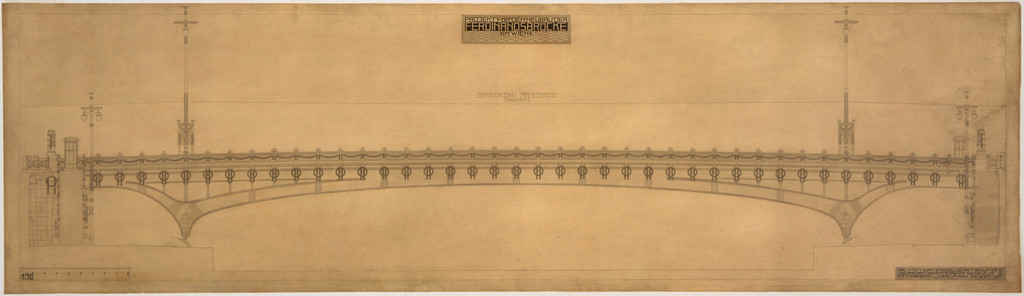
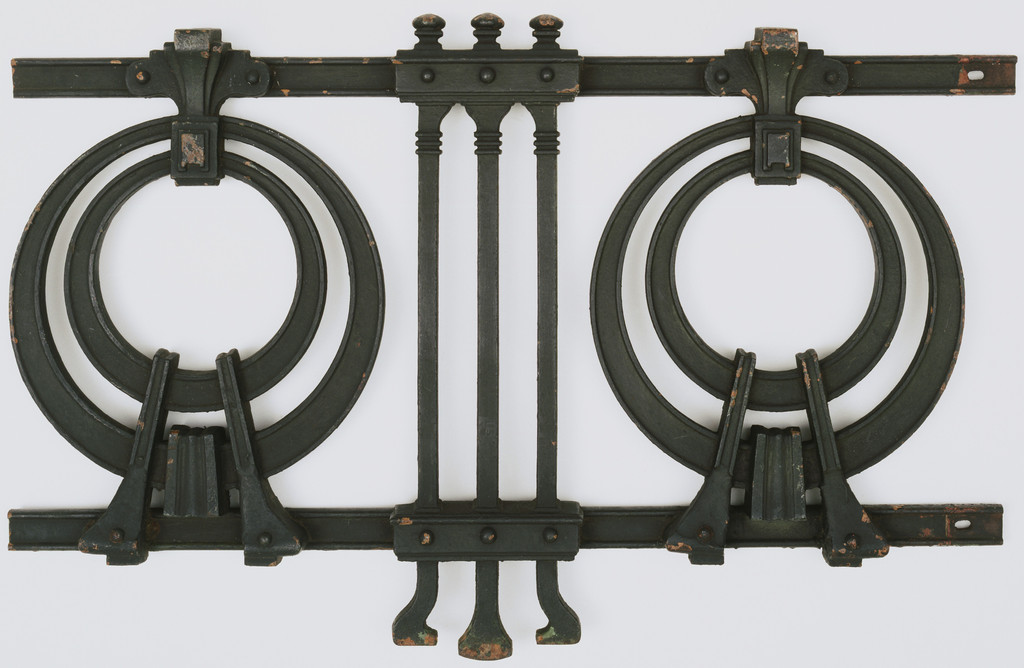
Otto WagnerAustria, 1841–1918
In Meissen
¿Se puede contemplar?
Por ahora no recibe

Harvard Art Museums
Cambridge, Estados Unidos
Pertenece a la colección, pero ahora mismo no está expuesta.
- Comprobado
- En este estado desde
- Fuente
- El museo
Ficha
- Número de inventario
- R10567
En el catálogo
Fuentes
- Harvard Art Museums
- Imagen: Harvard Art Museums — © President and Fellows of Harvard College
Mientras tanto, en la vida de Otto Wagner
La vida entera13 de julio de 1841
Birth in Penzing
Born in Penzing — then a suburb of Vienna next to the imperial residence of Schönbrunn — to Rudolf Simeon Wagner, a prosperous notary of the Hungarian royal court chancellery, and Susanne von Helfersdorfer, née Hübner.
1868
Wins the competition for the Rumbach Street Synagogue
In 1868 Wagner’s design for the Orthodox Synagogue on Rumbach Street in Budapest is selected in a competition; it becomes his first major realised project. The octagonal hall, lit from a stained-glass lantern, is hidden behind a four-storey street front of multicoloured brick with Moorish-looking minarets.
1894
Becomes professor at the Academy of Fine Arts
Wagner becomes professor of architecture at the Vienna Academy of Fine Arts and teaches there until 1914. He trains a whole generation of masters of Austrian and Czech Art Nouveau, among them Josef Hoffmann, Jan Kotěra, Jože Plečnik, Max Fabiani and Pavel Janák.
April 1894
Artistic adviser to the Vienna Stadtbahn
In April 1894 Wagner is named artistic adviser to the new Stadtbahn city railway and is gradually given responsibility for its bridges, viaducts and stations, including lifts, signs, lighting and decoration. He designs thirty-six stations and serves as chief engineer of the whole project, which runs until 1901; he hires seventy artists and designers, among them Joseph Maria Olbrich and Josef Hoffmann, later prominent in the birth of modern architecture.
1895 or 1896
The book “Modern Architecture”
Wagner publishes the textbook “Modern Architecture”, based on his 1894 inaugural lecture: the foundations of architecture are to be sought not in art history but in modern life, and “only that which is practical can be beautiful”. The book is dated 1895 or 1896 and has been called the “bible of the new movement”.
1897 or 1899
Joins the Vienna Secession
The Secession, founded in 1897, declared war on historicism and called for the abolition of the boundary between the fine and the applied arts. Some accounts say Wagner himself joined it only in 1899, others that he aligned himself with the movement as early as 1897.