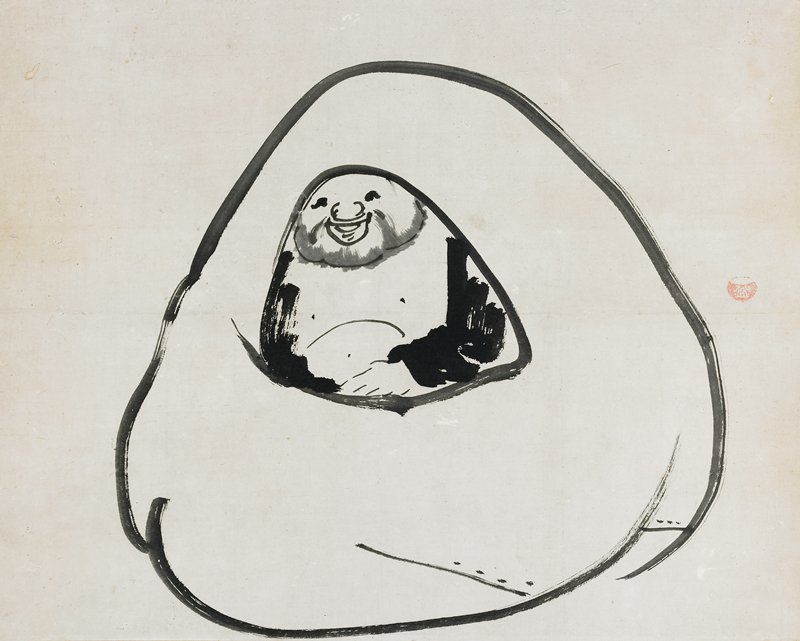
Hotei Within his Sack
¿Puedo verla?
No expuesta por ahora
¿Dónde está «Hotei Within his Sack» hoy? Colección: Instituto de Artes de Mineápolis, Minneapolis. No expuesta por ahora. Comprobado 29 de septiembre de 2026.

Minneapolis, Estados Unidos
Pertenece a la colección, pero ahora mismo no está expuesta.
- Comprobado
- En este estado desde
- Fuente
- El museo
Sobre el cuadro
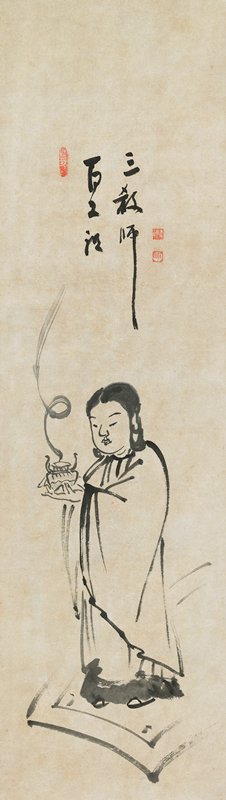
Budai (Jp. Hotei) grins broadly as he sits enveloped in his large bag. Budai was an eccentric Tang-dynasty (618–907) itinerant monk who was skilled at ink painting. His nickname, which literally translates to “jute bag, ” refers to the large traveling sack he used for carrying belongings and food as well as accepting alms. He is often depicted with a large belly and a broad smile to reflect his cheery nature. In Japan, he became part of the seven gods of fortune and was associated with wealth and prosperity. Within Chan (Jp. Zen) Buddhism, Budai was considered the incarnation of Maitreya, the present bodhisattva and future Buddha.
Leer más
Kōgan Gengei was a Japanese Zen priest in the lineage of Hakuin Ekaku (1686-1769), who was an influential Zen Buddhist monk, painter, and calligrapher. In Chan Buddhism, paintings were a tool to express religious teachings. Ink paintings were particularly suitable because they only required a brush, ink, and paper, all everyday objects in a monastery.
Instituto de Artes de Mineápolis
Ficha
- Número de inventario
- 2004.46.1
En el catálogo
Fuentes
- Instituto de Artes de Mineápolis
- Imagen: Instituto de Artes de Mineápolis — public domain